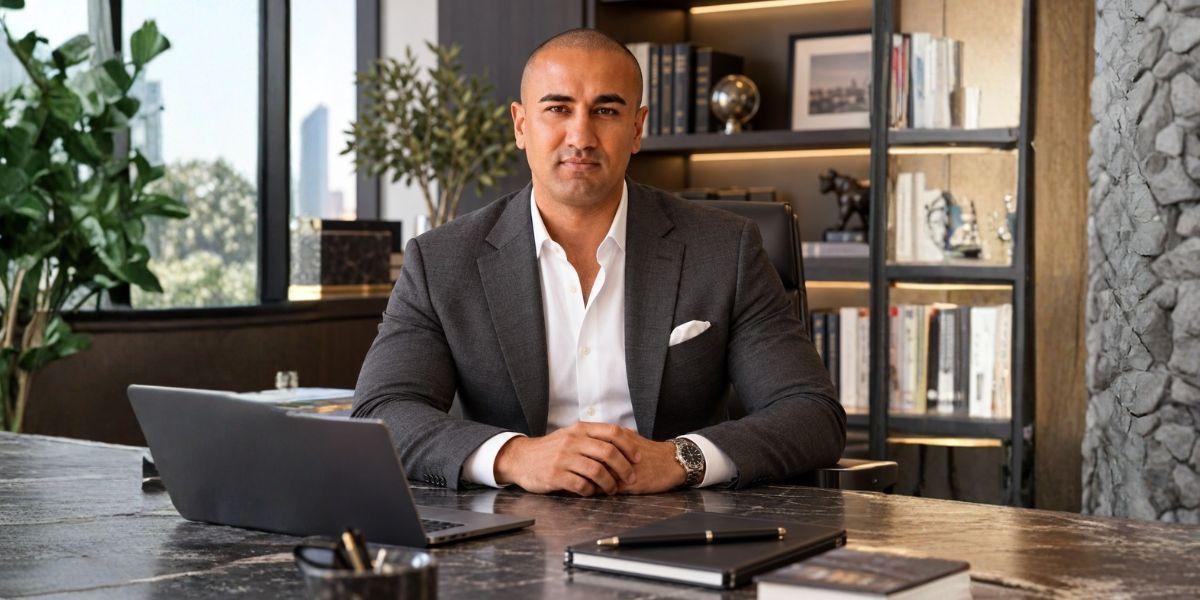


In an industry where every additional procedure can become another transaction, Inna Chornokan is building a different kind of business logic: sometimes protecting the relationship with a patient means recommending less, or recommending nothing at all.
Most businesses are trained to close the sale.
A customer arrives interested in a product. The company explains its benefits. The customer buys it. Revenue is created.
Aesthetic medicine creates a more complicated equation.
A patient can walk through the door already prepared to spend money. She may know the name of the filler she wants, the number of syringes she thinks she needs or the treatment she saw on social media.
For Registered Nurse (RN) Inna Chornokan, that does not automatically make the requested procedure the right decision.
Sometimes the answer is not this treatment.
Sometimes it is not this amount.
Sometimes it is not now.
And sometimes it is simply no.
That may sound like an unusual way to build an aesthetics business. Chornokan sees it differently.
A lost transaction can be recovered. Lost trust is much harder to rebuild.
Can Saying “No” Actually Build a Stronger Aesthetics Business?
The beauty industry has an obvious economic incentive: sell more.
More treatments. More products. More appointments. More maintenance.
Medical aesthetics complicates that incentive because the product is being used on a person’s face or body.
That means the practitioner has another responsibility beyond making the sale: deciding whether the proposed treatment makes sense for the patient.
Chornokan believes those two interests will not always point in the same direction.
A patient may request filler when another approach deserves consideration.
She may want more volume when adding more could work against the result she says she wants.
She may arrive with a photograph of somebody else and ask to reproduce a feature that does not fit her own anatomy.
Or she may simply need more time before making a decision.
In each case, agreeing immediately may be easier commercially.
But Chornokan argues that the long-term business value may lie in doing the opposite.
Beauty Has a Complicated Relationship With Insecurity
There is another uncomfortable business question inside the aesthetics industry.
Can a company profit from beauty without first teaching customers to dislike themselves?
Beauty marketing has enormous power to direct attention toward imperfections.
A line becomes a problem.
A facial feature becomes something to correct.
A normal sign of aging becomes something that must be fought.
Social media can intensify that process because comparison is continuous. A patient can move from looking at another person’s face to researching a procedure within minutes.
For an aesthetics business, insecurity can therefore be commercially useful.
Chornokan does not believe it should become the business model.
A patient does not have to hate her lips before deciding she wants to change them.
She does not have to dislike her body before exploring body contouring.
And she does not have to believe that aging is a failure before asking about facial rejuvenation.
The distinction matters because a business built by constantly creating new dissatisfaction may generate transactions while weakening the very confidence patients came looking for.
Patients Are Not Only Shopping for Procedures. They Are Shopping for Trust.
The modern aesthetics consumer has more information, and more ways to evaluate providers, than ever before.
The American Society for Dermatologic Surgery’s 2025 consumer survey, based on more than 3,500 U.S. consumers, found that 70% were considering a cosmetic procedure. Nearly half said a provider’s social media presence affects whether they schedule an appointment, and 94% said rating and review websites influence their choice of provider.
That changes the economics of reputation.
A patient experience no longer necessarily ends when the patient walks out of the treatment room.
People search names.
They read reviews.
They study results.
They watch providers explain procedures online.
They compare qualifications.
And they tell other people about experiences they trust, or do not trust.
For an aesthetic entrepreneur, reputation is therefore not a soft business concept.
It is an asset that can be searched.
The Most Powerful Trust Signal May Cost the Business Money Today
Imagine a patient arrives ready to purchase a treatment.
She expects the provider to agree.
Instead, the provider explains why the requested procedure may not be appropriate, why the amount should be reconsidered or why waiting may make more sense.
The business may lose revenue from that appointment.
But something else can happen.
The patient discovers that the recommendation is not automatically tied to how much she is willing to spend.
That changes the relationship.
This is the logic behind Chornokan’s emphasis on restraint.
The value of expertise is not only knowing how to perform a procedure.
It is knowing whether to perform it.
In an industry where the provider can financially benefit from saying yes, a credible no can carry unusual weight.
Why “More” Is a Dangerous Business Metric in Aesthetics
Many companies can measure growth by units sold.
Medical aesthetics cannot use that logic without qualification.
More filler is not automatically a better result.
More treatment areas are not automatically evidence of better care.
More frequent appointments do not automatically mean the patient is receiving more value.
This makes aesthetic entrepreneurship different from ordinary retail.
The practitioner is simultaneously dealing with a customer request, a medical procedure, an aesthetic judgment and a long-term relationship.
Chornokan’s approach is to begin by understanding the patient’s actual objective rather than treating the requested product as the objective itself.
A woman asking for “more filler” may actually be asking to look less tired.
A person requesting a particular treatment may really be trying to restore proportion.
Another may be responding to a trend rather than a stable personal preference.
The business opportunity is the procedure.
The professional responsibility is figuring out whether the procedure actually answers the question.
A Repeat Customer Should Return Because of Trust, Not Fear
Repeat business is one of the most familiar ideas in entrepreneurship.
In aesthetics, it requires particular care.
Some cosmetic treatments are temporary and may involve future maintenance. That naturally creates the possibility of an ongoing provider-patient relationship.
But there is an important difference between a patient returning because she values the relationship and returning because she has been taught to fear what will happen if she stops.
Aesthetic treatment should not create the message:
Now that you have started, you can never stop.
Nor should every appointment automatically discover a new flaw that requires another purchase.
For Chornokan, a stronger long-term relationship is one in which a patient knows she can return for an honest assessment, including an assessment that does not necessarily end in treatment.
That is a harder form of customer retention to build.
It is also potentially more durable.
Expertise Is the Product Before the Product Is Opened
One of the easiest mistakes in aesthetics is to treat the injectable, device or procedure as the entire product.
Chornokan sees professional judgment differently.
Before anything is used, someone has to decide what makes sense.
That requires assessment.
It requires knowledge of anatomy.
It requires understanding what the patient wants.
It requires recognizing the limitations of the proposed treatment.
And it requires being prepared to explain when expectation and procedure do not match.
This is also why Chornokan says she has invested heavily in continuing education since entering aesthetic medicine in 2021.
Marketing can introduce a provider.
A beautiful office can influence an experience.
Social media can attract attention.
But none of those things can make the treatment decision for the practitioner.
Marketing may bring a patient through the door once. Judgment determines what happens after she gets there.
What Does Ethical Growth Look Like in a Med Spa?
The question becomes more complicated as an aesthetic business grows.
Growth can mean more patients, more services, more providers or more locations.
But scaling revenue is easier to measure than scaling judgment.
Chornokan’s IC Med Spa currently identifies locations in Brooklyn, Manhattan and Staten Island.
As a business expands, the entrepreneurial challenge is not simply maintaining demand.
It is maintaining the principles behind the service.
Can patients continue to receive honest explanations?
Can expectations remain realistic?
Can treatment remain individualized?
Can the business grow without turning every consultation into pressure to purchase?
Those are not questions unique to IC Med Spa. They are structural questions for the med-spa industry.
Professional organizations have also raised broader concerns about oversight and transparency in medical spas. The American Society of Plastic Surgeons advises patients to review the qualifications of everyone involved in their treatment and notes that supervision requirements vary by state.
For any growing aesthetics company, trust therefore has an operational dimension as well as a branding one.
Reputation Cannot Be Outsourced to Instagram
A polished social presence matters in modern aesthetics.
The ASDS consumer data makes that clear.
But digital visibility creates an interesting trap for founders.
A business can begin optimizing for what photographs well rather than for what builds credibility.
The most dramatic before-and-after image may attract attention.
The most responsible recommendation may be far less visually exciting.
Sometimes good judgment produces a subtle result.
Sometimes it produces no procedure at all.
That makes reputation different from reach.
A large audience can make a provider visible.
It cannot, by itself, prove that the provider will make the right decision when a patient is sitting in front of them.
Chornokan’s business philosophy places more value on what happens in that private moment than on the public performance around it.
Can Professional Judgment Become Scalable?
For many founders, the next stage of growth is not simply doing more work themselves.
It is transferring what they know.
Chornokan has said she plans to move into education for other injectors in the future. She does not currently present that future direction as an established teaching program.
The distinction is important.
Teaching a technical procedure is one form of education.
Teaching judgment is harder.
How does someone learn when a treatment is appropriate?
How does an injector recognize when a patient’s expectation cannot be met?
How should a professional respond when the most profitable answer is not the most appropriate one?
And how do those principles survive when a practice becomes larger than its founder?
For Chornokan, those questions point toward a different definition of scale.
A business has not necessarily scaled its philosophy merely because it has increased its procedure volume.
The real test is whether its decision-making standards can grow with it.
The Business Case for “No”
Aesthetic medicine operates at a difficult intersection.
Beauty is emotional.
Medicine carries responsibility.
Social media accelerates trends.
Consumers arrive with more information, but not always better information.
And the business still has to make money.
That makes “no” an unusually meaningful word.
No, you may not need more.
No, this may not produce the result you saw online.
No, the procedure you requested may not be the right starting point.
No, you do not have to decide today.
For Inna Chornokan, those answers are not necessarily failures to close a sale.
They can be evidence that the relationship matters more than the immediate transaction.
And in a market where consumers increasingly research providers, read reviews and evaluate reputations before choosing whom to trust with their appearance, that relationship has business value.
An aesthetics company can buy advertising.
It can create content.
It can open another location.
It can add another treatment.
Trust works differently.
It has to accumulate decision by decision.
In a business built around changing appearances, sometimes the most valuable service is knowing when not to change anything.