
By: Ethan Rogers
For many entrepreneurs, success is measured by what they build, acquire, and ultimately own.
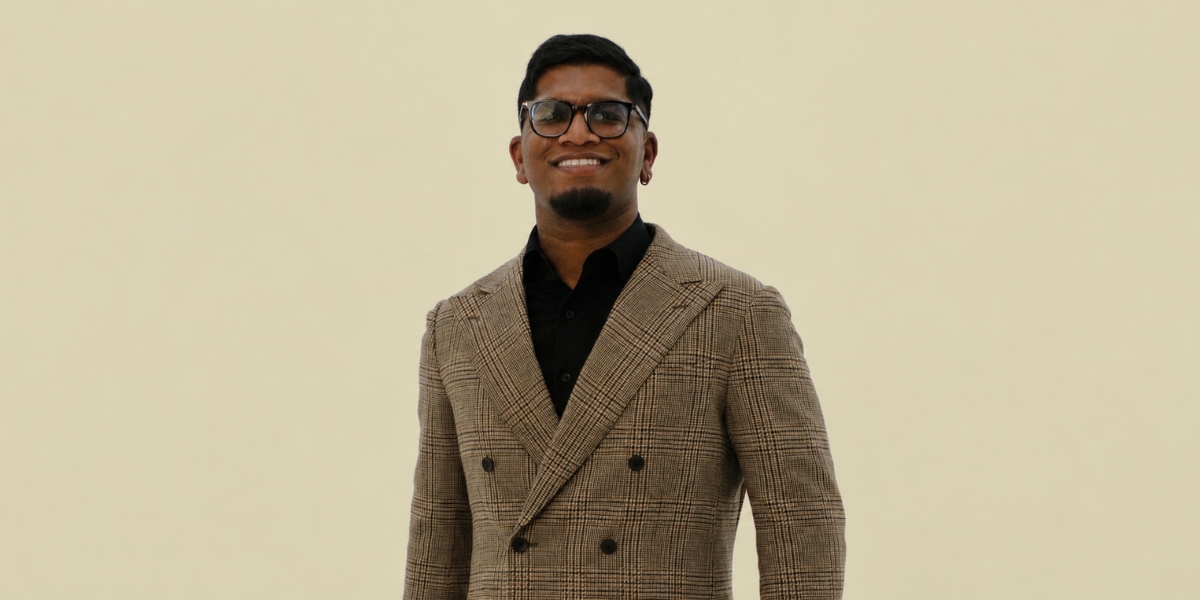
Karthik Achari made a different calculation.
After years spent moving between clinical leadership and entrepreneurship, Achari reached a point where building his next organization required him to give something up first. He fully divested his prior business interests and stepped away from operating companies he had helped build.
The decision was not an exit followed by retirement or a pivot into an unrelated industry. It was necessary, in his view, to establish the credibility of what he wanted to create next.
That organization became PepMD, an independent standards body developing credentialing and trust infrastructure for peptide medicine.
For Achari, the premise was straightforward: an organization cannot credibly evaluate an industry while its founder maintains a financial interest in the businesses being evaluated.
“The credibility of the referee is worth more than the upside of the player,” Achari says.
That principle has shaped not only PepMD, but also Achari’s evolving approach to entrepreneurship and leadership.
From Clinical Leadership to Entrepreneurship
Achari did not begin his career as a traditional entrepreneur.
He started as a clinician before becoming a nursing director, a role that placed him inside the systems responsible for clinical quality, compliance, documentation, and patient safety.
Being responsible for a clinical team changed the way he viewed standards.
As a nursing director, Achari was accountable not only for his own work but also for ensuring that other clinicians met the expectations of the healthcare system around them. Policies mattered, but he learned that their effectiveness ultimately depended on whether people consistently followed, documented, and enforced them.
“Standards only mean something when someone is responsible for verifying them,” Achari says.
His career eventually took him from healthcare leadership into entrepreneurship.
Achari founded businesses in precision diagnostics and later pharmaceutical and nutraceutical manufacturing and distribution. Suddenly, he was experiencing healthcare standards from the other side.
He had gone from helping enforce requirements within a clinical environment to operating businesses expected to comply with them.
The combination gave him an unusually broad perspective.
He had seen healthcare from the clinical leadership seat, the laboratory, the manufacturing environment, and the founder’s office.
Across those experiences, one idea continued to surface: reputation and verification were not the same thing.
A company could have a strong reputation. A professional could have years of experience. An organization could display credentials and make claims about quality.
But none of those things automatically created independent verification.
That realization ultimately became central to PepMD.
Giving Up the Player’s Seat
The hardest decision came before Achari could fully pursue that vision.
He still had commercial interests in businesses operating within healthcare.
Achari believed maintaining those interests while simultaneously creating an organization responsible for setting standards would create an unavoidable credibility problem.
So he divested.
It meant walking away from operating roles in businesses he had spent years building, without any guarantee that the new organization or its standards would ultimately gain widespread adoption.
For many founders, entrepreneurship is about maintaining as much ownership as possible.
Achari saw this situation differently.
If independence was going to become one of PepMD’s defining characteristics, he believed it had to exist structurally rather than simply appearing in the company’s messaging.
That philosophy influenced the organization’s design.
The standard, credentialing decisions, and registry operate within a nonprofit entity, while commercial services remain separate. Achari also established a business model that does not tie revenue to product volume.
PepMD instead generates revenue through credentialing fees, recognition fees, and recurring attestation.
The distinction is intentional.
Achari believes the organization making an evaluation should not become financially rewarded when more of the products or services it evaluates are sold.
Independence, in other words, had to become part of the infrastructure.
Building Something That Can Say No
One of Achari’s more unconventional beliefs about entrepreneurship is that credibility can come from limiting what a business is willing to do.
PepMD publishes its criteria. Credentials are not permanent simply because they have been awarded once. They can be lost when requirements are no longer met.
Achari sees that accountability as essential.
Recognition that cannot be taken away, he argues, risks becoming marketing rather than meaningful verification.
That approach also reflects how his own definition of success has changed.
Earlier in his career, success meant building companies that worked.
Today, he describes the objective differently.
“It used to be building companies that worked. Now it is building the thing that checks whether companies work.”
It is a significant shift in perspective for an entrepreneur.
Instead of asking how large an organization can become, Achari is increasingly focused on whether the systems surrounding healthcare can make trust measurable.
His operating philosophy can be summarized in three words:
Verifiable rather than assumed.
A Different Kind of Founder Story
PepMD was founded on January 1, 2026, but Achari views the organization as the culmination of experiences that began much earlier.
Clinical leadership taught him how standards are enforced.
Entrepreneurship taught him how companies respond to those standards.
Manufacturing and distribution exposed him to decisions consumers rarely see.
And divestment forced him to decide how much independence was actually worth.
Those experiences now shape the organization he is building.
PepMD brings clinician credentialing, pharmacy recognition, and research site authorization together under a single standard, while keeping the organization responsible for those decisions structurally separate from commercial incentives.
Achari is currently working toward expanding clinician credentialing, launching pharmacy recognition with an initial tier of national compounding pharmacies, and developing registry work under IRB governance.
The larger ambition extends beyond any individual program.
Achari wants his professional name to become associated with trust infrastructure in healthcare, particularly in areas where innovation and adoption can move faster than the systems designed to establish accountability.
When Credibility Becomes the Business Model
There is an obvious tension in Achari’s story.
Entrepreneurs are usually encouraged to protect ownership, maximize upside, and leverage everything they have already built into the next opportunity.
Achari deliberately surrendered part of that advantage.
He believes doing so made the next organization more credible.
The wager behind PepMD is that independence itself can become an asset — not independence as a marketing claim, but independence demonstrated through governance, incentives, published criteria, and the willingness to revoke recognition.
That may ultimately be the most important leadership lesson in Achari’s journey.
Sometimes building the next company is not about accumulating more.
Sometimes it requires deciding what you are willing to walk away from.
For Karthik Achari, that decision became the foundation for what came next.
To learn more about Karthik Achari and PepMD, visit the company’s website and explore its published standards, credentialing framework, and partnership opportunities.