

Massachusetts is home to one of the busiest healthcare networks in the country, with 70 hospitals serving patients across the state, most of them nonprofit institutions. That density creates constant demand for reliable, well-stocked supply chains. Behind every operating room, clinic, and long-term care facility is a network of vendors making sure the right products arrive on time and at the right quality standard. For administrators and procurement managers, understanding how this supply ecosystem works can make the difference between smooth operations and costly delays.
Why a Reliable Supply Partner Matters
Running a hospital, surgical center, or private practice means juggling dozens of product categories at once. A single missed shipment of surgical gauze or nitrile gloves can disrupt an entire day’s schedule. That’s why many facilities choose to work with a single hospital supply store rather than piecing together orders from multiple vendors. Consolidating purchases through one equipment supplier simplifies invoicing, reduces shipping delays, and often unlocks better pricing on bulk or wholesale medical supplies. Beyond healthcare, businesses are increasingly examining how supplier diversification and procurement planning can reduce exposure to unexpected disruptions and strengthen overall operational resilience.
Facilities also need flexibility. A rehabilitation center might prioritize orthopedic supplies and physical therapy equipment, while an urgent care clinic may rely more heavily on wound care supplies, exam table paper, and underpads. Procurement teams often look for suppliers that can cover several product categories while still meeting each facility’s ordering and service requirements.
Supplier diversification can also reduce dependence on a single source when disruptions occur. The right balance depends on product criticality, purchasing volume, contract terms, storage capacity, and how quickly substitute products can be approved.

Core Categories Every Facility Should Stock
Below is a snapshot of major product categories healthcare providers commonly source, along with typical examples and use cases.
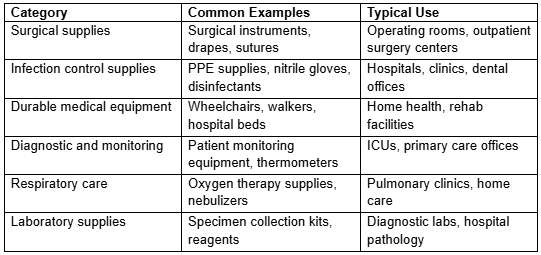
This type of categorization helps procurement teams audit inventory and identify gaps before they become urgent. It also shows how closely product categories overlap. A facility ordering surgical gauze, for example, may also need related wound care and infection control products to support routine clinical workflows.
Specialized Equipment and Everyday Consumables
Not every purchase is a high-cost capital item. Everyday consumables such as exam table paper, underpads, and gauze rolls represent recurring inventory needs, and running out of them can interrupt routine care. Medical exam tables and monitoring devices, by contrast, are larger purchases that may require more detailed vendor review, warranty evaluation, and service planning.
Durable medical equipment suppliers have a particular role because some equipment must be delivered directly to patients’ homes and may require service over time. Facilities handling home health referrals may therefore look for suppliers familiar with both clinical purchasing and home-care logistics.

Finding the Right Vendor in Massachusetts
For facilities evaluating surgical and medical supplies in Massachusetts, HSS Medical Supply is one distributor serving the state. The company states that its catalog includes more than 20,000 products across medical-surgical, diagnostic, pharmaceutical, laboratory, durable medical equipment, and daily-care categories. Procurement teams can compare catalog breadth, pricing, delivery terms, product availability, and service support against other vendors before deciding whether to consolidate orders.
Pharmaceutical supplies add another layer of complexity because they can involve stricter tracking and handling requirements than many other categories. Depending on the product, facilities may need to consider cold-chain handling, expiration monitoring, documentation, and applicable dispensing or storage requirements.
Building a Resilient Supply Strategy
The healthcare providers who avoid supply headaches are usually the ones who plan ahead rather than react to shortages. That means auditing usage patterns quarterly, keeping a buffer stock of high-turnover items like nitrile gloves and gauze, and maintaining a backup vendor relationship in case a primary supplier faces delays.
Ultimately, sourcing surgical and medical supplies in Massachusetts isn’t just about finding the lowest price on a single item. It’s about building a dependable supply chain that keeps clinical staff focused on patient care instead of inventory management. Facilities that treat vendor selection as a long-term partnership tend to weather supply disruptions with far less strain on daily operations.
Disclaimer: This article is based on information provided by the expert source cited above. It is intended for general informational purposes only and does not constitute legal, financial, medical, procurement, or regulatory advice. Organizations should conduct their own due diligence and consult qualified professionals regarding requirements that apply to their operations.