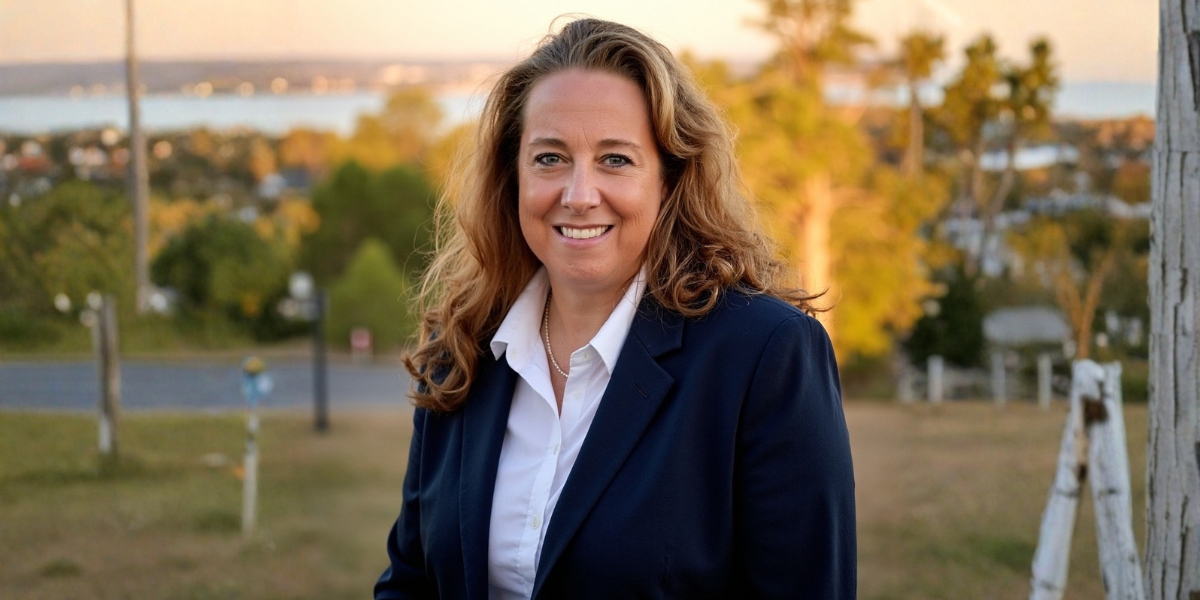

By Natalie Johnson
Leaders spend enormous effort aligning their organizations, and most of them are aligning the wrong one. Growth consultant Elaine Joggerst finds the same gap in nearly every company she works with. The difference comes down to how the organization is supposed to run and how it actually runs. The process on paper is not the process people follow, and the roles on the org chart are not the roles people actually hold. A leader who builds a growth plan on the official version is building on something that was never true, which is why the plan stalls. “Alignment always is key,” Joggerst says, but she does not mean getting people to agree. She means finding out how the organization really works before trying to change it.
Alignment Begins With Discovery, Not Agreement
Alignment usually implies getting people to fall in behind a plan; Joggerst changes that. Before anyone can be aligned, she has to learn what is actually happening, and that means drawing out information people will not volunteer on easily. Her tools are curiosity, kindness, and careful listening. “People will tell you so much,” she says, “but you won’t get that if you’re not willing to be curious and be kind and listen.”
Executives and teams open up about their work and where they see growth only when the person asking wants to understand rather than direct. Execution and process cannot be arranged correctly until a leader knows the truth of the organization, and that truth surfaces only through listening.
The Gaps Lie Where No One Is Looking
Nearly everyone inside a company is overwhelmed, absorbed in a thousand daily tasks, which leaves no one positioned to see the whole. An outside perspective can pause and study how the organization actually fits together, and that is where the missed opportunities and problems lie that no one saw coming.
Many of those gaps concern ownership, where the org chart misleads most. Joggerst describes a company where an executive keeps absorbing the role of their top performer, while two staff members refuse to collaborate because each believes the other sits at a different level when they are actually peers. The chart says one thing. The reality is a tangle of encroachment and status confusion. Fixing it means stepping into the middle to get people talking, then defining clearly who holds which goal. Only once the real ownership is settled can the group align around a genuine direction.
You Cannot Automate a Process You Do Not Understand
The documented process and the actual process are different things, and a leader who automates the documented one is building on something that was never true. “If you don’t know the current process and you don’t know what people are actually doing,” Joggerst says, “the technology has nothing sound to stand on.”
The fix is to talk to the people doing the work before changing anything, both to learn how the process really runs and to earn the trust that makes change possible. Employees who know they have been consulted and are not being managed out cooperate instead of resisting. Governance is just as important, since automation moves people into new roles and the transition has to feel safe. Above all, understanding the real process prevents automating something broken and, in Joggerst’s own words, blowing up a process that did not work to begin with.
Joggerst refuses to rush. Moving fast means acting before the truth is known, and leaders who find key executives not yet on board should take them aside, understand their concerns, and bring them along rather than press ahead on an assumption. Growth follows from seeing the organization as it actually is. Customer service endures as the top priority for the same reason, because it is where that clarity either shows or fails, and companies that lose it lose customers to those who kept theirs.
To learn more about aligning organizations for sustainable growth, connect with Elaine Joggerst on LinkedIn.