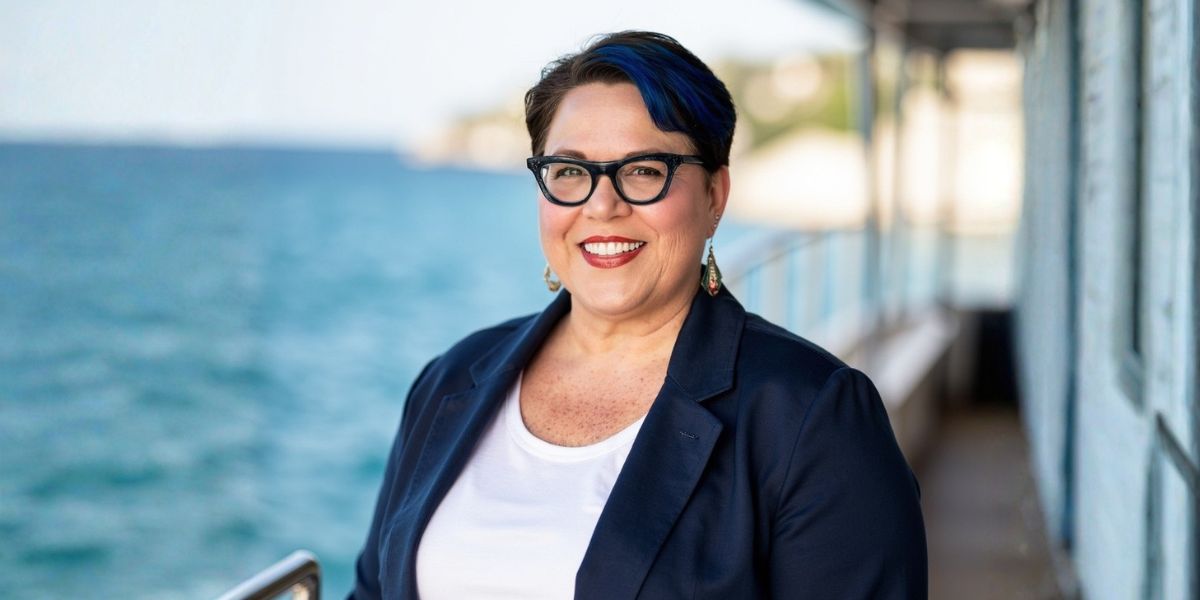

By: Natalie Johnson
For Donna Vincent Roa, PhD, Founder and Chief Executive Officer of MicDots Global, the greatest communication challenge facing organizations today is proving that the right people received, understood, and acted on information. For example, a water utility may issue a boil-water advisory by email and posted notices, yet have no way of knowing whether residents actually saw the message, understood its urgency, or followed the instructions. This could leave communities at risk despite the organization technically “sending” the alert.
This accountability gap, or as Roa calls it, the “trust tax,” has become a hidden operational risk, particularly in high-consequence sectors such as water utilities, transportation, construction, and government. “The trust tax is the hidden cost organizations pay when people stop trusting what they’re told,” she says. “It doesn’t appear on financial statements. It shows up in confusion, delay, and doubt.”
Why Communication Tools Fall Short
Despite an abundance of communication tools, from email and SMS to collaboration platforms and AI-generated content, Roa believes organizations still lack systems that verify delivery, comprehension, and accountability. “We don’t have a trust problem so much as a proof problem,” she says. “In high-stakes environments, ‘we sent the message’ is no longer enough.”
She identifies three factors driving this challenge:
- Communication volume has outpaced verification.
- Automation has weakened authorship and accountability.
- Organizations often lack clear governance over which messages require human oversight and documented proof of delivery.
Her perspective has also been shaped by experimenting with AI as a collaborative tool rather than a substitute for human judgment. Roa believes AI is most valuable when it complements people instead of replacing them. An early test of AI-generated voice technology, in which a cloned voice mispronounced “USAID” in an official script, reinforced her conviction that accountability must always remain visibly human. “When authorship dissolves, accountability dissolves with it,” she says.
From Experience to Philosophy
Roa’s philosophy stems from decades of experience working across more than 50 countries with refineries, multilateral organizations, water utilities, development programs, and city agencies. Throughout her career, she repeatedly witnessed communication failures with real-world consequences, from confusing public advisories to frontline workers creating unofficial translations because formal instructions were difficult to understand.
Those experiences transformed how she viewed communication. Rather than seeing it as a support function, she came to regard it as a core element of governance. Decisions affecting public safety, worker protection, and essential services ultimately depend on whether people trust the institutions communicating with them.
Building Communication as Infrastructure
This belief led her to establish MicDots Global, a platform designed to treat communication as critical infrastructure rather than another messaging tool. Instead of simply distributing information, the platform documents who received it, enables recipients to respond through a built-in “talk back” feature, and creates a verifiable record of communication.
Roa’s approach is guided by simple principles: high-consequence messages should be evidence-based, clearly attributable to a named human, and supported by documented accountability. “Technology can assist,” she says, “but it cannot carry responsibility.”
Early implementations with utilities, transit agencies, and infrastructure operators have revealed several practical benefits. Human sign-offs and documented workflows introduce modest internal friction, while strengthening public trust. Proof of message delivery shifts leadership discussions from “Did we send it?” to “Who still needs clarity?” And clear, trackable voice communication often proves more accessible than text alone for multilingual and time-sensitive audiences.
Trust as the Next Competitive Advantage
Looking ahead, Roa believes trust will become one of the defining competitive advantages of the AI era. “Coal powered the industrial era. Data powered the digital era. Trust will power the AI era,” she says. For leaders, her message is clear: organizations are no longer judged solely by what they communicate, but by what they can prove. “If your words can change someone’s safety, rights, or livelihood,” Roa says, “you are already in the trust business. The leaders who succeed will be those who can prove the right people heard the right thing at the right time.”
Follow her on LinkedIn or visit her website for more insights on trust, communication, accountability, and high-stakes organizational messaging.