

As the creative industry continues to evolve, traditional music education models are facing increasing pressure to remain relevant. Long centered around examinations, recitals, and technical mastery, these systems are now being challenged by a new generation of learners who engage with music through creation, digital platforms, and rapid content distribution.
Responding to this shift, Musicpreneur’s Education Department is emerging as a key player in reshaping how music is taught and how careers in music are developed. Its approach reflects a growing reality within the industry: modern musicians are no longer defined solely as performers, but as creators, producers, and entrepreneurs navigating a multifaceted landscape.
One of the long-standing challenges in music education has been the gap between technical training and real-world application. While students often spend years developing performance skills, many find themselves unprepared for the demands of the industry, particularly in areas such as music production, content creation, and monetization.
Musicpreneur’s activities are designed to address this gap by guiding learners through the complete process of music creation. From songwriting and arrangement to recording, mixing, and distribution, the program places equal emphasis on artistic development and practical execution. The result is a learning experience that prioritizes not only skill acquisition but also real-world readiness.
Inside the classroom, this shift is reflected in a move away from exam-based outcomes toward tangible creative output. Students are encouraged to produce original work, completing songs as part of their learning journey rather than treating them as theoretical exercises. This “learn by creating” model mirrors the realities of today’s music industry, where portfolios and content often hold more value than certifications alone.
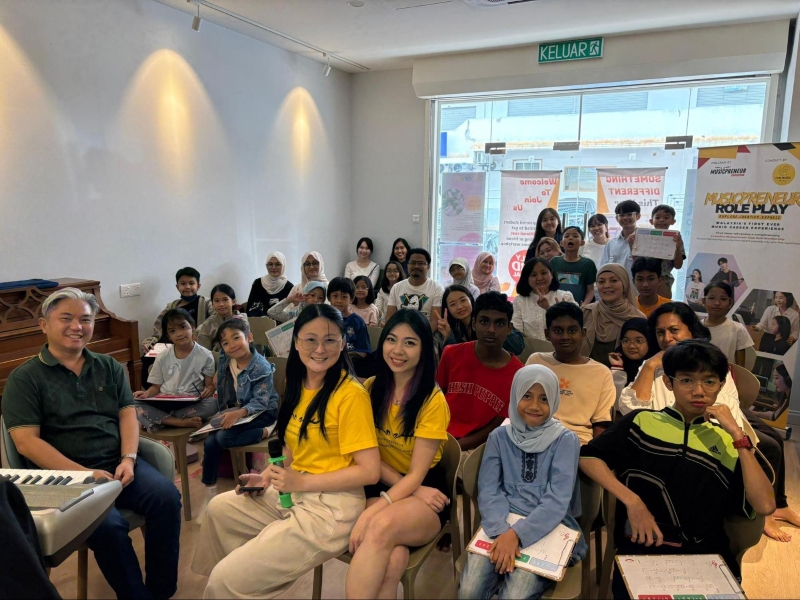
Beyond student development, Musicpreneur is also focusing on transforming the role of educators and institutions. As the industry evolves, so too must those responsible for shaping future talent. To support this, the organization provides a structured, classroom-ready music production syllabus alongside an assessment framework that allows schools to integrate production into their programs with greater clarity and consistency.
This approach signals a broader shift in how success in music is defined. While performance remains a key component, the rise of digital platforms and independent creation has expanded opportunities across production, content creation, and creative entrepreneurship. Education systems that fail to reflect this shift risk limiting students’ potential in an increasingly diverse industry.
Musicpreneur’s model does not seek to replace traditional training, but to extend it. By incorporating technology, production, and entrepreneurial thinking into a structured framework, this approach offers a more comprehensive pathway that aligns creative passion with sustainable career opportunities.
Looking ahead, the role of education in shaping the future of music is expected to become even more significant. As technological advancements continue to redefine how music is created and consumed, institutions will need to adapt to remain relevant in preparing students for the realities of the industry.
Musicpreneur’s Education Department positions itself within this transition, offering an alternative approach that blends creativity with practicality. For students, educators, and institutions, it represents a shift toward a more connected and future-ready model of music education.

Kynn Lua, Education Director, Musicpreneur Education, believes that music education must evolve beyond performance to remain meaningful in today’s landscape. She emphasizes the importance of building systems that connect learning directly with industry realities, enabling students to develop not only skills but also direction and long-term opportunities.
Under her leadership, initiatives such as the Musicpreneur Education Alliance, Musicpreneur ROLEPLAY, and structured music production programs have been introduced to foster collaboration between academies, educators, and industry partners. She also highlights the importance of educator development, noting that empowering teachers to grow into leaders is key to driving sustainable change across the education ecosystem.
Giya, Musicpreneur Educator, Producer and Mentor, represents a new generation of music professionals who operate across multiple roles within the industry. Her work focuses on guiding students beyond traditional performance-based learning, encouraging them to think as creators and develop original content that reflects their identity.
Through her involvement in songwriting, production, and mentorship, she supports learners in transforming ideas into completed works while building practical skills relevant to today’s music landscape. Her approach reflects a broader shift within music education, one that prioritizes real-world application, creative ownership, and long-term career sustainability.
As the music industry continues to evolve at an unprecedented pace, the gap between traditional education and real-world demands is becoming increasingly difficult to ignore. Institutions, educators, and aspiring creators alike are now faced with a choice: adapt to a model that reflects how music is actually made and monetized today, or risk falling behind.
Musicpreneur’s approach signals a broader shift in how music education can be redefined, one that prioritizes creativity, relevance, and tangible outcomes. Whether this model becomes the new standard remains to be seen, but one thing is clear: the future of music education will belong to those willing to rethink it.