
By: Dr. Bruce Mark, DC | Hollywood Laser Pain Center | Hollywood, Florida
For executives, professionals, and active adults whose schedules leave no room for surgical recovery, an important question is whether evidence-based, non-surgical options exist for managing herniated disc pain. Several do. The Regenerative Medical Laser™ protocol is one option that does not require anesthesia, an extended recovery period, or surgical alteration of spinal anatomy.
Many spine specialists note that non-surgical disc care is generally explored as a first step, before surgical procedures such as fusion are considered, because surgery results in permanent changes to spinal anatomy.
At Hollywood Laser Pain Center, I work with executives, professionals, and active adults across Broward County, including Fort Lauderdale, Pembroke Pines, Hallandale Beach, and Aventura, who are exploring non-surgical approaches to disc pain.
What Is a Herniated Disc and Why Doesn’t Rest Always Resolve the Pain?
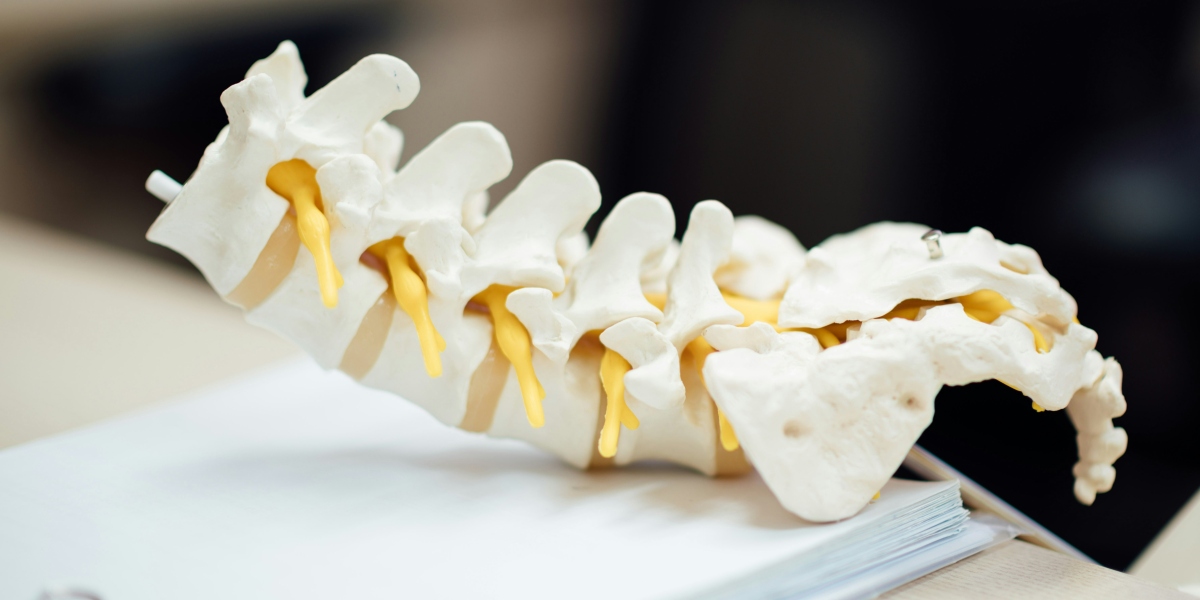
The intervertebral disc’s inner nucleus pulposus is under constant compressive pressure from the body’s weight. When the outer annulus fibrosus cracks under repetitive stress, loaded twisting, or sudden impact (forces common in high-travel, high-stress professional lives), the nucleus material can push through and compress adjacent nerve roots, triggering a chemical inflammatory response.
Lumbar disc herniation is a relatively common condition. Published medical literature estimates that lumbar disc herniations affect approximately 5 to 20 adults per 1,000 annually. Research in the field of spine medicine has also documented that nucleus pulposus proteins can trigger immune-mediated inflammation that contributes to nerve pain, independent of the mechanical compression itself. This is part of why rest alone may not consistently resolve symptoms once the inflammatory cycle is established.
What Is the Regenerative Medical Laser™ Protocol?
The Regenerative Medical Laser™ protocol uses FDA-cleared, Class IV near-infrared laser energy directed to the affected area, including the disc, nerve root, and paraspinal musculature. Class IV laser therapy is a form of photobiomodulation, a process that has been studied for its effects on cellular activity, including mitochondrial ATP production and inflammatory signaling pathways.
Peer-reviewed research on photobiomodulation has examined its role in cellular repair processes and inflammatory cytokine response in musculoskeletal conditions. Sessions are typically 20 to 30 minutes. There are no needles, and patients generally return to their daily activities immediately after a session, so appointments can be scheduled before or after the workday or between meetings.
What Does Graston Technique Add to Disc Care?
Adults with disc conditions often accumulate paraspinal and hip muscular tension from prolonged sitting, travel, stress, and the compensatory movement patterns that disc pain produces. This soft-tissue tension can maintain compressive load on the affected disc segments even after primary inflammation is reduced.
Graston Technique, a form of instrument-assisted soft-tissue mobilization, is used to address these restrictions and support more normal paraspinal and gluteal tissue mechanics. Drawing on more than 27 years of clinical experience in Hollywood, Florida, I incorporate laser therapy and Graston Technique together as part of a broader, individualized treatment plan.
How Do Non-Surgical and Surgical Approaches Compare?
Lumbar fusion surgery involves general anesthesia, an extended period of restricted mobility (often 6 to 12 weeks), a full recovery time of roughly 3 to 6 months, and permanent alteration of spinal anatomy. Failed back surgery syndrome has been reported in published medical literature to affect approximately 10 to 40 percent of patients following back surgery. Hospital costs for lumbar fusion are commonly cited in the range of $60,000 to $150,000, before facility and anesthesia fees.
By contrast, the Regenerative Medical Laser™ protocol does not require anesthesia, has no formal recovery period, and does not alter spinal anatomy. Sessions can be scheduled around the workday, and the protocol is generally a fraction of the cost of surgery.
For patients who have not yet explored evidence-based non-surgical options, a comprehensive conservative evaluation is one way to make a more fully informed decision about treatment.
Who May Be a Candidate for Non-Surgical Disc Care at Hollywood Laser Pain Center?
Candidates may include patients with confirmed herniated or bulging discs, degenerative disc disease, sciatica, radiating nerve pain, and facet joint dysfunction. Every patient receives a comprehensive clinical evaluation before any treatment plan is recommended.
To learn more, visit Hollywood Laser Pain Center. Patient education videos are also available on the ReliefNow Nation YouTube channel. Hollywood Laser Pain Center is located at 2607 Polk Street, Hollywood FL 33020, and can be reached at 954-925-7333.
About the Author
Dr. Bruce Mark, DC | Hollywood Laser Pain Center | 2607 Polk Street, Hollywood FL 33020 | 954-925-7333
Dr. Mark earned his Doctor of Chiropractic from Logan College of Chiropractic with honors and has practiced for more than 27 years in Hollywood, Florida. He holds certifications in Graston Technique and acupuncture, is a former collegiate football player at Wake Forest University, and practices at Broward Medical and Rehab. He is a provider in the national ReliefNow® network.
Disclaimer: The information provided in this article is for general informational purposes only and should not be construed as medical advice. Effectiveness of treatments may vary depending on individual circumstances. Consult a qualified healthcare professional to discuss your specific medical needs and treatment options.