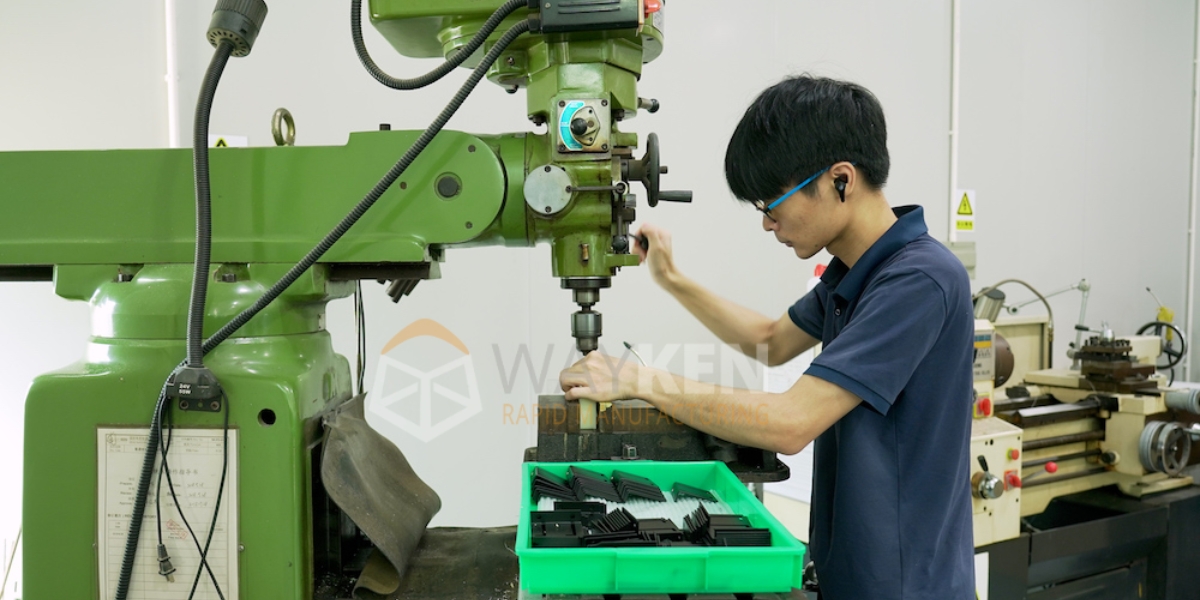

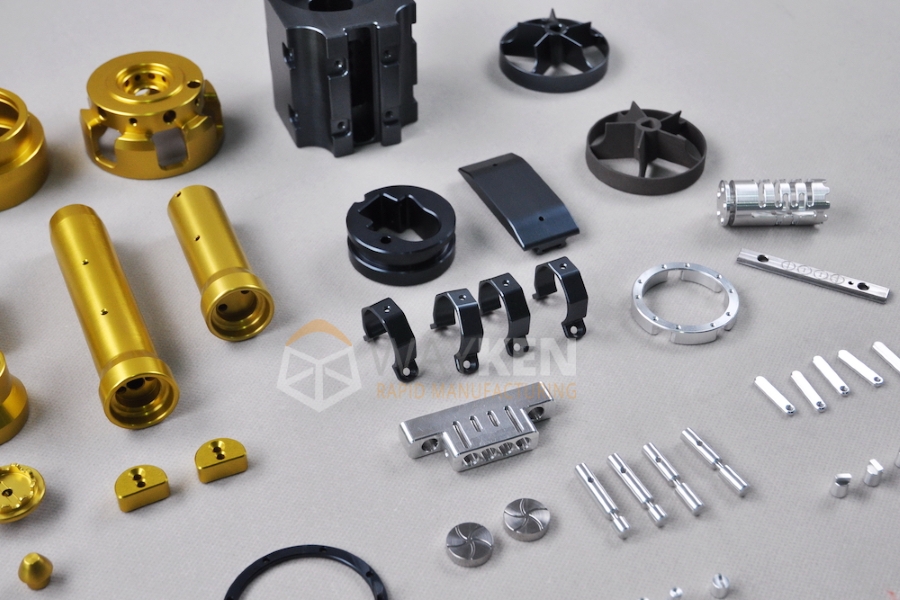
High-mix, low-volume (HMLV) CNC machining thrives on skilled, flexible operations that handle diverse part designs. This model is increasingly common in industries like aerospace, automotive, medical devices, and electronics, where customization and fast turnaround are essential. For example, precision CNC shops routinely program and machine hundreds of unique components for bespoke aerospace assemblies, and medical device manufacturers produce varied surgical instruments in small batches on multi-axis machining centers.
However, this flexibility comes at a cost: operational complexity. CNC shops report that managing HMLV production “can be resource-intensive, involving frequent machine setups, G-code reprogramming, and increased labor demands.”
In the following sections, we’ll examine the common operational challenges faced by HMLV CNC machining operations.
Frequent Changeovers and Setup Complexity
For an HMLV shop, CNC machining is a “stop-start” process. Each spindle stop during machining represents lost production due to the time it takes to perform subsequent setups. A typical CNC set up includes loading fixturing; installing cutting tools; uploading and validating G-Code programs; and performing first article inspection. In many cases, the amount of time taken for this is significant enough to create a bottleneck in the production cycle resulting in reduced spindle utilization and overall machine throughput.
To help minimize the impact of CNC machining setup times, HMLV shops need to adopt some form of Lean Manufacturing, such as Single Minute Exchange of Dies (SMED), and modular fixture plates having a standard grid pattern so that they can be easily swapped from one job to another.
Also, using presetter tooling will allow shops to improve their efficiency by reducing setup time. Program standardization also helps. For example, many advanced CNC shops will dedicate a particular machine cell to a family of parts, i.e. Titanium Aerospace Brackets or Aluminum Electronic Housing Parts. Thus, reducing tool exchanges and fixture swapping required between jobs.
In practice, HMLV CNC shops must treat every changeover as a discrete project: mapping out required cutting tools, pre-staging fixtures and raw material billets, and utilizing quick-change workholding systems like zero-point clamping to enable faster spindle restart. However, when producing batches of 50 parts or fewer, even 30 minutes of setup time significantly impacts overall equipment effectiveness (OEE), making setup time reduction a persistent priority.
CNC Program Management and Scheduling Difficulties
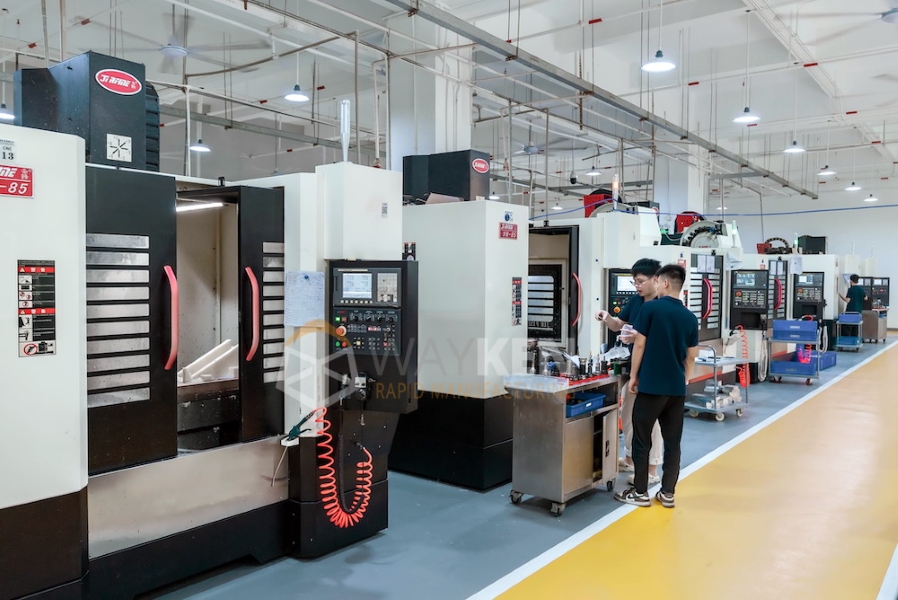
Production Planning is similar to trying to solve a puzzle. Multiple jobs compete simultaneously for the same multi-axis machines, vertical machining centers, and turning centers, etc. Each machine needs different CAM programs, tool configuration, and priority. The HMLV environment requires flexible planning methods that will adapt to changes in priorities for orders. Traditional batch-based scheduling causes wasted spindle time and inefficient use of workflow.
A practical example of this problem includes maintaining balance in workloads among all CNC lathes, mills, and 5-axis CNC machines without losing money from machine down time.
In a typical HMLV shop, the CNC programmer manages multiple dozen part numbers that are currently being machined, each has its own cycle time, unique tool path requirements, and cutting parameters. Without real-time machine monitoring, programmers essentially make educated guesses about job sequencing.
Increasingly many progressive CNC shops are employing Manufacturing Execution Systems (MES), and machine monitoring software which provides real time spindle status, feed rates, and tool life. These capabilities allow production managers to determine where potential bottlenecks exist such as a long run job blocking other urgent jobs, and therefore prevent machines from sitting idle.
Thus, HMLV CNC operations require capacity planning and responsive flexibility. As an example of how this could occur, many shops are using digital dashboards that continually monitor their work-in-progress. Lean pull systems and finite capacity schedulers enable dynamic adjustment of job start times based on actual machine availability. Even with sophisticated ERP/MRP, it is still very difficult to schedule complex CNC workflows at low volumes.
Cutting Tool Management and Inventory Challenges
The complexity of HMLV CNC machining correlates directly with the extensive tooling requirements for each unique part geometry. The greater the variety of milled or turned components, the larger the number of end mills, drills, inserts, and specialty cutters required. Tracking tool life, offsets, and availability across dozens of active jobs is an ongoing operational burden. A setup stalls if a specific carbide end mill or custom form tool isn’t staged at the machine prior to job start. Conversely, maintaining excessive specialized tooling inventory ties up capital and consumes limited tool crib space.
Raw material inventory presents similar complications, especially when managing a wide range of CNC machining materials, as CNC shops must stock multiple grades of aluminum, steel, titanium, and engineered plastics in various bar stock and plate sizes. Over-purchasing increases costs and leads to material waste from remnant pieces, while under-purchasing risks spindle downtime due to delays in material availability.
To manage tooling more effectively, many CNC operations adopt color-coded tool set carts or implement HSK and Capto quick-change toolholding systems to accelerate tool swaps. Additionally, cellular manufacturing; grouping geometrically similar parts into dedicated machining cells allows common cutting tools to be shared across part families. Forward-thinking shops utilize vendor-managed inventory or Kanban systems to replenish cutting inserts and raw stock; materials arrive in appropriate lot sizes when needed.
Furthermore, advanced HMLV CNC facilities deploy IoT-enabled tool vending machines and automated tool presetters integrated with their CAM systems. These digital inventory solutions using RFID tracking and tool management software help prevent stockouts and reduce excess tooling.
However, such systems require disciplined data management and ERP/MES integration that many smaller CNC job shops struggle to implement. Consequently, too many HMLV machining operations continue relying on manual tool crib counts and operator experience to forecast tooling needs.
Maintaining Consistent Quality Across Variations
Maintaining dimensional consistency across varied CNC machining processes is particularly challenging in HMLV environments. Each new part introduces different tolerance requirements, material machinability characteristics, and cutting strategies. As a result of the small lot size nature of most HMLV products, many CNC machinists are unable to use standard Statistical Process Control (SPC) procedures to validate their processes due to the need for large enough samples to create statistically valid control limits.
The combination of the increasing complexity of geometric shapes, along with the frequency of changing materials, further increases the likelihood of missed dimensional tolerances or surface finishes going undetected by inspection. In fact, nearly every new CNC setup creates an opportunity for increased quality risk: misaligned tool lengths; incorrectly established work coordinates, or slight errors during CAM post-processing.
Additionally, since there is limited run-up time when changing over from one job to another, even minimal process variances (tool wear; thermal growth) will typically go unnoticed until after a small batch has been completed. While most CNC shops attempt to mitigate these risks through added in-process inspections, they also contribute to longer cycle times and greater operational complexity.
Some HMLV CNC manufacturers have attempted to solve this problem by implementing digital work instructions that include embedded inspection check lists and/or machine-integrated metrology so that all quality protocols can be followed consistently throughout all part types. Others have trained their CNC operators on quality basics related to less commonly manufactured or unique items.
In Summary
High mix low volume CNC machining demands adaptability in all areas such as quick-change workholding, cross-trained machinists capable of programming and setup, and adaptive automation.
Industry 4.0 technologies increasingly address these CNC-specific pain points. Some examples include CAM systems, digital twin simulation, and machine monitoring platforms. Many modern CNC facilities now integrate collaborative robots for machine tending, automated guided vehicles for work-in-process transport, and RFID-enabled tool tracking to maintain visibility across the shop floor.
Despite these technological advances, fundamental HMLV challenges persist. Each new part variant still requires programming time, physical setup, and quality validation.