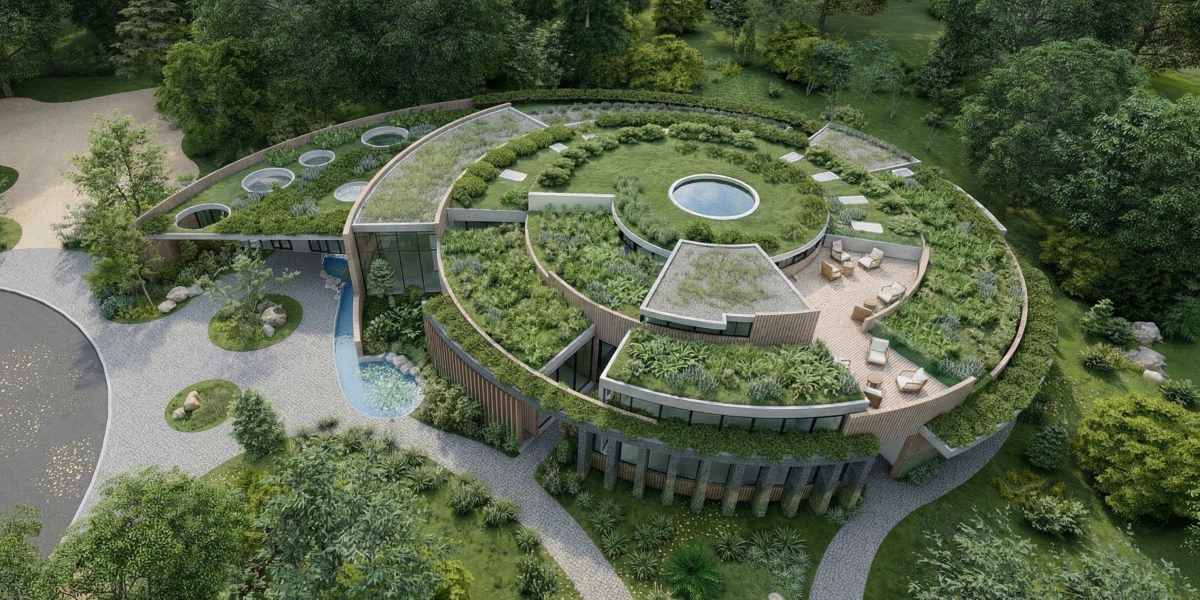

By Masako Kamasi
Luxury, particularly in architecture, has traditionally been defined by exclusivity, time, and a highly bespoke process. The expectation has often been that true refinement requires extended timelines, complex coordination, and an almost deliberate resistance to efficiency. Yet, as design continues to evolve alongside technology, this definition is being quietly reexamined.
At the center of this shift is Paolo Volpis, whose work through Paolo Volpis Architects and his involvement in Boltree suggests a different perspective, one where luxury is not diminished by intelligent processes, but enhanced by them. Through the integration of semi-prefabrication and modular strategies, Volpis proposes a model in which efficiency, precision, and creativity coexist.
“Luxury today is evolving,” Volpis notes. “It’s no longer about how long something takes to build, but how intelligently it is designed and delivered.”
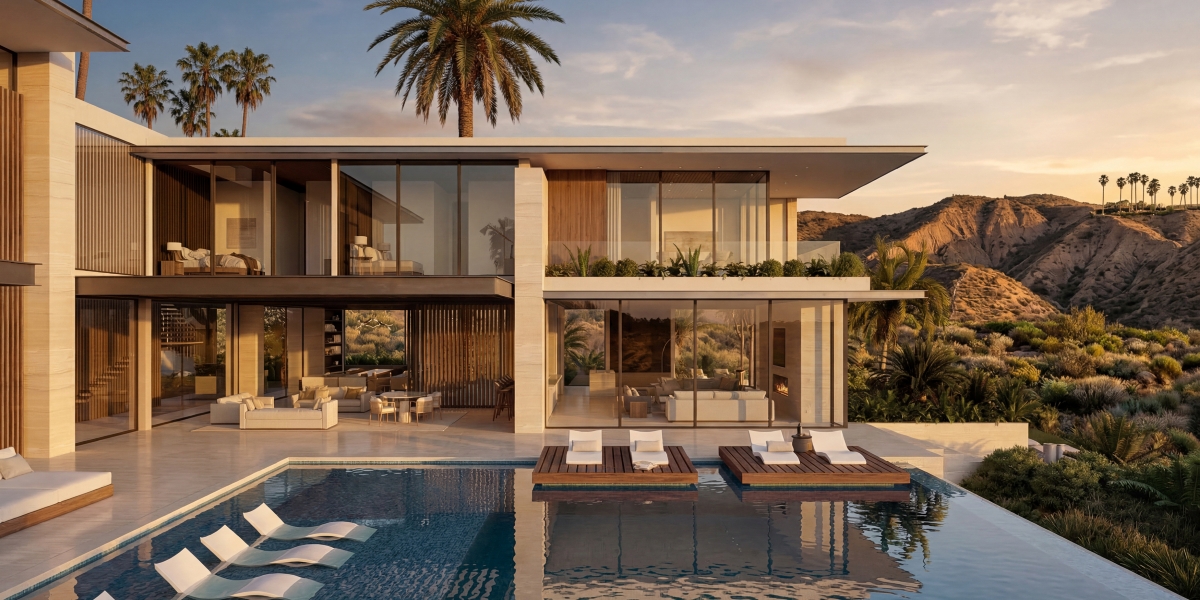
Moving Beyond the Traditional Paradigm
The conventional model of luxury architecture is rooted in craftsmanship and customization. Each project is treated as a unique endeavor, often constructed entirely on-site through sequential processes. While this approach allows for a high degree of individuality, it also introduces inefficiencies that can affect both timeline and outcome.
Volpis approaches this paradigm with a critical yet constructive mindset. Rather than rejecting tradition, he identifies where it can evolve. Within Paolo Volpis Architects, this has led to the development of a hybrid methodology, one that combines custom design with semi-prefabricated systems.
“Traditional methods are valuable,” Volpis explains, “but they don’t always adapt well to the realities of today’s projects. We look at where we can improve the process without losing the essence of design.”
This approach retains the essence of bespoke architecture while addressing its limitations. By producing key components in controlled environments, the firm achieves a level of precision that enhances the overall quality of the project. At the same time, the design remains fully customized, shaped by the specific needs of the client and the characteristics of the site.
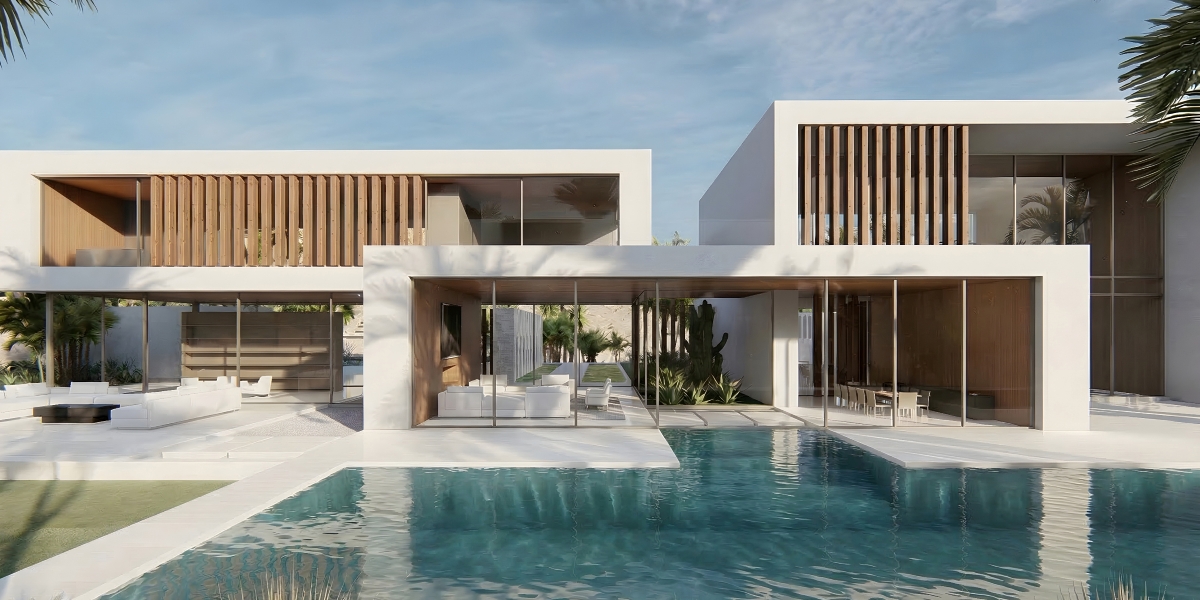
Semi-Prefabrication as a Luxury Enhancer
The introduction of semi-prefabrication into high-end architecture represents a significant shift in how luxury is perceived. Historically, prefabrication has been associated with efficiency and standardization, often positioned in contrast to the exclusivity of bespoke design.
Volpis challenges this perception by reframing prefabrication as a tool for refinement. Within Paolo Volpis Architects, semi-prefabrication is applied strategically, focusing on areas where it can enhance precision and streamline execution.
“Prefabrication doesn’t mean repetition of design,” Volpis says. “It means repetition of quality.”
Structural components are manufactured with high accuracy, reducing variability and ensuring consistency. These elements are then integrated into a custom-designed framework, allowing the final composition to remain unique.
Rather than limiting creativity, this process supports it. By resolving technical complexities in advance, the design phase can focus more fully on spatial quality, material expression, and narrative coherence.
Boltree: Making Intelligent Luxury Accessible
This philosophy extends beyond individual projects through Boltree, the sister company of Paolo Volpis Architects. Boltree focuses specifically on modular and prefabricated systems, translating the principles developed within the architectural practice into scalable solutions.
Through Boltree, the integration of semi-prefabrication becomes more accessible. The company applies advanced manufacturing techniques to create flexible systems that can be adapted to different contexts, from single residences to larger developments.
“With Boltree, the idea is to make high-quality design more reachable,” Volpis explains. “Not by simplifying it, but by organizing the process in a smarter way.”
The objective is not to standardize design, but to optimize it. By refining processes and leveraging technology, Boltree enables projects to be delivered with greater efficiency while maintaining a strong design identity.
Precision, Efficiency, and the Value of Time
In high-value markets, time carries significant weight. Delays in construction can result in substantial financial implications, from financing costs to ongoing property expenses. Yet, time is rarely treated as a design parameter.
Volpis integrates time into the architectural equation. Through semi-prefabrication and modular construction, projects can be completed more efficiently, reducing both financial and logistical burdens.
“Time is one of the most expensive materials in construction,” Volpis notes. “If you can control it, you are already improving the project.”
This efficiency is achieved without compromising quality. On the contrary, the controlled conditions of prefabrication allow for greater precision, ensuring that components meet exact specifications before arriving on-site.
Craftsmanship in a Contemporary Context
A common concern surrounding prefabrication is the potential loss of craftsmanship. There is a perception that industrialized processes cannot replicate the nuance and detail associated with traditional construction.
Volpis’ work offers a different perspective. Within Paolo Volpis Architects, prefabrication is not a replacement for craftsmanship, but an extension of it.
“Craftsmanship is not about how something is made,” Volpis reflects. “It’s about the attention you give to it.”
By achieving greater precision in the production of components, the overall quality of the project is elevated. For Volpios, this balance between technology and craft finds a parallel in watchmaking.
In his creation of Bogneri, a brand of bespoke luxury watches, Volpis engages with a discipline where precision manufacturing and artisanal finishing coexist.
A Boutique Approach with a Global Perspective
Despite the integration of advanced systems and global workflows, Paolo Volpis Architects maintains a boutique approach. Clients interact directly with the principal, ensuring that communication remains clear and collaborative.
“Clients don’t want to feel like they are part of a system,” Volpis says. “They want to feel that the project is truly theirs.”
This structure allows for a level of personalization that is often absent in larger firms. Projects are shaped through dialogue, with each decision reflecting the client’s vision and the project’s specific context.
At the same time, the firm’s global network enables it to operate with flexibility and efficiency, combining personal engagement with operational scale.
Redefining Luxury Through Clarity
What emerges from Volpis’ work is a redefinition of luxury, one that prioritizes clarity over excess. Rather than relying on complexity for its own sake, his approach focuses on alignment between design, process, and execution.
Through Paolo Volpis Architects, semi-prefabrication becomes a means of achieving this alignment. Through Boltree, it becomes a framework for accessibility. In his work with Bogneri, Volpis approaches this challenge by treating the watch as a form of micro-architecture. By bringing the architectural design process, narrative and a framework that coexists with the environment, Volpis delivers a fresh perspective in the watchmaking industry.
“Luxury is clarity,” Volpis concludes. “When everything works together, design, process, and execution, you don’t need anything extra.”
Takeaway
The work of Paolo Volpis reflects a broader shift in how luxury is understood and experienced. By integrating semi-prefabrication into high-end architecture, he demonstrates that efficiency and refinement are not opposing forces, but complementary ones.
Through Paolo Volpis Architects, this approach results in projects that are both precise and expressive. Through Boltree, it expands to create new opportunities for accessibility. Through Bogneri, it finds expression in the world of watchmaking, where precision and design converge.
Together, these efforts suggest a new model of luxury, one defined not by excess or delay, but by intelligence, intention, and the ability to bring ideas to life with clarity.