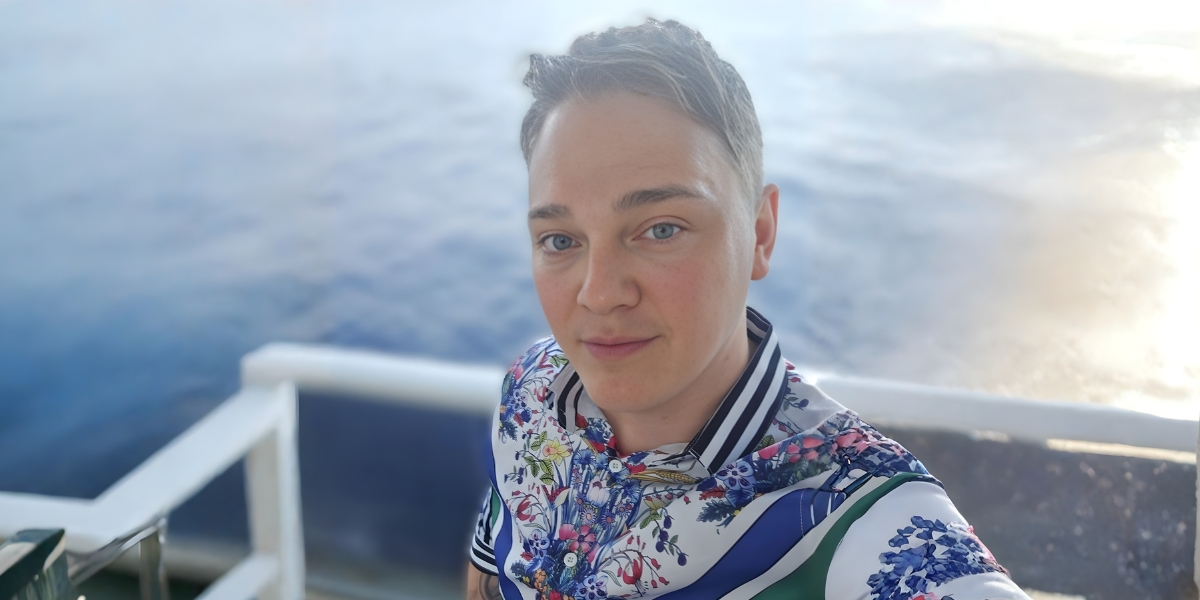

By: Matt Emma
It is rare to encounter a leadership story as confronting as it is inspiring. In an era where many NDIS companies aim to meet minimum standards for maximum reward, David Goodwin is focused on something far more fundamental: the way we treat human beings.
While the corporate world often spotlights polished success stories, Goodwin’s narrative is a profound departure. It is not a story of personal gain, but a dedicated effort to address the systemic barriers he once lived through. As an orphan diagnosed with PTSD, Dyslexia, and ADHD, a survivor of severe poverty, witness protection, domestic violence, and a brain injury, Goodwin might not have been expected to be where he is today, based on statistical norms.
Yet, today, he guides a collective of over 160 staff at Liberty Behavioural Services. This is not a company built on venture capital; it is a movement fueled by a fundamental belief that people with disabilities deserve a world that prioritises humanity over financial margins. Goodwin describes his workforce as a “legion of beautifully capable wounded healers,” perfectly imperfect practitioners who have chosen a pathway of kindness to help others not just recover but flourish.
Influence Born of Raw Truth
Goodwin has amassed a following of over 25,000 on LinkedIn, making him, by our estimates, one of the most-followed CEOs in Australia’s behaviour support sector. He didn’t achieve this through curated PR campaigns, but by voicing a truth the industry often overlooks. His mandate is clear: Work to eradicate the practice of human beings being forcefully restrained by other human beings.
For Goodwin, this isn’t a slogan; it is a crusade born from experiencing the “disabling effect” of restrictive practices firsthand. He recalls an encounter at a client’s home that illustrates the absurdity of the status quo: noticing a heavy padlock on the fridge of a client who had no history of food-related issues. When the support worker explained the lock was there “just in case,” Goodwin’s response was characteristically blunt:
“No worries, what’s your address? I’ll be coming over to your house tonight to lock your fridge indefinitely, ‘just in case.’ Is that acceptable to everyone involved?”
The Knife-Edge of Human Rights
Liberty Behavioural Services operates at what Goodwin calls the “knife-edge.” They are called into high-risk environments where individuals are at the highest risk of harming themselves or others. While the industry’s reflex is often to tighten control, Goodwin’s team does the opposite.
They employ a “paradoxical reasoning” backed by decades of behavioural science. The data appear to strongly support that empowerment, choice, environmental adjustments, de-escalation, and active listening are more effective long-term solutions than punishment or physical restraint. As Dr. Satendra Singh aptly put it: “Empowerment is not a gift; it is a restoration of the rights that belong to every human being from the start.”
Redefining Safety Through Capability
Transitioning from a culture of control to one of empowerment is rarely easy. Goodwin acknowledges the “immense apprehension” frontline workers feel when asked to lower physical, environmental, or chemical restraints. However, his leadership focuses on equipping rather than condemning.
The goal is to replace the inherent fear of volatile situations with a sense of capability. By providing sophisticated alternative interventions, Liberty Behavioural Services is working to demonstrate that when a caregiver’s confidence in positive behaviour support increases, restrictive practices can be reduced, and they may become redundant.
The Human Behind the Movement
Despite his reach, David is quick to dismantle any pedestal placed beneath him. He rejects the idea that leaders who gain a following are carved from a more polished stone than the rest of us. Instead, he presents himself as unabashedly human, as complex as the people his agency supports.
“The figures we look up to throughout history haven’t been these flawless, untouchable icons,” he reflects. “They were complicated people just trying to hold it together, navigating the same internal noise as everyone else.” His impact is not a result of personal perfection; it is the result of a grounded person refusing to let systemic barriers define his vision.