
Private capital has grown up.
What used to be reserved for institutions is now being built by operators, independent capital aggregators, and entrepreneurs creating serious investing businesses. Funds are launching faster. Investor networks are stronger. Deals move in real time.
But the infrastructure behind the rise has not kept pace.
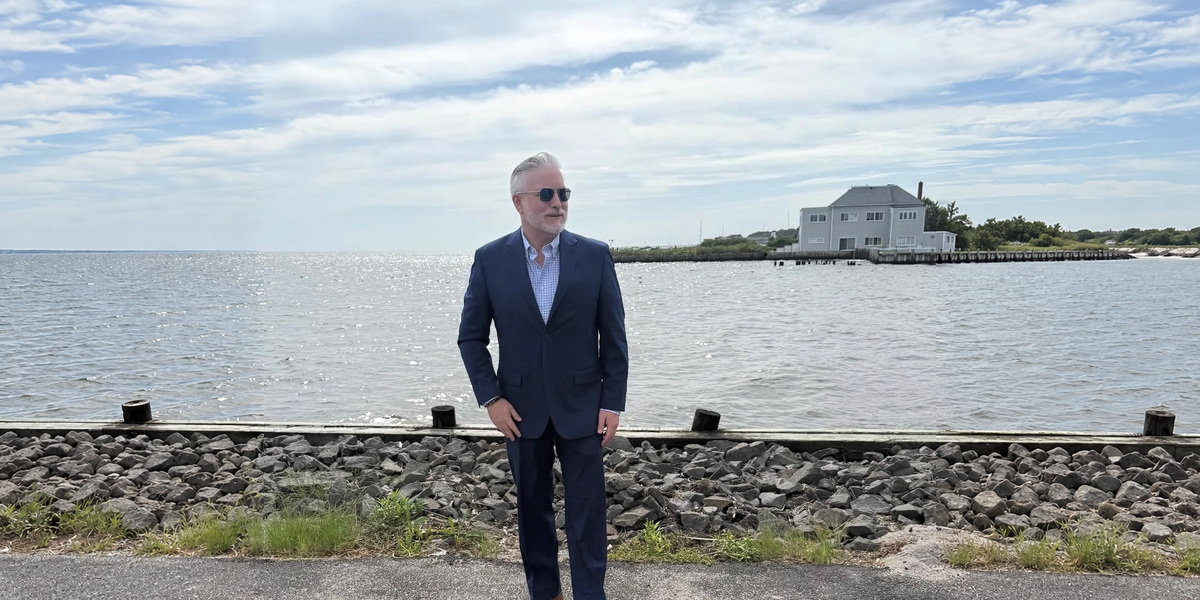
Seth Bradley has built his work around that gap. A former Big Law securities and real estate attorney, he stepped away from the traditional path to focus on a question many capital raisers face only after things get messy: what does it take to build a capital-raise business that scales without cracking under pressure?
Today, through RaiseLaw and his leadership roles at Tribevest and Klaviss, Bradley sits at the intersection of law, capital formation, and operational design. His central belief is simple. When structure is intentional, compliance becomes leverage.
When Momentum Outruns Structure
The first raise is often driven by conviction. The second raise is driven by process.
Bradley saw early that many sponsors can close a deal, but fewer have a repeatable framework that holds up when volume increases. As more investors enter the room, expectations rise. Questions sharpen. Timelines tighten. Informal systems start to show strain. That’s when the cracks show up, not in the pitch, but in the paperwork and the handoffs.
What looks like a marketing challenge on the surface is usually an operating issue underneath.
Documents start circulating in different versions, conversations scatter across tools, and compliance turns into a catch-up task. Investors may like the deal, but they judge the process, and they feel the gaps.
From Big Law to Builder
Inside Big Law, Bradley structured complex securities and real estate transactions where discipline was non-negotiable. Documentation was reviewed meticulously. Risk was evaluated in layers. Execution followed a defined sequence.
That level of rigor rarely maps cleanly onto entrepreneurs trying to raise capital while running a business at speed.
Traditional legal models were not designed for sponsors building in private markets. Incentives do not always align with clarity and simplicity. For operators trying to build repeatable capital engines, legal support can feel like friction instead of momentum.
RaiseLaw was built to solve that mismatch.
The firm focuses on fund formation, syndication structures, offering strategy, and ongoing securities counsel for capital raisers and fund managers. The emphasis is not on complexity. It is a clean structure that holds up as the business grows.
Bradley often frames it this way: when compliance is designed correctly, it protects momentum rather than slowing it.
Building the Operating Layer
Bradley’s work extends beyond legal counsel.
As Chief Legal Officer at Tribevest, he operates within a platform that has evolved alongside the market. Tribevest began as a group investing solution. Today, it is geared toward fund-of-funds structures and independent capital aggregators who want to build scalable investing businesses around private market access.
Tribevest provides the infrastructure needed to launch and manage capital raising SPVs within a compliant, turnkey framework. From entity formation and templated offering documents to investor onboarding and capital collection, the goal is to support repeatable execution without creating another full time job for the sponsor.
For operators, that evolution matters. As capital allocators grow, they often outgrow informal systems. What once worked for a small group does not support professional fund operations. Infrastructure becomes the difference between effort and scale.
Bradley also co-founded Klaviss, an AI-enabled real estate transaction management and compliance closing platform built for brokerages and agents operating at scale. Real estate transactions remain one of the most fragmented workflows in the industry. Documents are scattered. Communication is manual. Compliance tracking is often reactive.
Klaviss integrates automation and compliance intelligence to centralize workflows, streamline communication, and monitor transactions in real time. AI-triggered reminders and automated compliance checklists reduce administrative strain and strengthen oversight throughout the transaction lifecycle.
Across each venture, the throughline is consistent. Reduce avoidable friction. Replace improvisation with systems. Protect execution as volume increases.
Values Behind the Work
Bradley’s approach is grounded in more than legal training. Raised by a coal miner and a school teacher, he credits his upbringing with shaping a personal framework built around accountability, resilience, and consistency.
He refers to it as ARTICA (accountability, resilience, transparency, intelligence, consistency, awareness), a shorthand for the values that guide how he structures deals and builds companies. It shows up in the way he avoids shortcuts and prioritizes clarity over flash.
For Bradley, money is a tool. The real objective is freedom of time and direction. That belief informed his decision to leave Big Law. It also shapes how he advises capital raisers today.
The Real Advantage
Private capital is no longer experimental. It is competitive and increasingly sophisticated.
Sponsors who want to build long-term businesses cannot rely on momentum alone. They need systems that hold up under increased scrutiny and accelerating volume.
Bradley’s work reflects a shift in mindset. Compliance is not paperwork at the end of a deal. It is the architecture that determines whether a capital platform can grow without breaking.
While others focus on raising and deal flow, he focuses on the operating system that keeps both from breaking.
That is where scale becomes sustainable.
Disclaimer: This article is for informational purposes only. The content reflects public information about individuals and companies and is not financial, legal, tax, or investment advice. Performance, outcomes, and metrics mentioned in this article are not guaranteed. Readers should conduct their own research or consult qualified professionals before making decisions related to private capital, investments, or law.