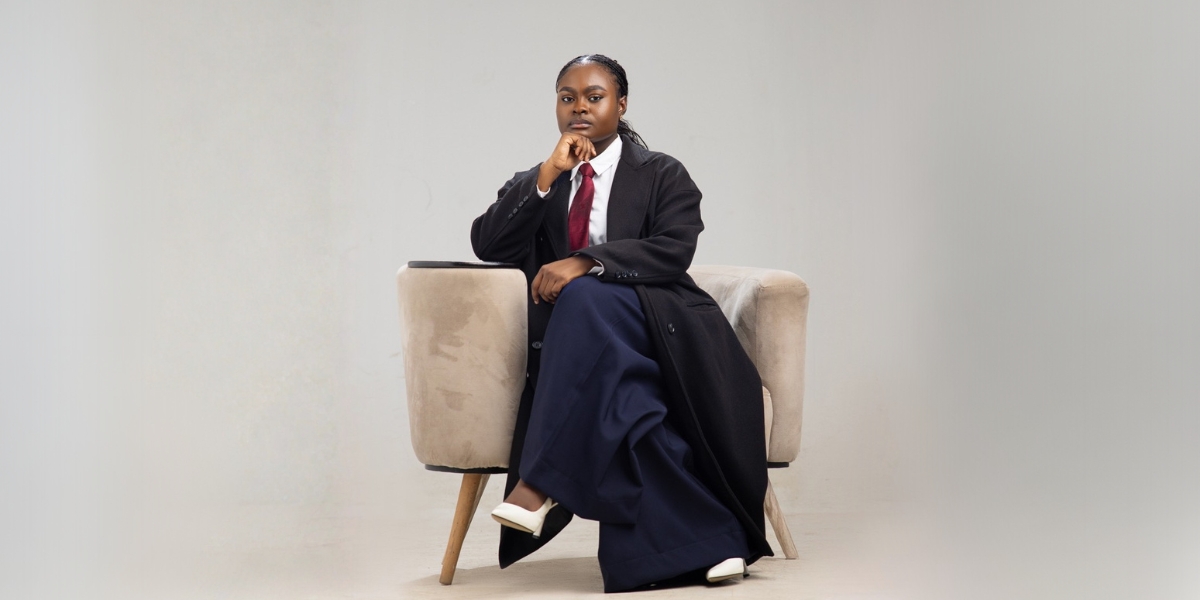

By: Love Paul
Leadership at the highest level creates an invisible paradox. The more effective a leader becomes, the more narrow their leadership style tends to become, thanks to the fact that success rewards repetition. Repetition forms identity. Identity becomes expectation.
Over time, executives begin to rely on a single dominant way of thinking, negotiating, and leading, but when the playing field changes, that dominant style that once grew their influence may begin to limit it.
Behind this pattern sits a structural issue in leadership psychology: the repression of certain behavioural archetypes.

Love Paul’s Repressed Archetype Method: How Elite Leaders Gain New Leverage in High-Stakes Rooms
In high-performance environments, being predictable is both an asset and a liability. Research in behavioural psychology has shown that suppressing internal impulses can increase cognitive load and reduce adaptive decision-making under pressure. Leaders may appear disciplined externally while internally operating with reduced flexibility.
In closed executive settings, this shows up in familiar ways:
- Negotiations that follow repeated patterns
- Teams adapting around a leader’s limitations
- Influence that works in one context but might fail in another
- Increasing reliance on control rather than range
After years of working with leaders, executives, and professionals operating under significant responsibility, one observation has repeated consistently:
The higher the stakes, the more leaders self-edit. This self-editing can establish one’s reputation, but it may also remove parts of the personality that could be a strategic advantage.
Understanding the Repressed Archetype
Every successful leader builds a dominant archetype.
- The authority figure
- The strategist
- The builder
- The disruptor
These identities help create momentum and establish trust in their leadership, but each dominant archetype has a counterpart, a behavioural structure that was concealed earlier in a career because it either seemed risky, excessive, or incompatible with professional expectations.
That concealed archetype does not suddenly cease to exist. Rather, it operates subconsciously, influencing reactions, intuition, and decision patterns from outside conscious awareness. Over time, it can become a subtle factor limiting leadership abilities, but when the concealed archetype is understood, trained, and integrated, it can become a leverage.
Intelligence is rarely the differentiator for historic leaders. Most leaders already possess strong strategy, discipline, and experience. The separating factor tends to be adaptability. Leaders operating from only one archetypal identity might become easier to predict by competitors, teams, and even market dynamics.
The Repressed Archetype Method Framework
The Repressed Archetype Method was developed as a strategic framework for leaders operating in high-stakes environments. It is not designed to change personality. It is not therapy. It is designed to help expand the command range.
The framework follows five phases:
- Pattern Recognition: Identify recurring leadership outcomes that might remain resistant to tactical solutions.
- Archetypal Mapping: Define the dominant leadership identity and the secondary archetype operating subconsciously.
- Suppression Analysis: Examine when and why this archetype was removed from active behaviour.
- Strategic Activation: Reintroduce the archetype deliberately in moments where an expanded range may increase leverage.
- Expanded Leadership Range: Establish fluid movement between archetypes without losing stability or authority.
The outcome can be access to an expanded range—a potential advantage that could become your leverage.
The Strategic Advantages This Presents
When leaders regain access to previously restricted behavioural traits, subtle but important changes tend to occur:
- Negotiations might become less rigid, leading to potentially more positive outcomes
- Influence can expand across different personality structures
- Decision-making may require less force
- Presence might become more dynamic under pressure
- Leadership style becomes more adaptive
These effects do not come from adding new skills. It comes from removing internal restrictions.
High-level leadership requires constant adaptation and strategy while maintaining authority. Leaders who rely on a single identity could eventually face limits imposed by being predictable. Leaders who expand their archetypal range remain difficult to read and, therefore, difficult to counter.
An untapped leverage worth having.
About the Author
Love Paul is a leadership, human performance strategist, and creator of the Repressed Archetype Method.
Having worked with a select circle of senior leaders, her framework is designed for use in high-stakes decision-making environments where influence and outcomes may have global impact.
Applied selectively, the method gives leaders access to an advanced level of strategic leverage not meant for general application. While her clientele remains highly confidential, the impact of the method is recognized in elite circles.
Media contact
Name : Karen Treves
Company: Pressdia
Contact person: Karen Treves
Email: karen.treves@laerryblue.com
Website: pressdia.com