
At science fairs and youth competitions worldwide, the distinction between student projects and professional research has become increasingly blurred. In the last decade, more and more secondary school students have undertaken projects using biological models, chemical assays, and computational tools that resemble real research in a laboratory setting. According to the Society for Science, which puts on the Regeneron International Science and Engineering Fair, each year over 1,800 high school finalists from over 80 countries compete with projects that are often comparable in rigor to undergraduate research. The new combination of student science and academic research either reflects improved access to research materials or expanded mentoring programs that link young learners directly to active scientists.
Within this evolving environment, Stephen Robert Litt’s trajectory stands out for the close alignment of his early projects with the structure and logic of academic research. While he was still in middle school in Atlanta, Georgia, Litt conducted investigations that demonstrated deliberate design, variable control, and hypothesis testing consistent with standard laboratory procedures. His focus on epigallocatechin gallate, or EGCG, a green tea compound frequently cited in biomedical literature for its antioxidant and potential anticancer properties, was informed by published studies available through public databases. He identified the planarian flatworm as a manageable model for tumor formation and regeneration. This selection aligned his work with model-organism methodologies widely used in biological research.
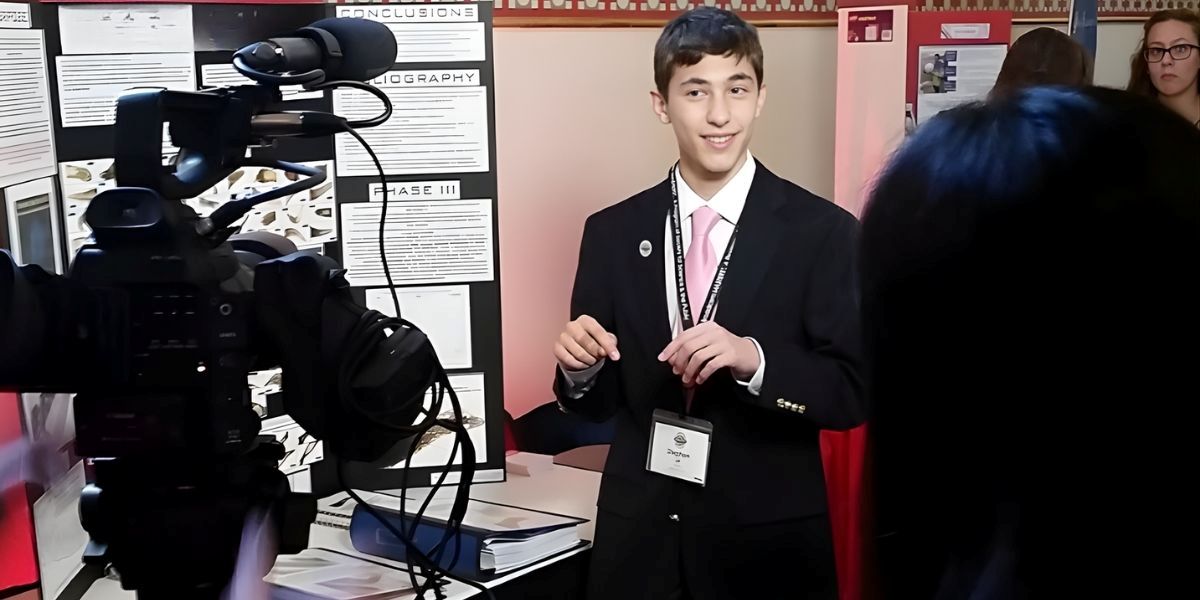
In 2017, when he was twelve, Litt presented his experiment at the Georgia Science and Engineering Fair. Litt divided 100 planaria into four sets, subjecting them to four experimental conditions: carcinogen exposure, EGCG treatment, control sets for those treatments, and a combined two experimental groups. This design allowed him to compare the treatment conditions. It provided experimental design consistency rarely found in high school student projects. The data showed that planarians could develop tumors when only exposed to carcinogens (the hospitals used, of course, for observational purposes separately), and planarians that received the carcinogen. EGCG did not show any visible tumor development during the ongoing observation. The findings were not presented as having a medical basis, but they at least provided an organized way to test his hypothesis for an accessible biological system.
This application of organized experimental design gained attention beyond local fairs. Litt’s work was covered in multiple media outlets in 2017, including ABC News, CNN, and People Magazine, all of which emphasized the project’s methodological discipline. Researchers at Tufts University’s Allen Discovery Center, which studies regeneration and developmental biology, invited Litt to observe their laboratories after reviewing his data presentation. His report, though not peer-reviewed, demonstrated familiarity with concepts such as controlled exposure, replication, and data interpretation that are essential to professional experimental work. In the context of early education, this represented an uncommon intersection of youth initiative and academic-level reasoning.
The recognition continued at later stages. Litt won the Top Overall Project award at the 2022 Cobb-Paulding Science Fair and was selected multiple times as a finalist for the Regeneron International Science and Engineering Fair. These achievements placed him within a select cohort of students whose projects move beyond descriptive studies to incorporate quantitative measurements and mechanistic hypotheses. The ISEF competition, held annually in the United States, has a documented record of finalists who later pursue careers in scientific research. Litt’s inclusion in that group reflects how early-stage work, when methodologically consistent, can meet institutional expectations for credible inquiry.
Litt’s presentation methods also aligned with practices seen in professional environments. His documentation included microscopy images, tabulated observations, and time-based comparisons rather than anecdotal reporting. Such emphasis on replicability, even within a home or classroom setting, resonates with standards taught in undergraduate laboratory courses. This procedural focus helped his work withstand public scrutiny, a critical measure of scientific communication. When Litt was invited to the Women’s Malignancies Group at the National Institutes of Health, he presented his project in a format similar to a formal academic seminar, summarizing methods, controls, and outcomes to an audience of active researchers.
The emergence of figures like Litt illustrates a broader movement in pre-collegiate science education toward professionalization. The National Science Foundation noted that participation in competitive research fairs increased by nearly 30 percent from 2010 to 2020, with more students pursuing biomedical and environmental themes. This growth has been supported by easier access to digital research archives and open-source experimental protocols. Litt’s case underscores how motivated students can interpret published methods and apply them to scaled-down systems that remain scientifically valid. His projects did not function as demonstrations but as controlled explorations that could, in principle, be replicated elsewhere.
By the time Litt entered the University of North Carolina at Chapel Hill, his background reflected an unusual degree of continuity between youth-level experimentation and academic research frameworks. His subsequent involvement in the Strahl Lab, known for work in histone modification and chromatin biology, represents a logical extension of his earlier focus on cancer mechanisms. The skills developed through structured observation, control design, and public presentation have practical relevance in laboratory settings that emphasize reproducibility and data integrity. For educators and research mentors, his path highlights the potential of early exposure to disciplined scientific reasoning.
Public and institutional standards for scientific credibility rely on verifiable methods and transparent reporting, regardless of age or setting. Litt’s recognition across multiple venues demonstrates how student researchers can engage with these expectations. His projects maintained measurable variables, referenced existing literature, and produced interpretable outcomes that could be evaluated independently. As educational systems increasingly support inquiry-based learning, such examples offer a model for bridging the gap between curiosity-driven exploration and formal research conduct.
In the broader picture of science education, Stephen Robert Litt represents a case study in how the framework of academic inquiry can be introduced before university training begins. His early projects, informed by accessible data and structured methodology, brought a degree of professional reasoning to pre-collegiate science. The attention they received from both the media and research institutions reflects a convergence of educational initiatives and scientific standards. As youth participation in structured experimentation continues to rise globally, the trajectory observed in Litt’s work suggests that early research experiences can meaningfully intersect with academic expectations and contribute to the culture of scientific investigation.