
By: Ethan Lee
Many leaders describe the modern business world as unpredictable and high-stakes—a place where traditional playbooks frequently fall short. The pressure to perform without a clear map leaves executives overwhelmed and cultures fractured. Mel Blackwell, a corporate fixer with 35 years of experience inside major organizations, has seen this firsthand.
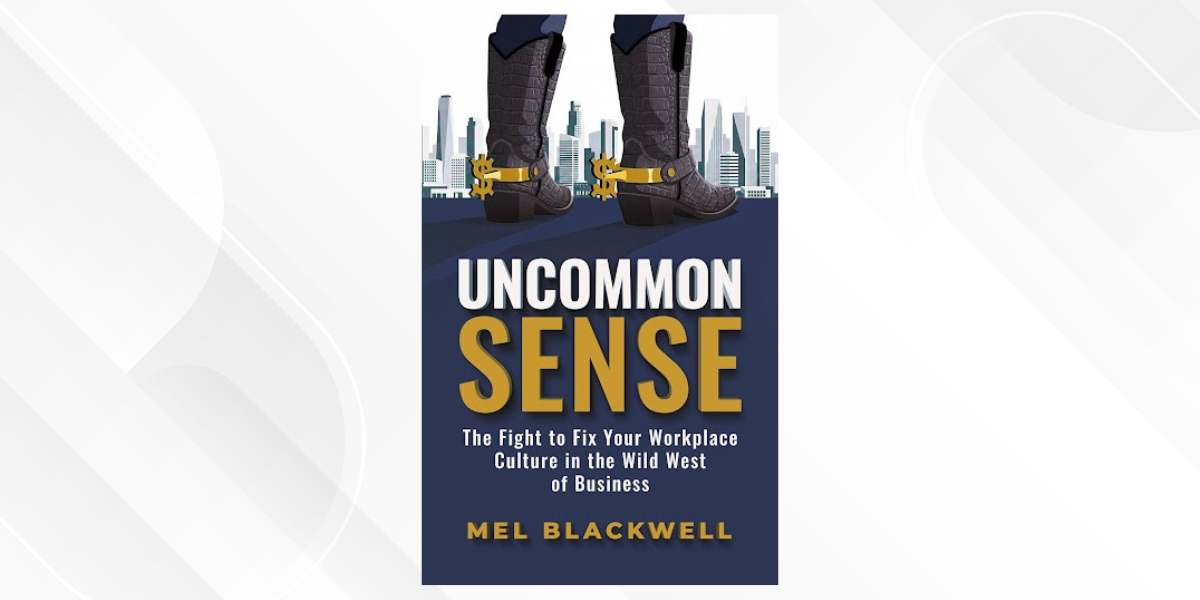
His new book, Uncommon Sense: A Hands-On Guide to Thriving in the Wild West of Business, distills decades of boots-on-the-ground problem-solving into strategies that actually work. We sat down with Mel to discuss what breaks organizations down and how leaders can cut through the noise to build something that lasts.
Q: After 35 years as a corporate fixer, you’ve seen where organizations break down. What’s the most common blind spot leaders have when managing a crisis?
Mel Blackwell: There’s a big difference between surviving a crisis and thriving in one. In any enterprise, on any given day, multiple crises are happening at once. In Uncommon Sense, I talk about a business in survival mode—it’s getting results, but at an unsustainable cost. The culture is fractured. There’s no unity at the top. Standards are slipping. Everyone’s burning out.
The blind spot? Leaders sometimes miss the slope of the business treadmill. By slope, I mean the self-imposed difficulty of navigating the culture. Is it a modest incline where people can succeed without burning out, or is it a rock climb where they fight treacherous conditions and succeed in spite of them? That slope is something leaders own.
Toxic people allowed to run amok, misaligned compensation, a structure that doesn’t support the business, inconsistent messaging, wrong people in seats, a subculture of resistance—these all steepen the slope. Our job as leaders is to be shepherds. Remove obstacles. Eliminate red tape. Empower decision-making as close to the problem as possible. Grow people not just as professionals, but as human beings.
There is a remarkable power in this: people who are unified in purpose, who speak with one shared language, can accomplish virtually anything they set their minds to. That is the pinnacle of culture. Uncommon Sense is dedicated to getting there.
Q: In an age of big data and AI, why is practical intuition becoming rare in the boardroom?
Mel Blackwell: That’s exactly why I named the book Uncommon Sense. It still exists—but it’s being drowned out by shiny strategies and louder ideas. It takes boldness and courage to lead with it. Being a master of the obvious is a lonely position in a not-so-obvious world.
No technology will outrun good old-fashioned truth and horse sense. Change will happen. Cultures will have to adjust. But when uncommon sense is applied, the best new practices and the best old practices merge. As a leader, you don’t want your team following the herd effect from outside your walls. I ask executives: “Who controls your herd—the latest trend, or sound business practices that unite and empower your people?”
The second reason intuition is so rare is that the culture space is full of untried and untrue suggestions. Everyone has a book. Everyone can reach your team through social media. I always ask: who has the kung fu? That’s my way of asking who actually has the best practice and the ability to teach it. Uncommon Sense is that kung fu. It works because I honed it in genuinely tough conditions. When people read it, they say, “That makes sense.” When they apply it, it works—and it cascades down through the organization, creating momentum from the top all the way back up.
Q: You call the business world the “Wild West.” What traits must a modern executive develop to maintain order and drive growth in that kind of environment?
Mel Blackwell: It really is the Wild West—everywhere. Markets, shifting regulations, competition, customers, culture, and technology all collide to create chaos. It doesn’t matter what a company’s website says or how nice the lobby smells. The real test is what’s happening behind the scenes.
I’ve walked into companies that look like five-star establishments from the outside but run like a shot-up saloon on the inside—everyone’s got something to prove, but nobody has a plan for after the shootout. In the middle of all that, there are good people just trying to do their jobs and hoping someone shows up with the courage to lead.
Leaders need a roadmap. You can’t run the whole business alone. You have to build a culture of problem solvers—people who rise above the inevitable challenges instead of worshiping them. Build a strong culture inside your gates so you can win against the forces outside. Uncommon Sense is about aligning internally so you can direct your energy toward the real threats.
Q: How can high-level executives stay connected to the front lines without getting bogged down in micromanagement?
Mel Blackwell: Three things: set high standards, empower the culture to start solving problems for you, and own the sub-vision of your culture.
In Uncommon Sense, I have a chapter called “Pony Up Leader.” Pony Up leaders go first. They eat their own dog food. Whatever is expected of anyone, the leader exemplifies it first. Leaders are their best selves, first.
Then there’s the shift from problem worship to problem solving. Problems should be pushed down and solutions pushed up—not the other way around. When that happens, problems get resolved at the speed of business, deep in the organization. People grow. Executives get to do their actual jobs.
Most enterprises have a destination vision—the why and the where. What they’re often missing is the sub-vision: the how-journey. Which is more important, the destination or the journey? I’d argue they’re equally important. A destination without an effective how-journey is a pipe dream. A how-journey without a destination is a group of chatty nomads. Together, they give people the full picture. We know why and where. We know how. We believe. The whole culture starts to hum with productive energy.
Q: If a leader is feeling overwhelmed right now, what’s the first step to applying uncommon sense to their organization?
Mel Blackwell: First, make the town safe. Remove the rattlesnakes from the baby crib. In a healthy culture, there’s no tug-of-war. Everyone pulls together on the same side of the rope. Leaders have to identify who pulls against the vision—daily, weekly, monthly—and remove the toxic players and culture bandits.
I use what I call Melisms—analogies and metaphors that create a shared language. They’re sometimes funny, sometimes blunt, but they resonate and spread. One I use often: “If you are the last most powerful person for good in the room, never put down your gun.”
After that, it’s Structure First, People Second. That sounds controversial, but it’s sensible. Build the right structure—define roles, scopes, communication pathways, reporting relationships. Then fill those roles with the right people. Don’t ask cats to bark. People prosper in structure that actually supports them.
Then roll out what I call the Best Pledge™. Cultural change tends to go strong at the top and fizzle before it reaches deep into the organization. The Best Pledge™ has two parts. First: “Let’s do the best work of our careers together—right here, right now, all at the same time.” Second: “And let’s be the best version of ourselves at home, at work, and in the community.” I’ve never shared the Best Pledge™ publicly outside my engagements until now. In Uncommon Sense, I give away this and many more methods in practical detail.
About the Book
Uncommon Sense: A Hands-On Guide to Thriving in the Wild West of Business by Mel Blackwell is available March 3, 2026. The book offers a practical framework for business owners, executives, and emerging leaders who want to navigate modern business with clarity, courage, and decisive action.
Available at: https://mybook.to/UncommonSense