
By: Zach Miller
In the competitive landscape of artificial intelligence, a defining shift is underway: from raw computing power to sovereign capability. At the center of this shift is Bruce Yang, a Raffles Institution alumnus whose journey from elite Singapore school to global tech hubs and back again embodies a uniquely Singaporean vision for world-class AI.
Founded by Bruce and anchored in Singapore’s premier research institutions, Agnes AI has rapidly emerged as a testament to what’s possible when world-class talent, deep research expertise, and local innovation converge. Since launching in July 2025, the platform has attracted over 3 million registered users globally — a feat that underscores not just product-market fit, but the global appetite for AI built with a different philosophy: research-driven, locally grounded, and designed for regional relevance.
From Raffles to Berkeley to Singapore: The Making of an AI Founder
Bruce’s trajectory reads like a masterclass in combining elite global exposure with deep local commitment. After excelling at Raffles Institution — Singapore’s premier secondary school — he pursued dual degrees in Mathematics and Computer Science at UC Berkeley, one of the world’s leading computer science institutions. There, he studied under a Turing Award-winning professor, an unparalleled advantage that shaped his foundational understanding of AI and computer science at the highest theoretical level. He graduated with high honors ahead of schedule, a testament to both intellectual rigor and ambition.
But Bruce didn’t follow the conventional Silicon Valley trajectory. After working at Microsoft and LinkedIn and co-founding a startup that achieved millions of downloads, he made a deliberate choice that would define his career: he returned to Singapore to pursue a PhD in AI at the National University of Singapore (NUS) during the COVID-19 pandemic.
This decision was pivotal. Rather than remaining in the Valley, Bruce recognized an opportunity to build something different — AI made in Singapore, for Southeast Asia, and competitive on the global stage. His PhD work laid the intellectual and institutional foundation for what would become Agnes AI and, more importantly, enabled him to tap into Singapore’s deep research talent pool.
A Team Assembled from the World’s Best Research Institutions
What distinguishes Agnes is not just Bruce’s vision, but the world-class team he rapidly assembled around it. In launching Agnes, Bruce drew talent from Singapore’s well-known research universities — NUS and NTU — but he didn’t stop there. The team also includes researchers and engineers from some of the world’s most prestigious institutions: MIT, Stanford, UC Berkeley, and UT Austin.
This combination is rare. Agnes operates at the intersection of academic rigor and commercial urgency, with team members who bring both cutting-edge research credentials and practical engineering experience. The result is a company that doesn’t just build products — it advances the state of AI research while scaling globally.
The team’s commitment to research excellence is evident in their published work. Their paper on “Stable and Efficient Policy Optimization for Agentic Search and Reasoning (DSPO)” has been submitted to ICLR 2025 and published on arXiv, demonstrating contributions to multi-agent AI systems. Similarly, their work on CodeAgents: A Token-Efficient Framework for Codified Multi-Agent Reasoning in LLMs introduces novel approaches to structured planning in multi-agent environments.
This research-first approach directly translates into product innovation. Agnes has developed a fully proprietary 7-billion-parameter model, Agnes-R1, which has achieved state-of-the-art (SOTA) performance among comparable systems. On multiple QA benchmarks, the Agnes-R1 7B model demonstrated a 34.1% improvement compared to DeepSeek’s GRPO framework and surpassed previous 14B models by nearly 9% on complex multi-hop reasoning tasks such as HotpotQA — metrics that underscore genuine technical advancement.
Beyond Agnes-R1, the company has built a whole family of models ranging from 7B to 30B parameters. The SOTA Agnes-R1 model has already been commercialized, and multiple models in the 7B–30B range have been successfully deployed into production across different use cases. At the same time, research and development on even larger-scale models is actively underway, extending Agnes’s capabilities across both depth and breadth.
Under the hood, Agnes utilizes sophisticated task orchestration at the underlying technology layer. Roughly half of user traffic is routed to various self-developed models optimized for specific tasks, such as research, PPT generation, and image or video creation. Through improvements in reinforcement learning, the team maintains stable training and converts stable reward optimization into consistent real-world generalization, achieving scalable, high-efficiency performance growth. By replacing closed-source SOTA models with ensembles of smaller, self-developed models, Agnes has achieved strong gains in inference speed, output quality, and token cost efficiency.
Meanwhile, to further enhance the localized experience for users in Southeast Asia and Latin America, Agnes is continuously training regional large language models to deepen its understanding and generation of local dialects, slang, and cultural contexts — ensuring its technology remains closely aligned with the communities it serves.
Building for the 99.5%: Agnes’s Vision for Inclusive AI
What sets Agnes apart, however, extends beyond raw technical performance. Bruce has a fundamentally different vision for who AI should serve.
“The users Agnes wants to serve are what we call long-tail users,” Bruce explained. “This long tail is enormous — it represents 99.5% of internet users worldwide. Many of them don’t own a PC or an iOS device; most are on Android. Their experience with AI is often very surface-level, and many have never used any paid AI features. Agnes’s mission is to bring this group into the AI world for the first time and make AI a truly inclusive, foundational infrastructure.”
This philosophy directly shapes Agnes’s product design and technical strategy. Unlike enterprise-focused AI platforms, Agnes is built as a consumer-first application designed for everyday use cases and real-world accessibility.
Agnes supports minority languages commonly used in Southeast Asia — languages that major global LLMs often overlook — delivering accurate understanding and generation tailored to local linguistic needs. The platform also offers significantly lower token costs than major LLM providers, making advanced AI accessible to the vast majority of users who cannot afford premium services.
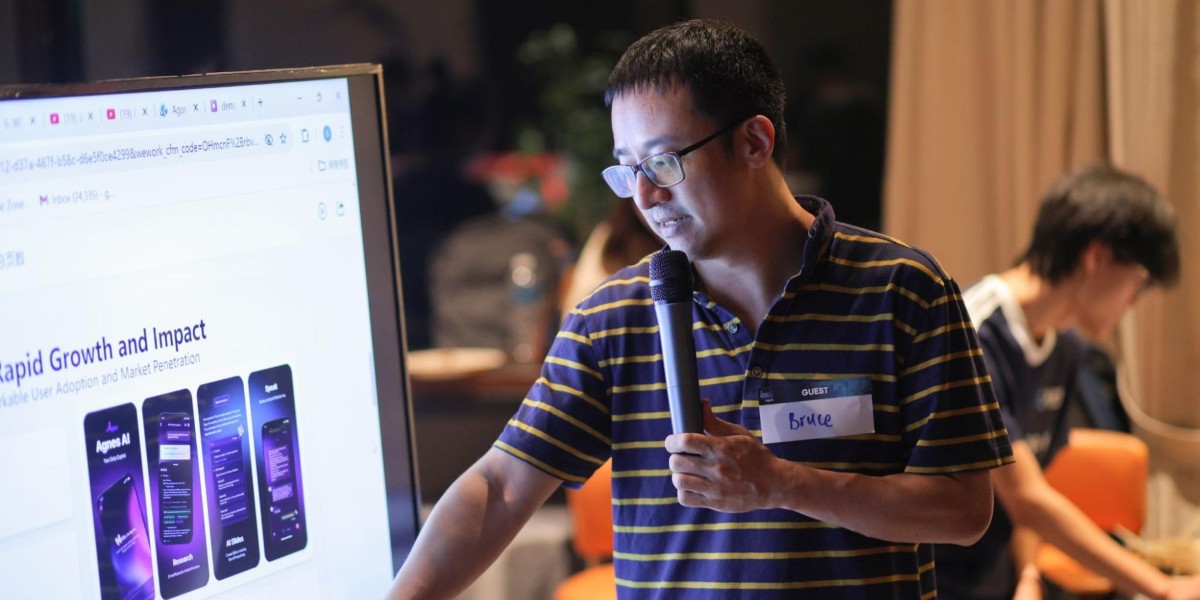
Agnes integrates Search, Research, AI Slides, AI Design, Group Chat, Filters, and Explore — along with real-time Collaboration features — into a single interface. The company’s philosophy is clear: don’t stack separate tools; embed AI seamlessly into how people actually work and create. Users can move from research to slide creation to collaborative refinement without context-switching — a friction-free experience that generic AI tools struggle to deliver.
“AI will only truly take off when its adoption and density are unlocked at scale,” Bruce stated. “The real growth opportunity isn’t in competing for the top 0.5%, but in serving the unmet needs and everyday scenarios of the other 99.5% of people.”
This approach explains Agnes’s rapid market penetration. Since launching on Product Hunt on July 4, 2025, the platform has achieved 3 million registered users and 200,000 daily active users, with approximately 50% originating from Southeast Asia. The app has consistently ranked in the Top 10 productivity tools across Google Play stores in the Philippines, Vietnam, Indonesia, and other markets—a regional stronghold that reflects both product quality and deep cultural understanding of Southeast Asian users’ needs.
Why This Team, Why This Moment
The convergence of factors enabling Agnes is significant. Singapore offers unique geographic positioning, forward-thinking policy support, and a growing pipeline of AI talent. The city-state’s NAIS 2.0 strategy explicitly aims to establish Singapore as a global hub for AI innovation and governance. Agnes exemplifies how locally-built, self-reliant AI systems can combine academic research, supportive policy, and commercial ambition.
Unlike many AI platforms that rely heavily on overseas open-source models, Agnes chose to build its own model architecture from the ground up. This reflects a deliberate strategy: developing locally controllable AI technology that can serve regional needs while maintaining the flexibility and sovereignty critical to long-term growth.
Singapore currently faces a significant talent gap in local product development and model training. Agnes bridges this gap by building and training models specifically for Southeast Asia, ensuring greater cultural and contextual relevance than global competitors can deliver.
Funding and the Path Forward
The investment community has taken notice. Agnes is currently in the process of closing a funding round worth tens of millions of U.S. dollars, at a valuation exceeding USD 100 million. Additional funding rounds, projected to value the company at USD 300–500 million, are expected to follow. These proceeds will fund the training of a regional large language model and accelerate commercial expansion into Latin America and the Middle East.
This capital trajectory reflects investor confidence not just in Agnes’s product, but in Bruce’s vision of building sovereign AI capabilities anchored in Singapore while serving global markets.
A New Model for Regional AI
Bruce’s journey — from Raffles to Berkeley to Microsoft and LinkedIn, and ultimately back to Singapore to build world-class AI — offers a template for how emerging tech hubs can attract and retain exceptional talent. It’s a model that rejects the false choice between staying local and competing globally.
The Agnes team represents something increasingly rare: research scientists and engineers from the world’s best institutions, voluntarily choosing to build in Singapore rather than the Valley. They’re not doing it for lack of alternatives; they’re doing it because they believe in the mission — building AI that originates locally, serves the region, and competes globally.
As global AI development bifurcates into different regional approaches, Agnes and Bruce’s team stands as proof that sovereign, research-backed AI can be built anywhere, provided there’s clarity of vision, access to top talent, and an institutional ecosystem that supports innovation.
The Singapore AI dream is no longer aspirational. It’s shipping code, gaining users, attracting capital, and redefining what’s possible when the world’s best researchers choose to build at home.
Disclaimer: The views expressed in this article are those of the author and do not necessarily reflect the opinions of Agnes AI, Bruce Yang, or any associated organizations. While every effort has been made to ensure the accuracy of the information, the content provided is for informational purposes only. Agnes AI’s achievements, milestones, and future projections mentioned herein are based on publicly available information as of the time of writing and may be subject to change. The article does not constitute an endorsement or investment advice. Readers are encouraged to verify all information independently.