
For decades, businesses have used prefabricated shelters for various purposes. Modern models add strategic operational value beyond utility. This article details how advanced engineering and materials create buildings that can potentially defy convention and improve operational efficiency.
Prefabricated shelters have long been a popular way of getting businesses up and running quickly for various needs. But the latest models offer something else, thanks to smart engineering and advanced materials. If you’re curious about alternatives to long lead times, there might be a solution out there. Next-gen engineered fabric structures could be a viable option to boost speed, safety, and performance, and they come with several potential benefits for a variety of uses.
Engineering for a New Standard
The global architectural fabrics market was valued at a substantial $5.89 billion in 2024 and is projected to reach $9.94 billion by 2034. This growth suggests a shift in how companies think about construction. The design relies on a heavy-duty steel frame for structural integrity. The fabric works as an integral part of the engineered system, providing strength and resistance to environmental stressors.
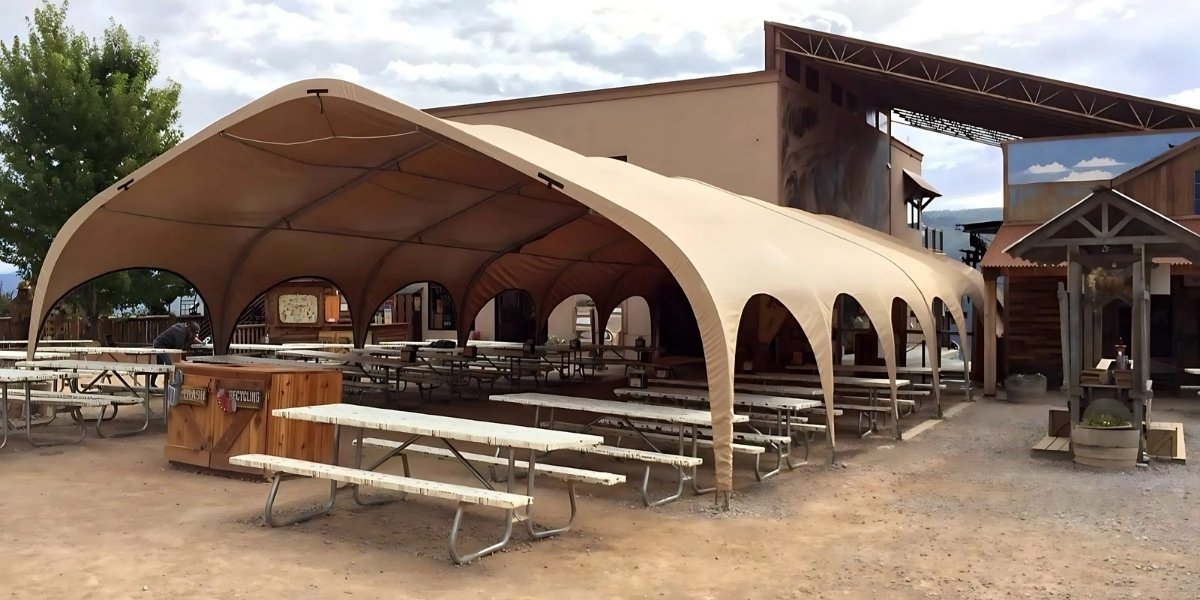
All models are generally designed with ground spikes for anchoring. Their design helps keep the shelter affixed in bad weather. A good outdoor business requires tough infrastructure. It’s essential to buy a heavy duty canopy that should ideally provide long-term protection for your equipment and staff. Just keep in mind to think about the engineering part too. You should look into the building codes that these structures are typically compliant with, and also the materials they’re made from.
The Value of Verified Performance
A structure’s ability to meet rigorous standards is not a luxury. It’s a fundamental business requirement. Companies must prioritize safety and durability to protect their assets and their employees. A study showed that projects using modular construction reduced costs by an average of 22% and shortened timelines by 35% compared to traditional methods. An engineered fabric building has been methodically tested and certified to handle specific loads, including snow and wind. This can be crucial for operations in unpredictable climates or areas with strict safety regulations.
The engineering behind these buildings provides peace of mind. It can also help streamline the permitting process. It demonstrates to regulators and clients that you’re operating with the highest level of professionalism and responsibility. Many structures have been successfully used in over 85 countries.
Accelerating Deployment for Operational Agility
Speed is a competitive advantage in today’s fast-moving markets. Traditional construction projects can take months or even years. They make it difficult for companies to respond quickly to new opportunities. Engineered fabric buildings offer the potential for a faster setup. The logistical implications are pretty significant. You can move a fully functional office or warehouse within days. This level of flexibility may be important for quick contract fulfillment and disaster response. It matters for organizations that need to adapt to rapidly changing demands.
Modular construction projects have been shown to finish up to 50% faster than conventional ones. The process of putting up a structure can take just a few days. This speed could lead to a quicker return on your investment. It also means you can reallocate capital to other areas. How might you quantify the worth of weeks saved on a mission-critical project?
The Financial Case for Rapid Deployment
Every day saved on a project’s timeline reduces labor costs and overhead. It also allows a company to start generating revenue sooner. Modular fabric buildings typically require a lower initial investment compared to permanent construction. Companies might achieve up to 70% cost savings when buying a temporary building instead of a permanent one.
Lower initial costs allow businesses to preserve capital for core business activities. It also provides a flexible asset that can be depreciated over a shorter period. It’s a relatively compelling argument for many financial officers.
Resilience Across Climates
Fabric buildings must perform consistently in diverse and often extreme environments. The engineering behind these structures ensures they can handle a variety of challenges. The non-residential segment of the construction fabrics market accounted for 72.2% of the revenue share in 2024, showing its widespread use.
A big selling point is the fabric membrane that’s been tensioned. Compared to plastic or vinyl, it really holds up well without cracking or weathering easily. And that tough steel frame? It is designed to stand up to strong winds, heavy snow, and even earthquakes, making it a reliable choice no matter where you are. For companies that work all over the globe, having one solution that works everywhere could be a big plus. Plus, being IBC compliant is important since it ensures that these structures meet safety standards in different countries.
Global Scale and Local Impact
Companies can utilize these setups to tap into markets that don’t often get attention, all without the hassle of long-term real estate deals. The strong materials used mean they’ll last a long time and can be reused for different projects, which helps cut down on waste and is better for the environment. Having the ability to scale globally while making a local difference can give you an edge.
Switching to engineered fabric structures could be a smart choice for modern businesses. It’s about adopting a new way of working, not just picking different materials. Companies that care about speed, flexibility, and keeping costs down may find they benefit from these kinds of buildings. Their solid track record around the world indicates they’re dependable. Plus, they can meet strict safety codes, which provides a level of reassurance that’s often missing from temporary setups.