

By: Maria Williams
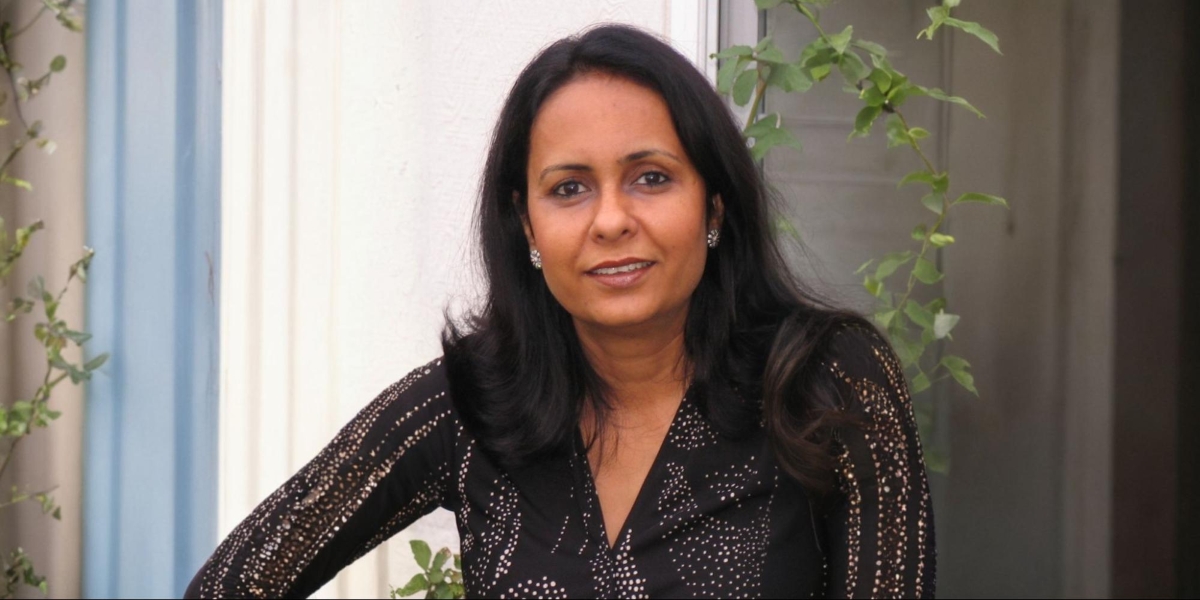
The life of Tina Tabesh, an Iranian-Canadian writer, is divided into ‘times of weakness’ and ‘finding strength,’ or what happened before her daughter’s kidnapping and after. After going through life with a suffocating sense of worthlessness accompanying her every step, Tina is ready to share her story, a turning point symbolized by the upcoming launch of Elham: Me, Daughter, Sister, Wife, Mother.

Now a driven and confident author on a mission to help others understand the struggles of abuse, Tina’s journey begins in pre-regime Iran, where she was born into a family teetering between progressive and conservative. Growing up, Tina felt unseen, unheard, and diminished by those around her, including those whose role was to nurture her – her parents, siblings, and educators.
While, at first, these challenges reflected solely on Tina’s internal well-being, with the breaking Iran-Iraq war, they started affecting her safety. 1979 was one of the academically important years of her life, marking her transition from elementary school to high school. However, Tina had always struggled to study without supplemental help—a factor that lowered the respect and love her parents expressed toward her.
Prompted by war, when her older sister asked to be relocated to a safer town where her aunt lived, her parents agreed immediately. When Tina did the same, pleading for freedom and a chance at a new life, her parents didn’t respond. “It would have been easier if they had just said ‘no.’ Instead, I was ignored,” she reminisces. “It was almost like I didn’t exist. Like I was too stupid or too weak to be visible.”
Combating the preconceived notions regarding her intellect, Tina crammed multiple books on 14 school subjects, passing all her exams after just six weeks of intense studying. That achievement sparked a realization, which quickly became Tina’s mantra: If I really was that dull, I wouldn’t have been able to graduate. Through that, she was able to understand that it wasn’t a weakness but people’s perceptions that shaped her personality.
Despite her blossoming confidence, demons of the past kept haunting Tina’s mind, always returning to one story – a defining moment that birthed a lingering trauma.
“In Iran, we were sharing a house with many tenants,” she recalls. “One day, an adult woman came outside as I was playing by the pool, grabbed my body, and held me upside down, with my head dunked in the water. I was suffocating, gasping for air. I must have fainted, as I don’t remember what happened next. My siblings told me I was hauled underwater, eventually coming back to consciousness. Back then, I didn’t know how to defend myself, and others took advantage of my fragile self-worth.”
Determined to cut ties with a family that didn’t care, Tina resorted to what was the only escape route in conservative Iran—marriage. From the stifling walls of her childhood home, she eagerly moved in with her husband – a father to a son from a previous marriage. But the elusive bubble burst quickly, and Tina realized why her husband’s former relationship ended – his abusive tendencies.
After their move to Canada, Tina found the strength to file for divorce. As predicted, her husband looked for all possibilities to control Tina’s decision and keep her tied. “He looked at me as someone who had no voice. He wanted to control me through my weakness, and, unfortunately, the love I had for my daughter was my biggest vulnerability,” shares Tina.
In 2002, to enforce Tina’s return to Iran – where divorce would immediately send her back to her family’s toxic grip – her husband abducted their daughter. Tangled up in a scenario that sounds like every parent’s worst nightmare, Tina fought fiercely, collaborated with psychological specialists, and found a way to outplay her husband – a strategy that led to her daughter’s return without Tina having to sacrifice her freedom.
Ignited by that victory, Tina commenced the inspiring process of writing a memoir. But, for many years, she struggled to outwardly express the words that so vividly percolated inside her mind. “Every time I tried to verbalize my thoughts, I couldn’t do it. I kept going back to that traumatizing moment of drowning in the pool, repeating in my head: I am weak. I am unworthy. I am invisible,” Tina recollects.
To free herself from that haunting memory, Tina changed the concept of her book; instead of focusing solely on her daughter’s abduction, she explored the transformative parts of her life since childhood, starting from that memorable experience of gasping for breath underwater. “When I eternalized these wounds on paper, I felt lighter, freer, and empowered,” she adds. “Before I processed what had happened, my mind felt blocked. Now, it can think clearly.”
Central to Tina’s post-abduction life was the harrowing sense of isolation. In a foreign country, living under a new name and away from familiarity, she had to overcome the struggles of providing for a child as a single mother without external support. Though her schedule was filled with work shifts and maternal responsibilities, leaving no time to nurture her own passions and skills, Tina confidently says: It was all worth it.
After overcoming adversity, Tina and her daughter have found a peaceful, quiet life devoid of societal expectations. Her daughter went against the grain, rejecting the academic path to follow her true passion – dogs. In October, she will open her first dog grooming business, a testament to the power of living authentically.
The story of Tina Tabesh is one of familial struggles, abuse, adversity, and one of the cruel experiences a parent could encounter – losing their child. After rising above her lifelong sense of worthlessness, Tina stood up for what she believed was right, finally finding her true voice and power – something that had been muffled by others for far too long.
“Everything that had happened in my past made me believe I was weak, not enough, and unworthy of real love,” she reflects. “Now, I see that the problem didn’t lie in my weakness. I was never weak. I just struggled to let that fire within me burn bright. Once you learn to respect yourself, everything else – resilience, happiness, and self-love – will follow. The journey is difficult, but the happiness that awaits is worth all the pain.”
Published by: Nelly Chavez