
By: William Jones
For decades, employee healthcare has been treated as a necessary expense—complex, costly, and largely outside of an employer’s strategic control. Premiums continue to rise, engagement remains low, and employees often avoid care altogether. Mouhamet Seye believes the current models are fundamentally broken—and that fixing them requires rethinking healthcare as both a human and a business challenge.
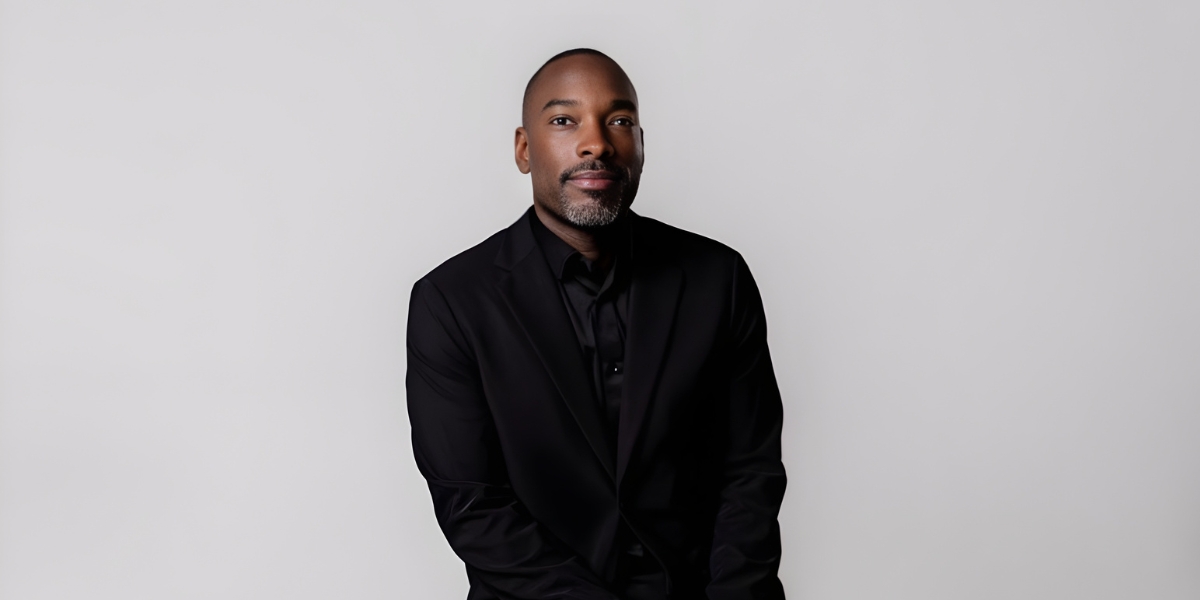
“I’ve always had a strong passion for helping others,” says Mouhamet Seye, Founder and CEO of Managed Health. “When I looked at how many hardworking Americans are uninsured or underinsured, it became clear that access to healthcare wasn’t just a medical issue—it was an economic one.” That realization led to the creation of Managed Health, a benefits platform designed to help employers control costs while giving employees access to healthcare they can actually afford to use.
For many business leaders, healthcare has become one of the most difficult line items to manage. It is often the second-largest expense after payroll, yet it offers little predictability or transparency year over year. “Most conversations around healthcare focus entirely on the employee experience,” Seye explains. “But employers are legally required to offer benefits and often pay 50 percent or more of the cost. For small and mid-sized companies, that’s an enormous burden.” At the same time, employees frequently make career decisions based on healthcare benefits, only to struggle with understanding or affording them once enrolled.
“Employees are looking for affordability, accessibility, and quality,” Seye says. “If any one of those is missing, the benefit fails.” Managed Health was built to address both sides of that equation simultaneously, treating healthcare not as a static perk, but as an operating system that must work for employers and employees alike. Rather than layering another solution onto an already fragmented system, the company focuses on simplifying how healthcare is delivered, explained, and used.
“When we talk about making healthcare simple, accessible, and affordable, those aren’t just buzzwords,” Seye says. “Accessibility means employees can actually see a doctor without choosing between their health and their paycheck.” That access extends across primary care, specialists, urgent care, mental health services, and prescriptions, among other essential services—using an insurance model designed to minimize or eliminate common out-of-pocket costs. “Many people technically have insurance, but can’t afford to use it,” Seye notes. “High deductibles and copays turn coverage into something theoretical. Affordability means people can use their benefits without financial strain.”
For employers, the value of this approach becomes measurable. Companies using Managed Health save an average of more than $500 per employee per year in fixed healthcare costs—savings that compound as organizations scale. At the same time, the platform addresses one of healthcare’s most persistent challenges: low employee engagement. Seye believes confusion is at the heart of the problem. “The system is designed to be overwhelming,” he says. “If people don’t understand their benefits, they won’t use them—and that leads to worse outcomes and higher costs.”
Education is central to Managed Health’s strategy. The company invests heavily in helping employees understand how insurance works, what their coverage includes, and how to use it effectively. To support that effort, Managed Health developed AMI AI, an AI-powered tool that allows employees to navigate their benefits through simple text messages. “They can ask which doctors are in-network, how to fill prescriptions, or where to go for care,” Seye explains. “These are basic questions, but most people don’t know where to get clear answers.” The company also provides live support across multiple time zones, ensuring employees are never left navigating the system alone.
Technology plays a critical role in turning healthcare from a black box into a manageable—and measurable—business function. “One of the reasons healthcare is so expensive is that most people don’t understand how the system works,” says Seye. Managed Health delivers employers monthly insights into plan utilization, engagement trends, doctor visits, urgent care usage, and prescription data, translating raw information into actionable intelligence. “It’s not just about having data,” Seye adds. “It’s about making it simple enough that employers can actually use it to improve outcomes and control costs.”
Over the past two years, the company has invested heavily in building its internal technology, with full-time developers focused on creating platforms that are intuitive, scalable, and valuable for both employers and employees. Managed Health also challenges the traditional model in which healthcare is purely an expense, instead using incentives and gamification to encourage proactive engagement. “The more educated and engaged people are with their healthcare, the more value they receive,” Seye says. Employees participate in monthly educational initiatives tied to real-world health topics and can earn rewards through quizzes, challenges, and learning modules, turning engagement into measurable behavioral change.
The model’s impact is perhaps best illustrated by a national grocery company with several thousand employees. When Managed Health first partnered with the organization, only 15 to 20 percent of employees were enrolled in the company’s health plan, largely because they could not afford to use it. Within a year of implementation, enrollment climbed to approximately 60 percent, while the employer realized more than half a million dollars in fixed savings. Pharmacy spending declined significantly, and employees gained zero-cost access to essential medications, urgent care, and mental health services. “The financial results were important,” says Seye, “ but what mattered most was seeing employees finally access care they had been forced to avoid for years.”
As the workforce continues to evolve, Managed Health is intentionally inclusive of part-time and 1099 workers—a segment often excluded from traditional benefits. “About 35 percent of the U.S. workforce is already in the gig economy,” Seye says. Managed Health provides independent and part-time workers with access to the same quality healthcare benefits traditionally reserved for large corporate employees. “Everyone deserves access to affordable, high-quality healthcare, regardless of how they earn a living,” Seye emphasizes.
For entrepreneurs and executives looking to innovate in healthcare, Seye sees both opportunity and responsibility. “This is a massive, complex problem,” he says. “It’s not going to be solved by one company or one idea.” He encourages leaders to embrace bold thinking, leverage emerging technology, and challenge outdated assumptions. “We need more people willing to step in, take risks, and rethink how healthcare works,” Seye concludes. “The more innovators we have, the closer we get to a system that actually works for everyone.”
Disclaimer: The information provided in this article is for informational purposes only. Managed Health’s platform and services are not intended to diagnose, treat, cure, or prevent any medical conditions. The savings and benefits mentioned may vary based on individual circumstances. Please consult with a healthcare professional before making any changes to your healthcare plan or benefits.