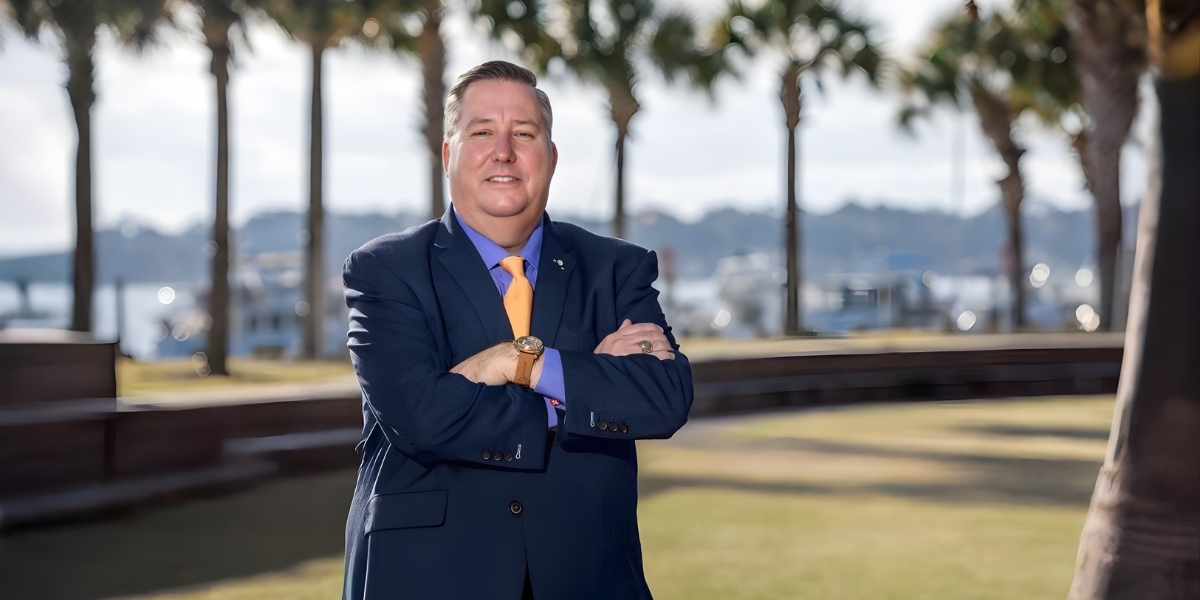


The real estate development and construction sector has always been a proving ground for accuracy, timing, and fortitude. It’s a profession where leadership is determined by the ability to run the business and the capacity to adjust to changing global forces, regulations, and cultural environments. With a progressively integrated economy, development leaders who can oversee multi-continent ventures and consistently manage massive projects are rare. Against that background, Michael P. Murphy’s career path is worth discussing in the light of how cross-industry experience and focused project management can reinterpret the scope of a firm’s possibilities.
Murphy’s career history involves a tour as an officer in the United States Army and a stint at a major financial services firm, and evolved out of necessity into a risk management background. Through that multi-layered experience, he ultimately assumed leadership at Global Building Solutions (GBS), a regional company with notable global visibility. His point of entry wasn’t merely one of expansion for expansion’s sake, but of being a go-to partner for high-value projects in diverse regulatory landscapes. And over time, that positioning became evident in real growth in revenue and reputation.
Under Murphy, GBS won contracts covering North America, the Caribbean, the Middle East, and Africa. One of the most prominent and challenging was a $560 million deal to develop 45,000-bed labor accommodation villages in Qatar in support of the 2024 FIFA World Cup. The project included intricate logistics, adherence to international labor standards, and synchronization with various government agencies. Such projects require exacting delivery within narrow timeframes, particularly when linked to large-scale global events, and Murphy’s leadership on this project became a benchmark for the firm’s ability.
Murphy’s project management style emphasizes careful planning, data-driven decision-making, and leadership stability across different time zones. Murphy successfully delivered housing, commercial buildings, and institutional facilities across continents, demonstrating that the model has withstood various challenges.
In addition to the showpiece Qatar deal, Murphy’s GBS expanded its operational reach into high-risk, high-reward markets, targeting areas with dire infrastructure needs. This moved a considerable distance out of the realm of comfort with uncertainty, particularly in nascent economies where project timing often coincides with political cycles and shifting trading policies. However, Murphy’s risk management experience is said to have contributed to his ability to incorporate safeguards into the structures of contracts, which enabled the company to achieve deliverables without incurring unsustainable losses.
What distinguishes Murphy’s leadership tenure is the magnitude and uniformity of performance across projects with extremely disparate cultural and legal environments. His understanding of global regulations and focus on front-end due diligence enabled him to reduce downstream disputes. In a 2015 feature, he emphasized the importance of aligning stakeholder expectations from the outset, particularly in markets where construction delays are common due to permitting difficulties or supply chain limitations.
Murphy’s leadership style has also been noted for its emphasis on ethical growth, especially in workforce housing and government collaboration projects. While most construction companies stress profitability measures, he has included compliance procedures beyond standard requirements, particularly in accommodations for workers. In the Qatar project, the building designs were featured in local media for their compliance with improved living standards compared to past designs, which sparked public interest in light of criticism of past practices regarding worker treatment in the region.
Murphy credits a lot of his operations discipline to his military past. A Citadel Graduate and service-disabled U.S. Army veteran, he mentioned how his time in uniform influenced how he leads teams, prioritizes execution clarity, and develops contingency plans. The capacity to lead under uncertainty, a skill developed in military settings, has been portable to massive infrastructure projects where disruption is unavoidable.
Parallel to his corporate leadership, Murphy has held advisory positions that bridge business and policy, specifically between the United States and Africa, as well as the Middle East. His geopolitical and commercial interconnections insight has given him a competitive advantage in deal structuring to fit national development priorities. His advisory work with companies specializing in corporate intelligence and policy engagement suggests a broader network of influence through which he can navigate market entry strategies with deeper insight.
Murphy has continued to engage with humanitarian and diplomatic efforts, such as his involvement with the Sovereign Order of Malta as an Ambassador in Africa. Though that aspect of his working life is addressed in more detail in other discussions, it remains pertinent to this discussion in describing how his worldwide activities are not limited to business interests. His diplomatic assignments have seen him visit 40 of Africa’s 55 nations, further enriching his knowledge of infrastructure requirements at a continent-wide level.
Regarding long-term legacy, Murphy’s experience in GBS is frequently framed within the larger narrative of American development companies’ ability to compete effectively in international markets without sacrificing regulatory adherence or ethical standards. His management of a multi-hundred-million-dollar World Cup Qatar contract remains one of the more high-profile examples of American companies securing significant shares in major international developments, particularly in areas traditionally dominated by European or local competitors.
Michael P. Murphy’s ascension from serviceman to global executive highlights how multi-layered experience across industries can inform the leadership of a contemporary infrastructure company. Although not all executives move from national service to international business, Murphy’s experience provides a perspective on the interplay between discipline, vision, and execution. His approach reflects a broader shift in how development leaders operate—moving beyond regional expertise and into the complex terrain of multi-market coordination, long-term risk management, and policy alignment.