
By: Joshua Bonnell
Most SMS marketing can feel like spam because, frankly, it often is. Brands send the same generic message to thousands of customers, hoping something sticks. It’s the digital equivalent of shouting into a crowded room and wondering why nobody’s listening.
Kyle Bigley, the founder of TxtCart, saw this broken approach and decided to build something different: AI that doesn’t just send messages, but actually considers the situation like a seasoned marketer before hitting send.
“Most platforms are still manual or rules-based,” Kyle explains. “You set up workflows that say ‘if this, then that’ and hope they work. We’re building AI that aims to understand context, can handle objections, and knows when it might be more effective to escalate to humans.”
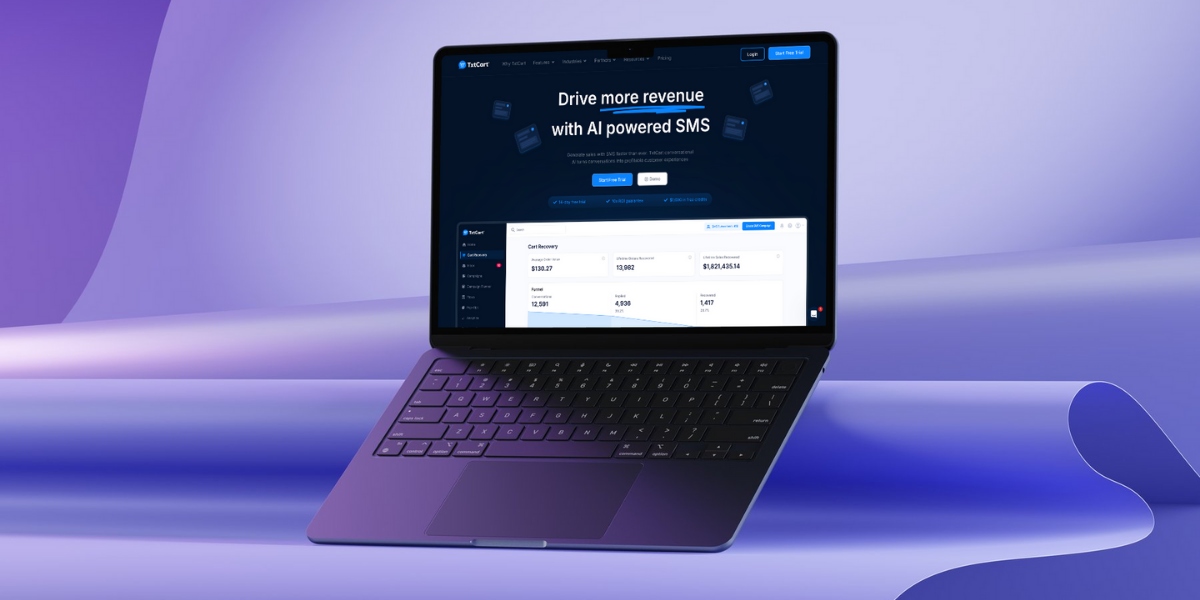
The result is what Kyle calls “agentic SMS marketing” – AI that can analyze customer behavior, craft personalized responses, and engage in meaningful conversations without human intervention. It’s not just automation. It’s artificial intelligence that learns to market in ways that resemble human interaction.
The Problem with “Dumb” Automation
Traditional SMS platforms operate like elaborate email autoresponders. They send pre-written messages based on simple triggers: cart abandoned, send message A. No response after 24 hours, send message B. Customer clicks link, send message C.
This approach treats every customer the same, regardless of their specific situation, concerns, or buying behavior. A customer who abandoned their cart because they had a question about sizing might receive the same generic “Don’t forget your items!” message as someone who left because they couldn’t find a discount code.
“The SMS marketing space is flooded with platforms that treat the channel like email,” Kyle says. “They’re all about blasting generic messages to large lists with little personalization or timing.”
The problem isn’t just ineffectiveness. When brands send irrelevant, poorly timed messages, customers don’t just ignore them – they may unsubscribe entirely.
Kyle realized that for SMS marketing to work in today’s environment, it needed to be fundamentally conversational, not transactional. And that required AI that could potentially think through each customer interaction.
Building AI That Actually Thinks
Creating AI that thinks like a marketer isn’t just about writing better message templates. It requires understanding customer psychology, timing, context, and the subtle art of persuasion that experienced marketers develop over years of practice.

Kyle’s approach started with a simple question: What would a skilled human marketer do in this situation?
A skilled marketer doesn’t just send messages. They listen. They ask questions. They understand the customer’s specific situation before making recommendations. They know when to be helpful versus when to be persuasive. They can read between the lines of what a customer is really asking.
TxtCart’s AI has been trained to replicate these human marketing instincts. When a customer abandons their cart, the AI doesn’t just fire off a generic recovery message. It analyzes the customer’s browsing behavior, purchase history, and the specific products they were considering.
Did they spend a long time on the product page, suggesting genuine interest? Did they add multiple items and then remove some, indicating price sensitivity? Did they get all the way to checkout before abandoning, suggesting a technical issue or last-minute concern?
Based on this analysis, the AI might craft a personalized approach. It could ask if they have questions about the product. It might address common concerns for that specific item. It could offer assistance with sizing or shipping questions.
The Art of Conversational Commerce
What makes Kyle’s AI particularly innovative is its ability to engage in actual conversations, not just send sequential messages.
When a customer responds to an SMS, most platforms either send them to a human agent or provide canned responses from a limited menu. TxtCart’s AI can understand the context of the customer’s question and provide genuinely helpful, personalized responses.
If a customer asks about return policies, the AI doesn’t just recite the policy. It explains it in conversational language and addresses the specific concern behind the question. If someone asks about sizing, the AI can access product information and provide detailed guidance based on the customer’s needs.
The AI can even handle more complex scenarios like price negotiations or product recommendations. It understands when a customer is price-sensitive and can offer appropriate discounts. It knows when to suggest alternative products that may better meet the customer’s needs.
“We’re not just recovering abandoned carts,” Kyle explains. “We’re building relationships. When someone texts back asking about sizing, shipping, or product details, our AI can answer those questions immediately. It’s like having a personal shopping assistant available 24/7.”
Learning from Every Interaction
Perhaps the most impressive aspect of Kyle’s AI is its ability to learn and improve from every customer interaction. Traditional rule-based systems are static – they do the same thing every time. TxtCart’s AI gets smarter with each conversation.
The system analyzes which approaches work better for different types of customers, products, and situations. It learns which questions customers ask most frequently and develops better ways to address them proactively. It identifies patterns in customer behavior that human marketers may miss.
This continuous learning means that the AI becomes more effective over time, not just for individual brands, but across TxtCart’s entire customer base. Insights gained from conversations in one industry can often improve performance for brands in completely different sectors.
The AI also learns to recognize when human intervention is needed. It can identify complex customer service issues, emotional concerns, or situations that require a personal touch, and seamlessly hand off the conversation to human team members.
The Economics of Intelligent Automation
Kyle’s AI-driven approach has potential implications for how ecommerce brands think about customer communication and staffing.
Traditional customer service and sales require significant human resources. As businesses grow, these teams need to grow proportionally. TxtCart’s AI handles many of these functions automatically, allowing brands to scale their customer communication without proportionally scaling their teams.
This isn’t about replacing human jobs – it’s about augmenting human capabilities. The AI handles routine inquiries and straightforward sales conversations, freeing human team members to focus on complex issues and strategic initiatives.
For small and mid-sized brands, this efficiency gain can be transformative. They can provide enterprise-level customer service and sales support without enterprise-level staffing costs.
Beyond SMS: The Future of AI Marketing
Kyle’s vision for AI-powered marketing extends far beyond SMS. He sees conversational AI as the foundation for a new era of customer communication across all channels.
“We’re building toward fully autonomous marketing that could handle everything from lead generation to customer support to retention,” Kyle explains.
TxtCart is already handling many of these functions. The AI can identify high-intent customers based on browsing behavior, engage them with personalized messages, answer questions about products and policies, and guide them through complex purchase decisions.
When AI can handle nuanced customer conversations, it opens up new possibilities for personalization, customer service, and relationship building that weren’t previously economically feasible with human-only approaches.
The Competitive Advantage of Smart Automation
While competitors focus on sending more messages or reaching more customers, Kyle is focused on making every message smarter and every conversation more valuable.
This approach could create a sustainable competitive advantage. Brands using TxtCart’s AI don’t just recover more abandoned carts – they build stronger customer relationships, gather better customer insights, and create more efficient operations.
The AI’s ability to learn and improve means that this advantage may compound over time. As the system gets smarter, it becomes more effective at driving sales, answering questions, and solving customer problems.
For brands competing in crowded markets with rising customer acquisition costs, this kind of intelligent automation could be essential for survival.
Building the Marketing AI of Tomorrow
Kyle’s work building AI that thinks like a marketer represents a fundamental shift in how brands can interact with their customers. Instead of treating marketing automation as a way to send more messages, he’s created AI that sends more thoughtful, targeted messages.
The result is marketing that feels less like marketing and more like a helpful conversation. Customers get the information and assistance they need, when they need it, in a format that feels natural and personal.
As Kyle continues to develop TxtCart’s AI capabilities, he’s not just building a better SMS platform. He’s creating the blueprint for how artificial intelligence can augment human marketing expertise, making every customer interaction more intelligent, more helpful, and more effective.
In a world where customers are increasingly skeptical of marketing messages, Kyle’s AI offers a different approach: technology that thinks before it speaks, listens before it sells, and helps before it asks.
For further inquiries or information about TxtCart’s AI-driven SMS marketing platform, please reach out to Kyle Bigley using the contact details below.
Kyle Bigley | Founder & CEO, TxtCart
- Email: kyle@txtcartapp.com
- Website: https://usetxtcart.io
- LinkedIn: linkedin.com/in/kylebigley
- X: x.com/kylebigley