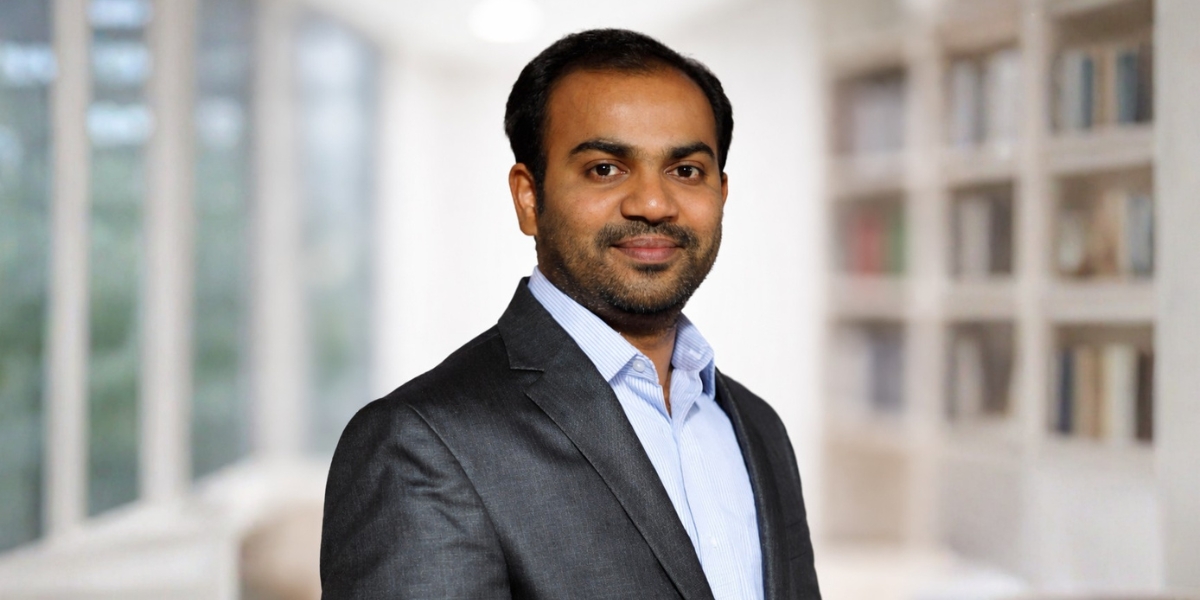


In an era where artificial intelligence is rapidly transforming scientific research and enterprise technology, professionals who can bridge computational innovation with real-world applications are becoming increasingly valuable. One such emerging contributor in this space is Dr. Kiran Kumar Donthula, a researcher and technology professional whose work spans artificial intelligence, large-scale data engineering, and molecular sciences.
Dr. Donthula’s career reflects a unique intersection of disciplines. With expertise in computational science, machine learning, and distributed data systems, he has been involved in designing and implementing advanced data pipelines and analytics frameworks that power modern enterprise platforms. His work focuses on building scalable data infrastructures capable of processing massive datasets while enabling intelligent decision-making through machine learning models.
Working within large-scale data environments, Dr. Donthula has contributed to the development of sophisticated architectures that integrate technologies such as Apache Spark, distributed streaming systems, and cloud-native data platforms. These systems allow organizations to analyze complex datasets in real time; an increasingly critical capability across industries including healthcare, finance, and digital services.
Beyond his engineering contributions, Dr. Donthula is also actively engaged in academic research exploring the application of artificial intelligence and machine learning in molecular science and drug discovery. His research examines how computational models can predict molecular behavior, enabling scientists to accelerate the discovery of chemical compounds with desirable properties.His research publications and citation record can be viewed on his Google Scholar profile:
https://scholar.google.com/citations?user=e49jwC4AAAAJ
Recent developments in AI-driven molecular design have demonstrated the transformative potential of combining quantum chemical insights with modern machine learning algorithms. Dr. Donthula’s research contributes to this emerging direction by exploring how advanced computational techniques can assist scientists in understanding chemical reactivity, spectroscopic properties, and molecular interactions at increasingly precise levels. One example of this interdisciplinary work is reflected in his published research on machine learning applications in molecular science, available through academic journals:
https://link.springer.com/article/10.1007/s00214-024-03142-9
His scholarly work has also contributed to the growing dialogue surrounding the role of artificial intelligence in scientific discovery, particularly in areas where computational modeling and machine learning can complement experimental research. Through publications and academic collaborations, his work reflects the broader movement toward integrating data-driven methods with traditional scientific inquiry.
In addition to his research activities, Dr. Donthula contributes to the scientific community through peer review and scholarly publications, helping evaluate new research across interdisciplinary domains including computational chemistry, artificial intelligence, and data science. His involvement in scholarly communication supports the advancement of knowledge in fields where computational methods are becoming essential research tools. More details about his professional background and experience can be found on his professional profile:
https://www.linkedin.com/in/kirankumardonthula
The growing convergence of artificial intelligence, scientific computing, and big-data infrastructure continues to reshape how modern research and innovation are conducted. Professionals who can navigate both the theoretical foundations and the technological implementation of these systems are playing a crucial role in accelerating scientific progress.
Through his combined work in AI-enabled research, scalable data engineering, and interdisciplinary collaboration, Dr. Donthula represents a new generation of scientists and technologists working to expand the possibilities of intelligent systems in both industry and academia.
As artificial intelligence continues to influence fields ranging from healthcare to materials science, contributions from researchers such as Dr. Donthula demonstrate how computational technologies can unlock new pathways for discovery and innovation.