


By: Stan Pakarin
Stan Pakarin is a co-founder of Fuse Service, a rapidly growing HVAC company based in California. What started as a local service business has evolved into a multi-disciplinary operation with franchising ambitions and a strong focus on efficiency, systems, and long-term growth. In this interview, Pakarin shares how he built Fuse Service and what it takes to scale an HVAC company in today’s market.
Q: Stan, Fuse Service has grown quickly in a very competitive industry. How did the journey begin?
Fuse Service started in 2017 in San Jose. At that time, the HVAC market was already crowded, so from the beginning, I knew that simply being “another contractor” wouldn’t work. The goal was to build a structured company, not just a service crew.
I approached HVAC as a business system. That meant thinking early about processes, management roles, financial planning, and how the company could grow without losing control. We focused on doing things correctly from the start, even when it was harder or more expensive.
Q: Many HVAC companies are built around technical expertise. You emphasize business structure. Why?
Technical skills are essential, but they are not enough to build a scalable company. Many HVAC businesses remain small because everything depends on the owner personally—sales, operations, decisions.
From my perspective, the business has to work independently of one person. That requires clear systems: hiring processes, training standards, scheduling, quality control, and financial oversight. When those elements are in place, growth becomes manageable instead of chaotic.
Q: Fuse Service offers more than just HVAC. Why expand into multiple service areas?
Customers want reliability and simplicity. If a homeowner or business has to call different contractors for HVAC, refrigeration, electrical, and plumbing, it creates friction.
By offering multiple services under one brand, we increased trust and long-term customer relationships. It also improved business stability—different services balance each other across seasons and market shifts. This model helped us grow revenue per customer while maintaining operational efficiency.
Q: Quality and energy efficiency seem to be central themes in your approach. Why are they so important?
Poor installation creates long-term problems—for customers and for the company. Callbacks, breakdowns, and complaints damage reputation and profitability.
We focus heavily on proper installation, trained technicians, and efficient, reliable systems. Energy efficiency is no longer optional. Customers care about operating costs, indoor air quality, and sustainability. Regulations are also moving in that direction, so aligning with those trends is simply smart business.
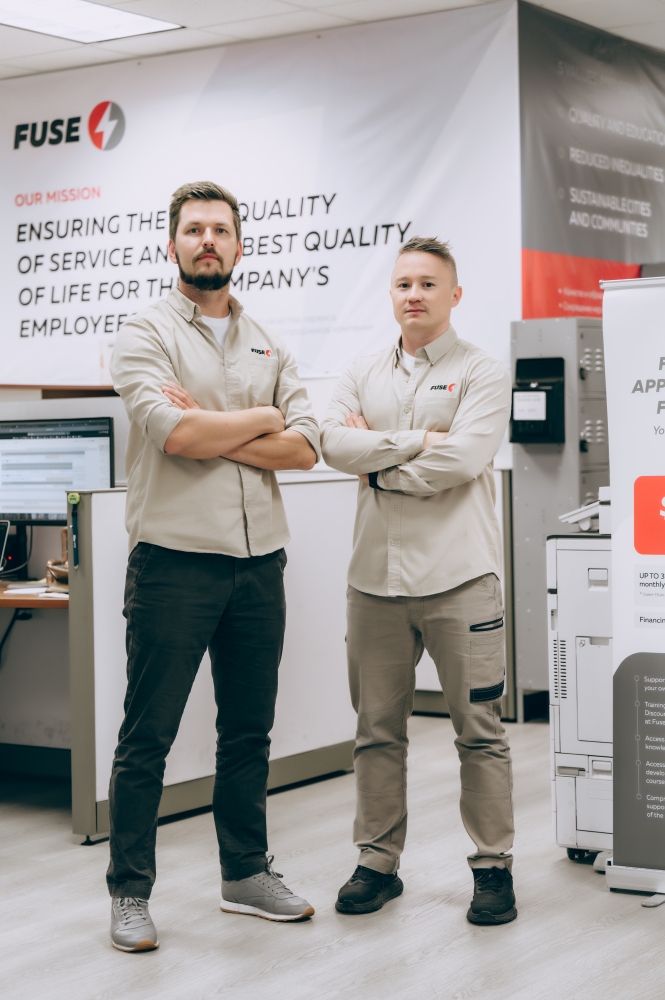
Q: Fuse Service now employs more than 100 people. How did you approach team growth?
People are the foundation of any service business. We invested early in hiring standards and internal training. Instead of treating technicians as temporary labor, we focused on building careers within the company.
That means clear expectations, ongoing education, and opportunities for advancement. As the company grew, we also built management layers so leaders could focus on teams rather than daily emergencies. This structure reduced turnover and improved consistency across operations.
Q: What role do systems and data play in scaling an HVAC company?
They are critical. You can’t scale on intuition alone. We track performance metrics—revenue, market share, efficiency, customer satisfaction—and use that data to make decisions.
This helped us understand when to expand, when to hire, and when to adjust strategy. Growth without measurement is risky. Growth with data is controlled.
Q: Fuse Service has moved toward franchising. What motivated that decision?
From the beginning, we built the company with replication in mind. HVAC demand exists everywhere, but quality and professionalism vary widely.
Franchising allows us to expand while maintaining standards. The key is having documented processes, training systems, and brand discipline. Without that foundation, franchising doesn’t work. For us, it was a natural next step rather than a sudden pivot.
Q: How do you see broader industry trends shaping HVAC businesses today?
The industry is changing fast. Energy efficiency, smart systems, indoor air quality, and sustainability are becoming central, not secondary. Customers are more informed, and regulations are more demanding.
HVAC companies that ignore these trends will struggle. Those that adapt—technically and operationally—will have long-term advantages. We try to stay ahead by continuously updating our services, training, and internal processes.
Q: What advice would you give to someone starting an HVAC company today?
Think long-term from day one. Don’t build a business that depends entirely on you personally. Build systems. Invest in people. Focus on quality and efficiency, even when it’s harder.
HVAC can be a very strong business, but only if it’s treated like a serious enterprise, not just a trade. Structure creates freedom, and discipline creates growth.
Q: How would you summarize the Fuse Service philosophy in one sentence?
Build for scale, operate with discipline, and never compromise on quality.