

By: K.H. Koehler
Too often, large corporations and small businesses play by different financial rules. Fortune 500 companies have large teams that provide them with real-time data, complex forecasting, and a deep, comprehensive understanding of their performance.
At the same time, small and mid-sized businesses (SMBs), which are often regarded as the backbone of the economy, are stuck picking at data crumbs and treating finance as something that happens after the quarter ends.
Many SMBs are driving without a roadmap or clear direction. They frequently lack what big companies call a “Financial Operating System.” As a result, their money management can be fragmented as the bookkeeper handles taxes and compliance issues, the “accounting part,” while the owner or CEO makes decisions on pricing and spending, the “strategic part.” Unfortunately, these two sides aren’t necessarily connecting correctly.
Robyn Consulting Group helps businesses plan for risk mitigation and cash-flow opportunities, providing them with the same predictive tools and strategic frameworks Fortune 500 companies use. This allows companies to turn finance into a growth engine rather than a cost center focused solely on tax filings and accounting entries.
What Is Financial OS?
The disconnect between the numbers and the actual running of the business can create headaches. Owners may be relying on outdated data, such as last month’s profit and loss statement, to make important decisions about next month’s inventory or staffing. They may not have a straightforward way to link past events to near-term outcomes, which can lead to poor decisions, missed opportunities, and, at times, cash-flow issues.
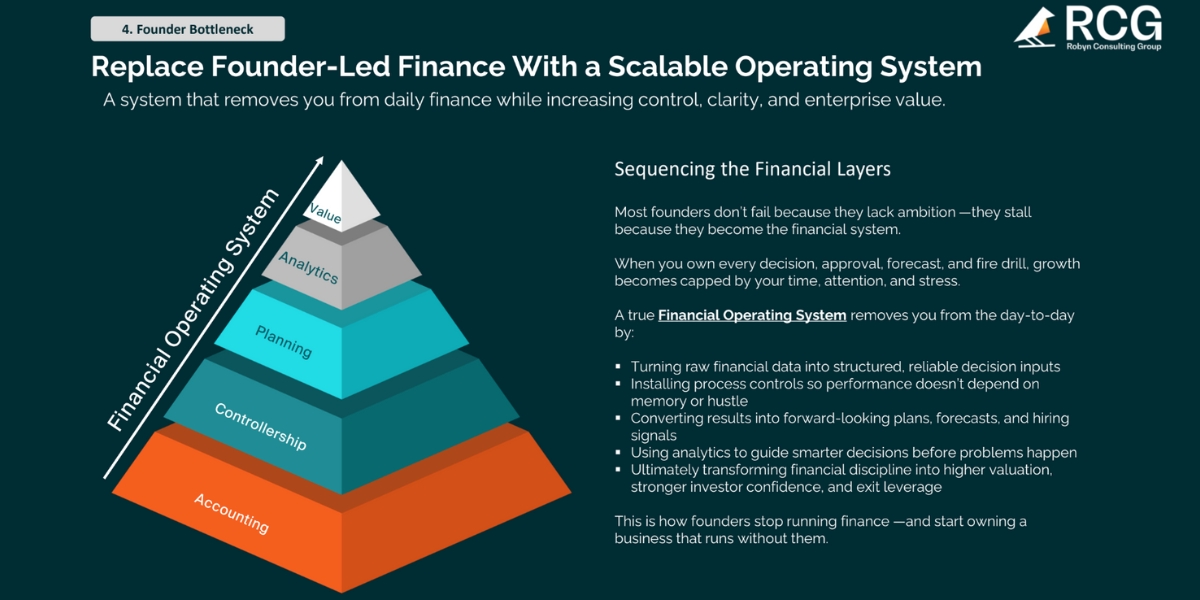
A Financial Operating System, or Financial GPS, is a structured framework that helps small businesses add structure. It can help you see the road ahead with a daily or weekly dashboard that tracks the company’s health and financials in a side-by-side comparison.
It can also help you plan the route by creating dynamic models that can project your cash and profit based on several changes to your business, for instance, if you lower the cost of an item to attract new buyers.
Performance tracking is another key benefit. A Financial OS identifies a small but powerful set of metrics, such as profit per employee or customer satisfaction, and signals before the quarter ends whether you’re on the right financial track.
Finally, it can establish a formal, consistent schedule for reviewing your numbers, to analyze specific actions or strategies rather than just reviewing what happened in the past.
The Road to Success: When “CEO-as-CFO” Stops Working
In the early stages, many founders manage their company’s finances themselves. At first, that hands-on approach can feel like an advantage. But as the business grows, there’s a clear inflection point where “CEO-as-CFO” becomes a constraint rather than a strength.
A Financial GPS helps small businesses install the structure needed to move beyond reactive decision-making. It introduces forecasting, cash flow visibility, and reporting rhythms that allow leaders to stop relying on gut feelings and start making faster, smarter decisions based on current data.
It also improves cash flow through predictive forecasting, giving management time to address problem areas before potential pitfalls arise.
Companies with clear, predictable Financial GPS systems are lower risk and more appealing to investors and prospective buyers. This marks a shift from finance as cleanup after the fact to finance as the primary navigator. Instead of guessing, leaders gain a system for managing the future.
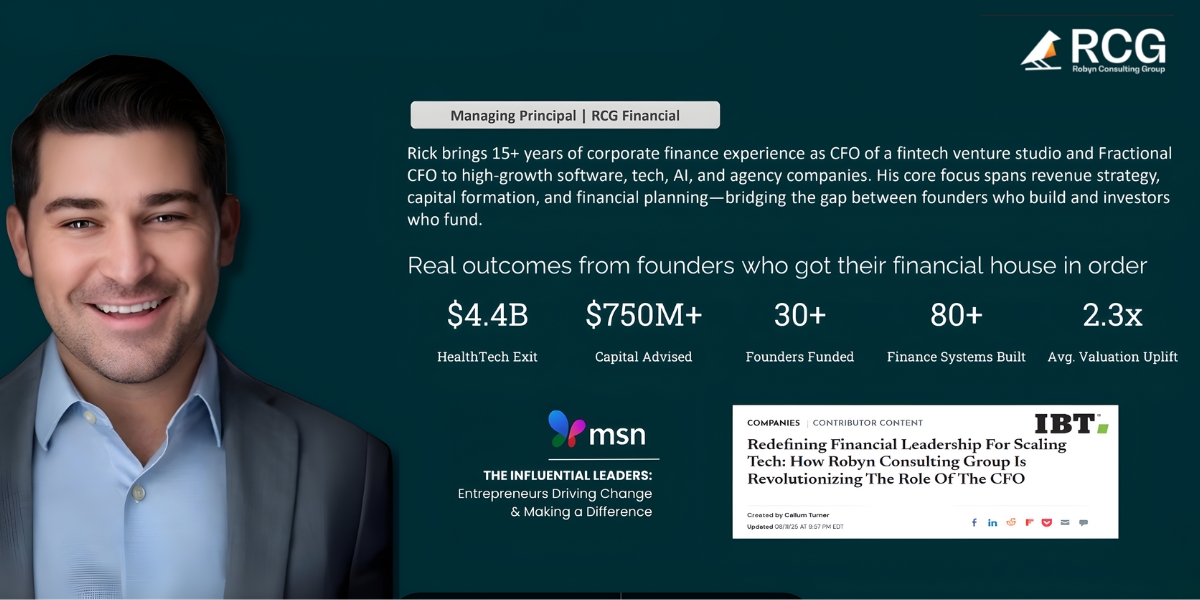
Founded by Rick Sanchez, Robyn Consulting Group helps startup founders avoid financial headaches that stop them from building products, growing technology, driving innovation, and making sales. They seek to empower businesses every step of the way with the results, strategies, and competitive advantages they need to stay ahead in the ever-growing digital world.