
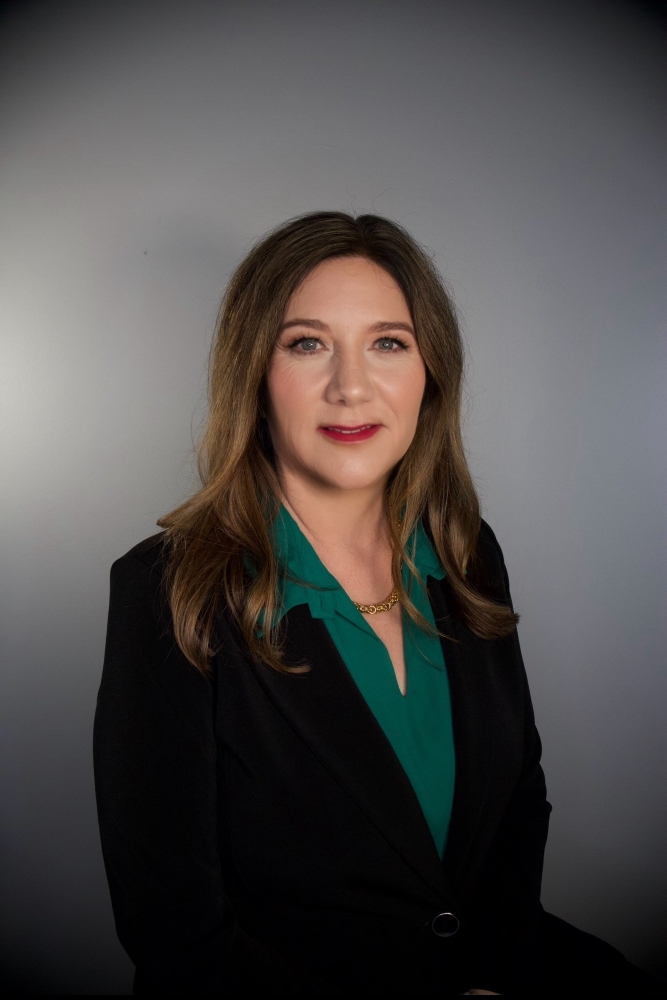
By: Beverly Ann Hansen
Silence is not always the absence of sound. Sometimes, it is a warning we fail to hear. For me, that warning arrived as a steady, artificial hum filling a quiet room. I was babysitting my grandson when I noticed the constant drone of a white noise machine beside his crib. To many parents, this sound represents comfort, routine, even survival during sleepless nights. To me, as a registered nurse with over four decades of experience and a professional immersed in applied neuroscience, it felt immediately wrong.
That moment changed everything.
What seemed like a harmless parenting tool triggered a deep professional instinct. The infant brain is not passive. It is exquisitely sensitive, rapidly developing, and profoundly shaped by its environment, especially sound. Noise is not background. It is input. It is instruction.
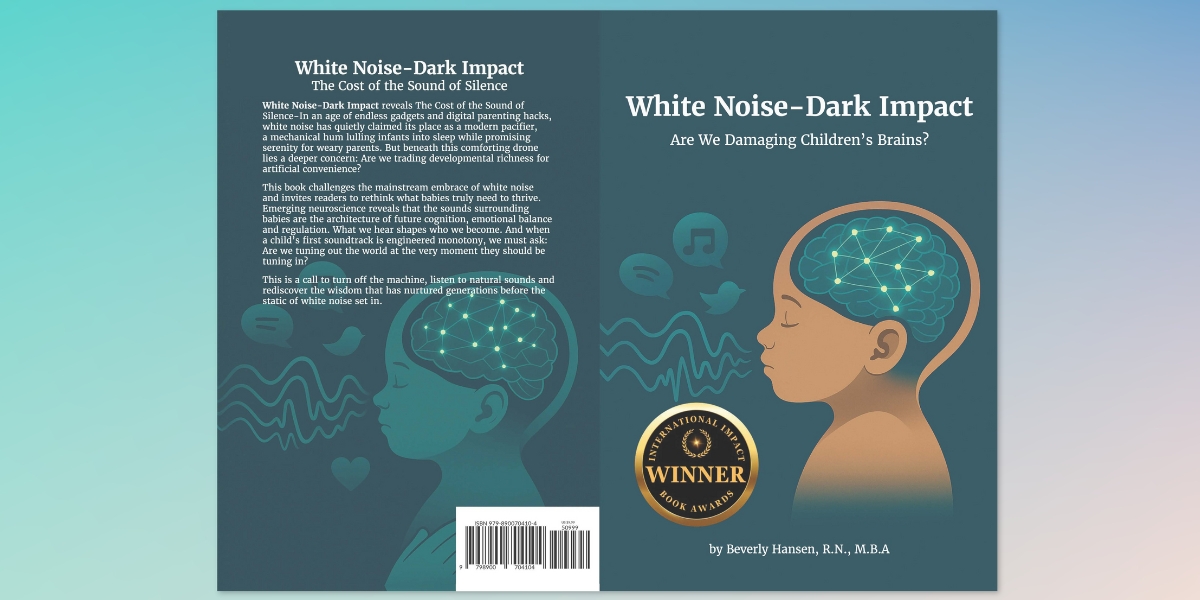
That instinct led me down a path of research that ultimately became White Noise-Dark Impact. I expected to find reassuring data studies proving safety, developmental benefits, or at least neutrality. Instead, I found something far more troubling: there is no solid scientific evidence demonstrating the benefits of white noise machines for infant brain development. What does exist are legitimate concerns around hearing damage, delayed language acquisition, and altered neural development, supported in part by animal studies and emerging neuroscience research.
The first years of life represent the most neuroplastic period the human brain will ever experience. During this time, up to one million new neural connections are formed every second. The auditory environment, voices, language, natural household sounds, and subtle variations play a critical role in shaping how the brain learns to process information, regulate emotion, and feel safe in the world. When that rich environment is replaced by constant, monotonous sound, we are not simply soothing a baby; we are altering the conditions under which the brain is built.
My writing process did not begin with the intention of publishing a book. It began with questions. Where did these devices come from? How did they move so seamlessly from adult sleep aids into infant care? Why were they embraced so widely without long-term developmental studies? And perhaps most importantly, what are we trading for convenience?
As the research deepened, the answers became more unsettling. White noise machines are often used for hours at a time, sometimes at volumes that exceed recommended safety levels, during the most critical stages of auditory and neurological development. Babies cannot tell us when something feels intrusive or overwhelming. Their brains adapt instead often in ways that reveal consequences years later.
This realization came at a personal cost. When I shared my concerns with my own family, emotions ran high. Evidence was dismissed. Relationships fractured. I spent months grieving the loss of time with my grandson and questioning whether speaking up had been worth it. What ultimately pulled me forward was a shift in perspective: I could not control others’ choices, but I could choose to act in service of something larger.
That choice became my mission.
My professional background spans population health, quality improvement, and applied neuroscience, including years of work with research-driven behavioral change platforms. In healthcare, we never evaluate outcomes by isolating a single variable; we look at cumulative exposure, timing, and vulnerability. Infancy represents the highest vulnerability of all.
In conversations with EEG experts, white noise exposure has been compared neurologically to a persistent, irritating stimulus, something the brain cannot escape. While parents may interpret longer sleep as proof of benefit, we must ask a deeper question: what kind of brain is forming during that sleep?
Animal studies have already shown that constant noise exposure negatively affects memory, learning, and sensory processing. In humans, this can translate into delayed speech, hearing impairment, and long-term challenges with emotional regulation, stress response, and anxiety. The brain’s “safety-first” system, responsible for emotional balance, begins forming on day one of life. Chronic disruption during this phase can echo for decades.
The core message of White Noise-Dark Impact is not fear; it is awareness. Parents are not careless; they are uninformed. Nearly every time I explain the risks, I hear the same response: “I didn’t know. I’m turning it off.” That moment matters. White noise machines were never proven beneficial for infant brains. They simply became normalized because they worked at least in the short term.
This issue extends far beyond individual households. We are facing a global hearing health crisis, with over 1.5 billion people already affected by some degree of hearing loss, a number projected to rise dramatically. Excessive noise exposure beginning in infancy is a preventable contributor we can no longer ignore.
My work as an author and healthcare professional is driven by a simple purpose: protect the vulnerable before damage becomes normalized. This book is only the beginning. Through consulting, education, and future writing, I will continue advocating for brain-centered, preventive health strategies that honor both science and humanity.
Sometimes love means soothing.
Sometimes love means questioning what we’ve accepted as normal.
And sometimes, love means turning off the noise.