

In today’s fast-evolving business environment, AI integration for enhancing customer support has become a strategic consideration.
The once futuristic vision of intelligent customer service is currently gradually shaping improvements in company-to-customer interactions with increasing reliability.
Support operations are being transformed through artificial intelligence, along with services that are often faster, more personalized, and potentially more cost-effective.
This article explores the ways in which AI is influencing customer support.
The article also examines recent trends and practical insights in order to meet rising consumer expectations.
The Transformation of Customer Support Through AI
Artificial intelligence has moved from basic automation to become an increasingly sophisticated tool that can enhance how customers receive service at every stage.
Current AI solutions, beyond basic scripted chatbots, can retain information from past exchanges, interpret involved requests, and shape replies to align with individual clients’ needs.
AI has advanced to independently manage certain support inquiries, such as order tracking, in many cases.
Human agents retain the ability to focus on more nuanced billing clarifications and sensitive password recovery cases.
For smoother customer support, businesses are empowered by careful AI integration strategies to provide:
- 24/7 availability through intelligent bots and virtual assistants, helping ensure customers often receive timely assistance regardless of time zone or language.
- Personalized experiences by leveraging customer data to greet users by name, anticipate likely needs, and offer informed recommendations.
- Emotionally aware interactions with AI systems designed to recognize user moods and respond with an empathetic and suitable tone.
- Increased efficiency and potential cost reductions by automating routine processes while aiming to maintain service quality.
The Human-AI Synergy in Customer Service
Technological advancements emphasize that human expertise should complement AI automation rather than being replaced entirely.
Human agents remain necessary for addressing complex scenarios where empathy, critical thinking, and overall context are significant, while AI addresses more repetitive, transactional requests.
AI and human representatives can coordinate smoothly, creating a support experience that feels efficient and generally caring.
This balance can contribute to fostering customer loyalty and trust.
Continuous training also helps employees remain proficient in both technical knowledge and emotional intelligence.
Human interaction may still be required, and personnel can engage as needed.
Innovative AI Capabilities for Customer Support
Customer service is witnessing the gradual integration of a range of emerging AI-powered technologies that appear to enhance the support experience:
- Predictive Analytics: AI can analyze historical interactions and customer data to anticipate potential issues, allowing businesses to reach out proactively when appropriate.
- Voice and Visual AI: Voice-activated assistants and augmented reality applications may make customer support more interactive and intuitive, allowing users to receive help in diverse formats.
- AI Copilots for Agents: These real-time assistants support human agents by suggesting possible responses and automating routine steps, potentially accelerating case resolution.
- Security and Compliance Monitoring: AI systems also assist in detecting unusual activities and supporting adherence to privacy regulations.
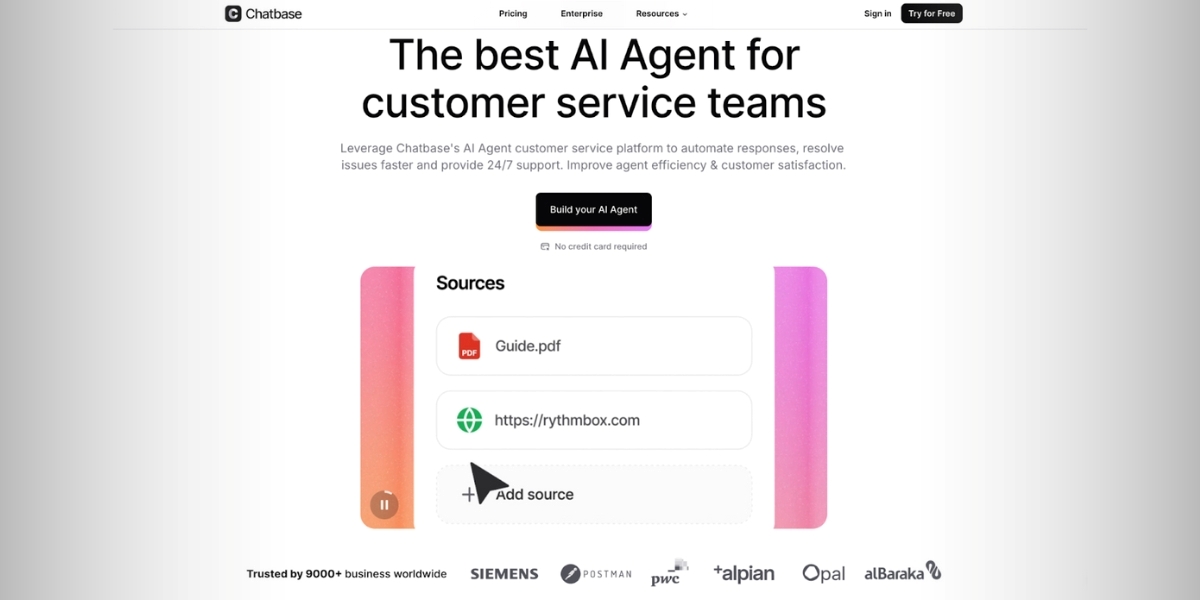
A notable example of advanced AI tools in customer support comes from Chatbase, which offers AI-driven solutions designed to interpret customer intent and potentially improve support conversations.
Overcoming Challenges in AI Customer Support
Although AI offers several advantages, challenges remain.
Complex requests often require thoughtful escalation to human agents, and ensuring smooth handoffs is important to maintain a positive customer experience.
Retaining and building customer trust also remains a critical consideration.
Transparency about AI use can help ensure customer confidence rather than frustration.
Providing clear options for connecting with a person helps when human support is preferred.
AI performance is influenced by the quality of data, so ensuring accurate and relevant information is essential.
AI models tend to perform better when continuously trained on updated and relevant data.
Finally, strong privacy and security protocols are necessary to handle sensitive customer information ethically and securely, reassuring customers that their data is protected.
Standard Practices for Implementing AI in Customer Support
To implement AI effectively, companies should adopt a structured, phased approach:
- Identify the right use cases: Begin by automating routine inquiries and tasks where AI is likely to deliver efficiency improvements without compromising service quality.
- Monitor performance continuously: Use customer feedback, analytics, and system metrics to refine AI behaviors and human-AI coordination for ongoing improvement.
- Maintain ethical and transparent AI use: Communicate openly with customers about AI involvement and provide accessible options for human support as needed.
The Future of Customer Support Is Collaborative
AI is no longer just a tool; instead, it can serve as a supportive partner for customer experiences.
AI handles straightforward requests effectively, while humans dedicate empathy, creativity, and judgment to interactions that benefit from a personal touch.
AI integration helps businesses scale operations in ways that aim to maintain quality and personalization, contributing to generally smoother customer support.
This approach may improve satisfaction and foster loyalty.
Companies are positioned to adapt in a competitive marketplace.
Organizations can embrace AI and gradually develop resilient, future-ready customer support models.
Customers can find value in models that balance human warmth with AI capabilities.
AI plus human agents working together may help exceed customer expectations, characterizing this evolving service synergy.
Disclaimer: The content in this article is provided for informational purposes only. While efforts have been made to ensure the accuracy of the information shared, no guarantees are made regarding specific outcomes or results. Readers are encouraged to conduct their own research and seek professional advice before making decisions based on the information provided.