
In Europe, a paradigm shift from a fossil fuel industry-powered system to a renewable energy-powered system required a transition that extended beyond the application of new technologies. It also needed a system of laws and financial markets that could serve as a foundation for a major undertaking. According to the International Energy Agency, Europe’s renewable electricity capacity doubled between 2010 and 2022, with solar and wind energy as the primary drivers of this growth. Here lay a team of lawyers, financiers, and engineers who translated these plans into reality.
Infrastructure investment, particularly in the energy sector, rests on the availability of long-term capital, robust contractual frameworks, and predictable revenue streams. Project sponsors must operate within complex regulatory regimes governing permits, contractual arrangements, and financing structures, while investors seek to mitigate risk and ensure ongoing compliance with both national and EU law. In this environment, professionals who, thanks to their expertise at the intersection of law and finance, play an essential role in enabling the development and growth of infrastructure assets and investments.
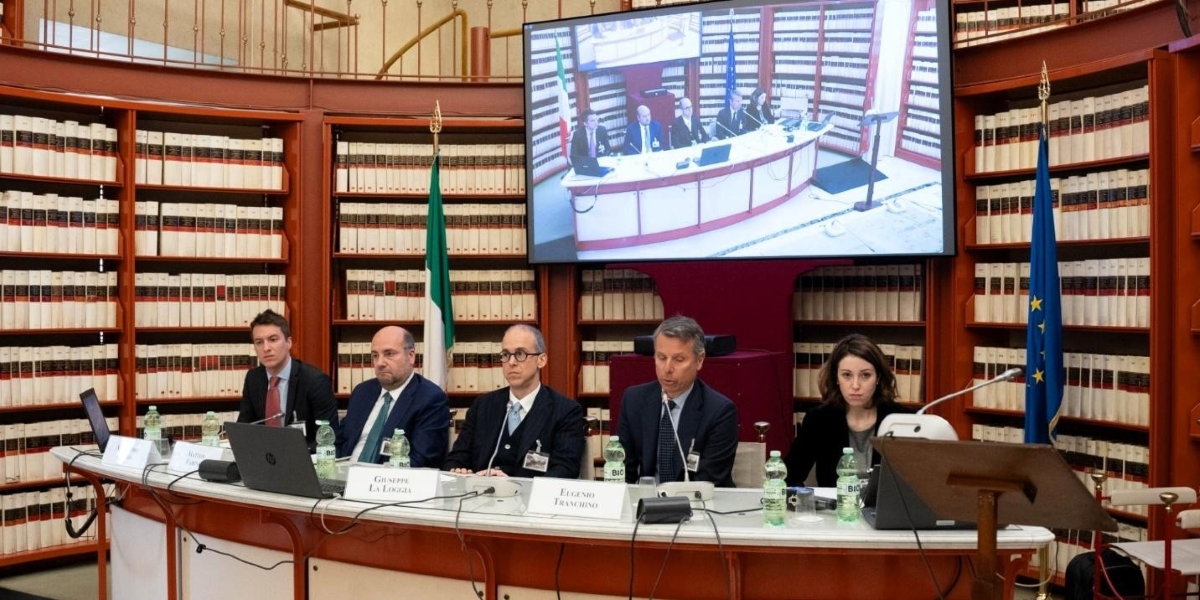
Against this background, Giuseppe La Loggia has carved out a career path from legal advisory to leadership in renewable infrastructure investment. This trend nudges energy and corporate lawyers towards ventures where structured finance, asset management, and investment ideas intersect. Instead of remaining in the advisory field, where his training naturally belonged, he carved a career path in which a legal background directly influences investment decisions.
La Loggia was born in Palermo, Italy, in 1975 and pursued legal studies at the University of Palermo, graduating with honors. He later completed a PhD in law at Sapienza University of Rome. His formal training focused on legal reasoning and regulatory systems, both closely linked to infrastructure development in regulated sectors such as energy and utilities. After completing his academic studies, he entered private legal practice during a period when Italy was beginning to expand renewable energy incentives, particularly for solar power.
La Loggia began his practice in 2002 at Chiomenti Studio Legale, a top law firm in Italy, where he remained with the corporate and energy practice until 2008. During his time, he counselled multiple clients, including banks, investment funds, and energy market participants, on the development, acquisition, and construction of projects, project finance, and the regulatory aspects of renewable energy sources. This included familiarity with concession regimes, feed-in tariffs, procurement and construction, and the structure of financing contracts, which steadily grew more complex as solar and wind energy projects expanded. During this time, Italy emerged as a rapidly expanding solar market, driven by government-promoted development incentives.
Eventually, his function evolved from strictly advisory to overseeing asset management, encompassing not just contract writing but the entire gamut of origination, development, acquisition, construction, and long-term operational management.
Such a transition occurred in 2008, when La Loggia joined SunRay Renewable Energy, a European solar energy company backed by Denham Capital. Denham Capital had invested around $200 million in solar energy development in Southern Europe. SunRay operated across multiple countries, requiring development strategies that adapted to each territory’s regulatory regime while meeting investment objectives related to project size and financial returns. In 2010, SunRay was acquired by SunPower Corporation to expand investment in European solar energy markets.
Following the acquisition, La Loggia became Head of Business Development and General Manager of SunPower Italy. In that role, he oversaw the acquisition, development, construction, and operation of more than 300 megawatts of solar capacity across Italy. Projects at this scale required coordination between permitting authorities, equipment suppliers, construction firms, and financial institutions. According to industry data, utility-scale solar plants typically need several years from when they start the planning process to when they are connected to the electrical grid, with financing structures often finalized before construction begins.
During this period, La Loggia also served as director of Andromeda Srl, a project company within the SunPower group. In 2010, Andromeda issued a 260 million euro solar project bond, which was publicly rated and listed. At the time, Project Finance International described this as the first publicly listed and rated bond backed by solar assets in the world. The transaction received the European Project Bond Deal of the Year award in 2010. The bond structure allowed renewable projects to access capital markets traditionally used by transport or utility infrastructure.
Project bonds are a financing model in which revenue from operating assets supports long-term debt issued by institutional investors. For renewable energy, such instruments require confidence in regulatory stability, plant performance, and power pricing. The Andromeda bond was seen as a step toward placing solar infrastructure within mainstream investment channels, rather than relying solely on bank lending or sponsor equity. While policy incentives still played a role in revenue security at the time, the use of capital markets broadened funding options for renewable developers.
In 2012, La Loggia moved to London to join Octopus Investments as Head of Portfolio Renewables. His mandate included building a team and an asset management platform designed to oversee the construction and operational phase of renewable assets. Over the following five years, Octopus expanded its renewable holdings, becoming one of the largest non-utility investors in UK renewables and one of the largest commercial solar operators in Europe, with capacity exceeding 1 gigawatt. Growth at this scale required systems for performance monitoring, refinancing, and long-term maintenance planning.
At Octopus, La Loggia’s legal and financial background, and the experience gained during his time at SunRay and SunPower Corporation in origination, development, acquisition, construction, and operational management, informed his approach to investment structures and contracting models. In 2015, he established a dedicated pipeline. He designed an investment and construction framework that enabled utility-scale solar projects to operate without public subsidies, at a time when many European markets still relied on feed-in tariffs. The model combined direct procurement arrangements, contractor responsibility structures, and financing designs that optimized capital costs. These changes reduced overall project expenses and enabled electricity sales revenue alone to support debt and equity returns.
The progression from law firm associate to investment executive illustrates how legal expertise can shape infrastructure development beyond compliance. For La Loggia, contract design, financing structures, and regulatory interpretation were not separate tasks but integrated elements of project strategy. This approach continued in later roles, including his move to EOS Investment Management in 2018, where he became a Senior Partner and led the firm’s Clean Energy Infrastructure investment strategy. However, the foundation of that work was laid during the earlier transition from legal advisory to direct investment responsibility.
By combining legal training with operational experience in project origination, acquisition, development, construction, and asset management, La Loggia developed a professional profile that encompasses traditional legal practice and financial investment management. In sectors where regulation, financing, construction, and asset management are tightly linked, such a hybrid experience has become increasingly in demand. It reflects the reality that infrastructure projects succeed or fail not only through technology but also through how contracts, capital, and policy frameworks interact over decades.
Contemporary debates on the energy transition tend to concentrate on generation capacity, technology, and emissions targets, often overlooking the professional pathways that underpin how energy systems are structured, financed, and ultimately delivered. Career trajectories that move from legal structuring to financial execution illustrate how institutional knowledge flows across disciplines, shaping decisions long after the initial legal work has been completed. Against this backdrop, the professional journey of Giuseppe La Loggia provides a clear example of how legal training, combined with origination, development, acquisition, and operational experience, can inform long-term investment strategies in Europe’s renewable energy sector, influencing how projects are conceived, funded, built, and sustained over time.
Disclaimer: This article is intended for general informational and educational purposes only. The information presented is based on publicly available sources and is not intended to constitute professional, legal, financial, or investment advice. Readers are encouraged to independently verify information and consult qualified professionals when appropriate.