
By: Ethan Rogers
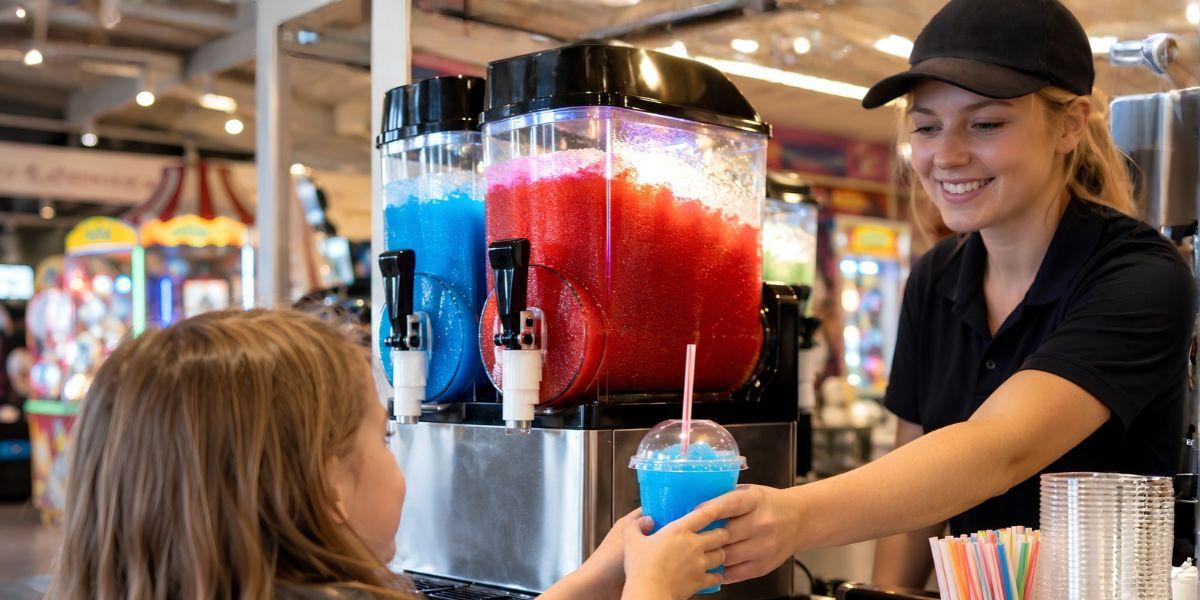
Walk into a UK convenience store, bowling alley or seaside arcade on a warm afternoon, and you’ll probably hear it before you see it: the steady hum of a slush machine turning bright blue and red ice behind the counter. Customers see a treat. An owner should see one of the most useful lessons in small-scale business economics.
Frozen drinks rarely make the strategy deck. They seem too small, too seasonal, and a bit too much fun to take seriously. Look closer, though, and a slush machine is a neat case study in unit economics, impulse buying and low-risk diversification. Those principles apply well beyond the drinks counter.
The Economics of a Single Cup
Most of what goes into a slush is water and ice. Syrup is usually diluted at around six parts water to one part syrup, so a single bottle goes a long way. UK supplier Slush Direct puts the ingredient cost of a 10oz slush at around 21p. A cup typically sells for several times that.
Few products on a typical counter come close to that ratio between cost and selling price. Crisps, chocolate, and canned drinks all come with a wholesaler’s margin built in. A frozen drink is made on site from a cheap base, so most of the value is created at the point of sale.
The lesson for any leader is to know your cost per unit to the penny. Many businesses know their revenue lines well but are much less sure what each sale actually costs them. Products that look small often hide the healthiest margins.
Impulse Is a Business Model
Nobody plans to buy a slush. They see the colours turning in the bowls, the cups stacked beside the machine, and a child tugging at a sleeve. Then they buy one.
That is why placement matters more than promotion. Operators who do well with frozen drinks put the machine where people can see it from the queue, near the till and at eye level, with the flavours lit and clearly labelled. A machine hidden in a corner earns a fraction of what one placed by the till does.
The wider point is about removing friction. The more visible and immediate a product is, the less marketing it needs. Plenty of businesses spend heavily to promote offers that would sell themselves if customers could simply see them at the right moment.
Low Barriers, Low Risk
Part of the appeal is how little a commercial machine asks of a business. Most modern units need no plumbing and run from a standard 13A socket, and Slush Direct says its machines use under £1 of electricity a day. A machine can usually be making slush within an hour of being filled.
There is also a healthy second-hand market. For a business testing demand, a used, serviced machine reduces the upfront cost and makes the experiment easier to walk away from. Comparing new and refurbished options side by side, such as this range of commercial slush machines, gives a quick sense of what different bowl sizes and budgets look like.
This is a sensible way to try any new revenue line: start small, keep the downside limited, and let real sales data decide whether to scale.
Questions Worth Asking Before You Buy
Like any capital purchase, a slush machine pays back only if it suits the business. A few questions help:
- What is your footfall, and when does it peak? A busy leisure venue might justify two or three bowls. A quiet village shop may do better with one.
- How much counter space can you spare? Machines need room around them to vent heat, so check the manufacturer’s clearance guidance before choosing a spot.
- Who services it? Warranty terms, spare parts, and how quickly someone can fix a fault matter more than the purchase price when a machine is down in July.
- Where will your syrup come from? A reliable supply of popular flavours keeps the machine earning. Running out of the best seller is a lost day’s revenue.
- Are you up to date on the rules? The Food Standards Agency has issued guidance on glycerol in slush drinks for young children. Read the current advice and choose products to suit your customers.
It’s Not Only a Summer Product
Frozen drinks peak in hot weather, but indoor venues such as cinemas, soft-play centres, trampoline parks and bowling alleys sell them all year. Bars have found another angle too: with alcohol-free cocktail syrups and a measure of spirit added at the counter, the same machine can serve frozen cocktails after dark.
This is a reminder that seasonality is often less fixed than it looks. Reframing who a product is for, or when, can stretch its earning window considerably.
The Bigger Lesson
A slush machine will not transform a business. That’s partly the point. It is a modest, measurable addition that can pay for itself quietly while the rest of the operation carries on.
The best small investments share the same qualities: a clear cost per unit, a product customers buy on sight, a limited downside, and quick feedback on whether it works. Leaders who keep looking for opportunities like that, at the counter or anywhere else, tend to find more margin than they expected.