
Mike Lindberg started his career in the Materials Department at E-Systems and finished it as Corporate Vice President and Chief Contracts Officer at L3Harris. Four decades separated those two jobs. Along the way, he worked at Raytheon and L-3 Communications, took on contracts and subcontracts management roles with widening responsibility, and retired in September 2023. He also made mistakes too, and he now shares the lessons from them in his book and through Contracts Training Solutions, his training practice.
His view is simple. A career in corporate America rarely moves in a straight line, and the people who advance are usually the ones who learn fastest from what went wrong.
Why the First Day Can Be a Reality Check
Lindberg points out that new graduates arrive with academic training and almost no exposure to how a business actually runs. Classroom work rewards individual output. A corporate department rewards something different. Deadlines belong to teams. Decisions pass through people who were never consulted in the original plan. Priorities shift without explanation.
That gap catches people off guard. Lindberg describes the first day on the job as a reality check for anyone entering corporate America without a realistic picture of what the environment demands. The work itself is often the easy part. Reading the room takes longer.
He wrote his book to address this problem. As he puts it, the material exists “to help navigate turbulent times and to facilitate the understanding of the obstacles that you will encounter” on the path from entry level to the C-suite.
The Generation Gap With Senior Leadership
One obstacle in corporate America sits in plain sight and still gets ignored. Lindberg notes that roughly two generational categories separate a new hire from the company’s senior leadership. Those executives formed their habits in a different era of business communication, risk tolerance, and decision making.
Understanding how they think, and adapting to it, is what he calls one of the four cornerstones of success.
Adapting does not mean abandoning your own judgment. It means learning the format a decision needs to take before it gets approved. It means knowing which executive wants a one page summary and which one wants the full analysis. New employees often assume the quality of an idea carries it forward on its own. Senior leadership in corporate America tends to respond to ideas that arrive in a familiar shape.
How Management Skill Actually Gets Built
Lindberg is direct about where management ability comes from. In his words, “Management is a skill that must be learned by doing, listening to your immediate boss, senior management, peers as well as your team. You will also learn a lot from your mistakes.”
That statement puts the burden on practice rather than theory. Certifications and training programs help, and Contracts Training Solutions builds structured instruction around government contracts and subcontracts, but Lindberg treats classroom learning as preparation rather than proof. Management careers in corporate America are built in the gap between a plan and what the plan actually produces.
The list of people he names is worth noticing. It runs in every direction: up to an immediate boss and senior management, across to peers, and down to one’s own team. Listening in only one of those directions leaves most of the lesson unheard. The mistakes he mentions belong to the same education, and they are the backbone of his book.
Why Reputation Moves Faster Than a Resume
Reputation in corporate America travels through conversations a person is not part of. Promotion discussions, staffing decisions and project assignments all involve people describing someone to other people. Those descriptions are built from small moments: whether a call got returned, whether a number held up under review, whether a problem was flagged early.
Contracts and subcontracts management, the field Lindberg built his career in, sits between the customer, the program team, finance and legal. That makes it an especially visible place to build that kind of standing, or lose it.
The practical side is unglamorous. Accuracy matters more than appearance, and a mistake caught and corrected early does far less damage than one someone else finds first.
The Mistakes Behind the Title
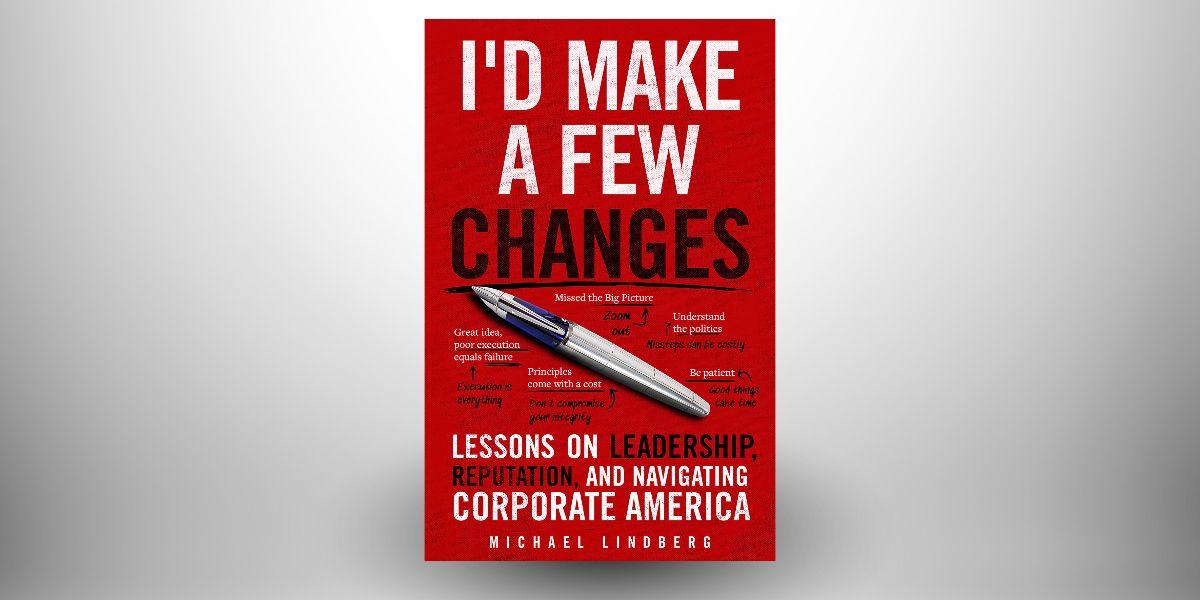
The title of Lindberg’s book, I’d Make a Few Changes, sums up its approach. Rather than presenting a career as a string of right decisions, the book looks at the mistakes professionals tend to make on the way from entry level to the C-suite, and at the lessons that come with each one.
Lindberg has seen every stage of that path himself. He moved from his first job out of college into contracts, and from there into senior leadership, including 15 years as a Corporate Vice President at a Fortune 500 company.
That vantage point covers every rung of the ladder the book describes. The aim is to help readers understand the obstacles ahead before they reach them, so the lessons arrive earlier and cost less.
Where Lindberg’s Work Sits Now
Through Contracts Training Solutions, Lindberg offers instruction in contracts and subcontracts management drawn from his career across E-Systems, Raytheon, L-3 Communications, and L3Harris. The training covers the operational side of the discipline. His new book I’d Make a Few Changes covers the career side, including the obstacles he met and the decisions he would make differently. His four decades in the defense industry are documented on his LinkedIn profile.
The thread running through both is the same idea he offers about management. A career in corporate America is learned by doing, and much of what gets learned comes from mistakes. His goal is to help the next generation recognize those lessons sooner.