
There was nothing dramatic about the night Sultan Sobhi Batterjee began questioning the life he had built. He was simply still at the office long after everyone else had gone home, which by then had become normal. The companies were performing, the walls around him carried the evidence of professional success, and by any conventional standard, he had done exactly what ambitious people are told to do.
Then he looked at his phone. It had not rung.
Sultan knew he had turned down countless invitations from friends over the years, but it had never occurred to him that eventually people might simply stop asking. His wife and children were already asleep. Even returning home that night meant arriving quietly, too late for another goodnight.
He remembers sitting there surrounded by the symbols of success and feeling something much harder to explain.
He had everything he was supposed to want, and somehow it felt like he had lost too much while getting it.
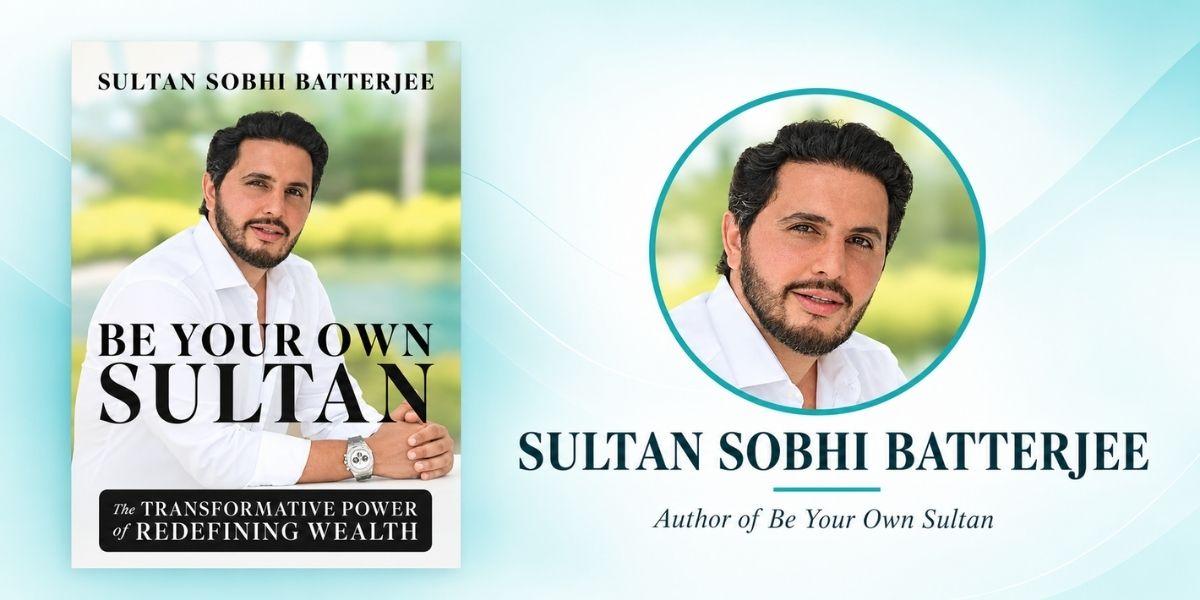
That moment became one of the emotional foundations of Be Your Own Sultan: The Transformative Power of Redefining Wealth, a book built around a question many high achievers avoid because the answer can threaten the structure of the life they have already created.
What if success is real, but still incomplete?
The City of Expectations
Sultan did not come to that question from an ordinary starting point. The Batterjee family has been doing business in Saudi Arabia since the 1920s, with a legacy that stretches across healthcare, education, real estate, and philanthropy.
With that kind of history comes opportunity, but it also comes with expectation.
Sultan describes this inherited structure as the City of Expectations, a life partly designed before you have the chance to decide what you actually want. Family, culture, reputation, duty, and tradition all help define what success is supposed to look like.
None of that, Sultan is careful to say, was wrong. He remains deeply grateful for what he inherited.
The harder realization was that gratitude and authenticity are not the same thing.
At some point, he had to ask himself how much of what he was pursuing genuinely belonged to him and how much of it came from the expectations attached to being a Batterjee.
That is not an easy question because it does not feel like questioning ambition alone. It can feel like questioning loyalty.
When the Mechanics Stop Working
Sultan had spent years becoming exceptionally good at the mechanics of business. Strategy, execution, deal-making, leadership, and growth were familiar territory.
What those skills could not answer was why professional success had failed to produce the satisfaction he expected.
That sent him into a years-long personal search that moved through different countries, traditions, teachers, books, conversations, retreats, and unexpected experiences. Some lessons came in formal settings. Others came from something as ordinary as an airport bookstore or a dinner conversation.
The common thread was increasingly difficult to ignore.
External achievement could shape his circumstances, but it could not automatically determine how he experienced his life.
Sultan points to an idea he heard from Tony Robbins that stayed with him: results are heavily influenced by mindset, not merely mechanics. Sultan had spent most of his career mastering the mechanics. The internal part of the equation was where he had done far less work.
Success Was Not the Enemy
That distinction matters because Be Your Own Sultan is not an argument against ambition.
Sultan still runs businesses. He still cares deeply about performance. He still holds himself and his teams to demanding standards.
What changed was what he expected achievement to provide.
For years, success had been treated as a destination that would eventually produce happiness as a side effect. Once the companies were strong enough, the reputation established enough, and the goals achieved, satisfaction was supposed to arrive.
It did not.
That forced Sultan to reverse the equation.
Instead of asking how much more he needed to accomplish before he could enjoy his life, he began asking what a rich life actually contained.
The Question Most People Delay
Sultan does not present his answer as something readers should copy. In fact, he deliberately resists giving people a formula because that would only replace one set of expectations with another.
The question he wants readers to confront is more personal.
What do you really want out of life?
Not what looks impressive. Not what your family expects. Not what your industry rewards. Not what would sound convincing in a biography.
What do you actually want?
Sultan knows how disruptive that question can be because he had to ask it after building a life that already looked successful from the outside.
That may also be why it carries weight.
It is easy to question the definition of success when success has remained out of reach. It is something very different to reach it and admit that the definition itself may have been incomplete.
Sultan Sobhi Batterjee explores that question at greater length in his book, Be Your Own Sultan.