
By: Courtney Chase
There is a moment that Dr. Sean Pastuch describes in Live More. Hurt Less. that will stop a lot of readers cold because it is so specific and so human and so completely different from the clinical distance that most pain management books maintain. He is walking home from a neighborhood block party with his daughter, who is five years old, and he cannot put her on his shoulders because years of persistent neck pain have left him unable to do it. He does not sleep that night, he tells us, not because of the pain but because he never wanted to be the dad who couldn’t do anything. That moment is the emotional heart of the book, and it is the moment that makes everything that follows feel genuinely personal rather than professionally clinical, because Pastuch is not writing about chronic pain from the comfortable distance of someone who has only ever observed it in patients. He is writing about it from the specific and humbling experience of living inside it himself and having to find his own way through.
Pastuch is a chiropractor, the founder of Active Life, and someone who has spent twenty years helping thousands of people, including Olympians and CrossFit Games champions and people who could not make it up a flight of stairs without running out of breath, return to full participation in the lives they want to live. That range of clients is significant, because it means his framework has been tested not in a single population or a single kind of pain but across the full spectrum of human physical experience, and the insights he has drawn from that breadth are what give the book its unusual and practical authority.
The central argument of Live More. Hurt Less. is one that challenges the conventional wisdom about chronic pain at its most fundamental level. Pastuch argues that the advice most people receive, rest when it hurts, avoid the activities that cause pain, shrink your life to manage your symptoms, is not just unhelpful but actively counterproductive. The real disease, he contends, is not pain but compromise, the small and reasonable decisions made in response to pain that quietly reduce the size and fullness of a person’s life until they are living a version of themselves they never intended to become. His alternative is not a set of exercises or a treatment protocol. It is a complete reorientation of the relationship between pain and living, organized around the principle that the more fully you live, the less you are likely to hurt.
He delivers this reorientation through a combination of evidence-based principles, actionable tactics, and the kind of powerful and often funny storytelling that makes the material feel immediately accessible rather than technically intimidating. The book covers how to know when pain is cause for genuine medical concern and when it is not, how to use movement and exercise to build a capable body rather than a protected one, how to calm the mind when pain is driving it crazy, and how to figure out who you want to be on the other side of pain rather than simply trying to get rid of the pain itself. That last piece is perhaps the most distinctive and most valuable contribution the book makes, because it treats chronic pain not just as a physical problem but as an identity challenge, a question about who you are and who you choose to be that no amount of symptom management alone can answer.
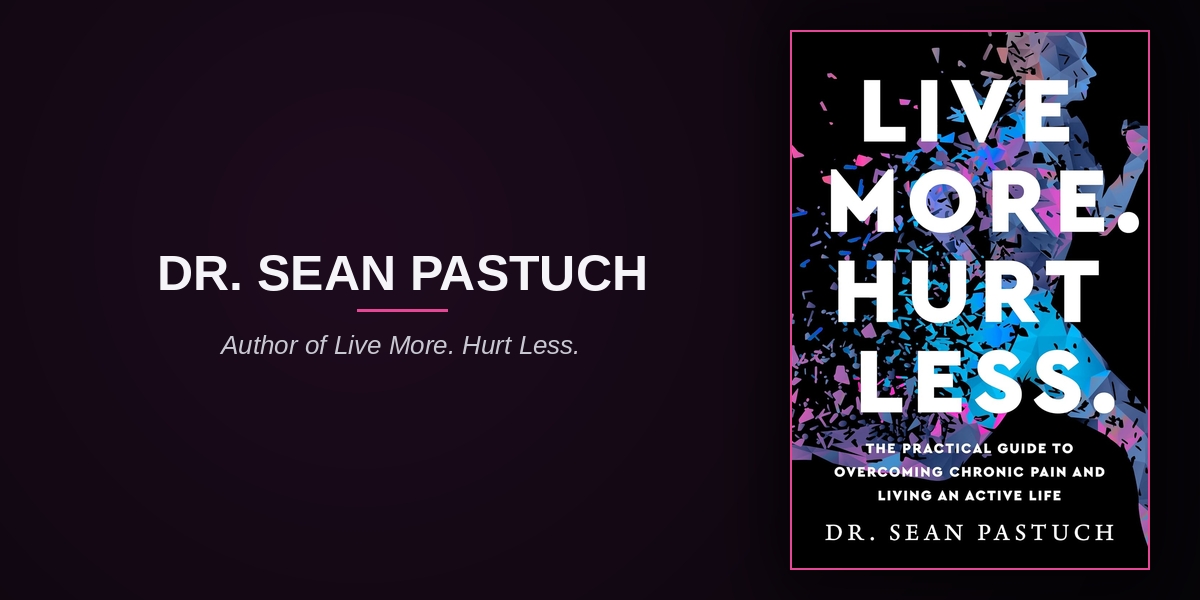
If you have been making decisions about how to live based on what hurts and are ready for a guide that puts the power back in your hands and shows you how to stop letting pain define the size of your life, Live More. Hurt Less. by Dr. Sean Pastuch is exactly the book you need. Grab your copy on Amazon today and start building the life that chronic pain has been quietly shrinking.