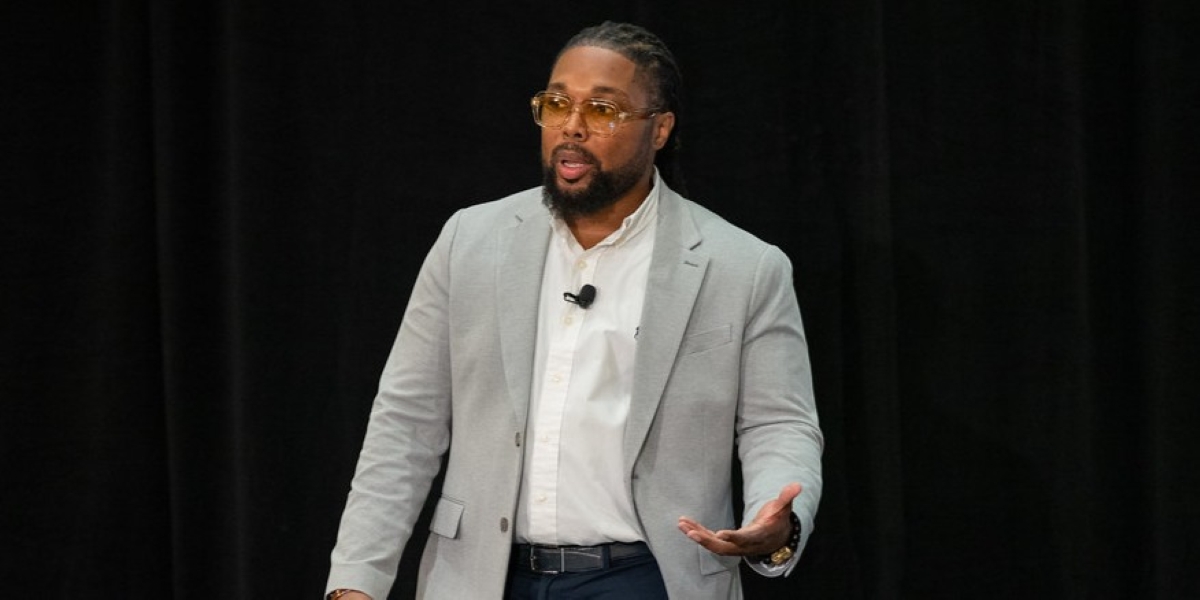

By: Natalie Johnson
Corporate leaders are currently moving as fast as possible to put artificial intelligence (AI) into everyday workflows. Most of the executive conversation centers on direct cost savings and how quickly tasks get done. But according to Kason Morris, this push for speed and efficiency can overlook a much bigger question inside modern companies. “I think the risk is that we’re automating work faster than we can understand what that work creates,” he says.
The Real Trade-Off Behind Fast Automation
When executives look at work, they usually look at basic metrics like job descriptions, payroll numbers, and headcount. What gets missed is the quiet learning that happens when someone works through a problem from start to finish. “A task can produce an analysis, answer a customer question, or move a process forward,” Morris explains. “But the experience of doing that work can also build pattern recognition, judgment, relationships, context, and eventually expertise.”
Cutting those routine tasks out of the workday can easily backfire on leadership down the road. While productivity numbers might look great for the current quarter, the organization is quietly running through capability built years ago. Over time, companies risk weakening institutional knowledge if people no longer get enough opportunities to do the thinking that builds it. That is why Morris reminds leaders that “every automation decision is also a capability decision.”
Looking Past Traditional Organizational Charts
To avoid making blind cuts, Morris believes companies need a clearer concept of what he calls Execution Visibility. Standard corporate charts show reporting lines and broad duties, but they fail to capture how projects actually move across a team. “Execution Visibility gets underneath the containers we’ve historically used to describe organizations,” Morris points out. “An org chart tells me who reports to whom. A job description tells me what someone is broadly responsible for. Skills data tells me something about what people may be capable of doing. All of that is useful. But none of it tells me precisely how the work moves, where value is created, where judgment is exercised, or what capability is being built through doing it.”
Real work involves constant workarounds, informal chats, and quick fixes that never make it into any employee handbook. Experienced workers often navigate exceptions, dependencies, and informal handoffs without realizing how much accumulated knowledge and judgment they are applying. Now that software is stepping into those workflows, leadership teams need to know where human judgment really makes a difference. Without that level of clarity, managers risk breaking the very relationships and handoffs that keep the business running smoothly.
Why Human Presence Is Not Enough
Many teams believe they are safe as long as an employee remains in the loop to check the software’s work. Morris sees this as a flawed safeguard, especially when early-career work is handed off entirely to machines. Preparing the first draft of an analysis or doing the initial background research used to be the main way junior staff built their instincts. When software takes over all that preliminary effort, people lose the regular practice needed to grow into seasoned decision-makers.
Merely reviewing an automated answer is not the same as getting the practice that develops judgment. “Human presence does not necessarily equal human practice,” Morris explains. “So the question is no longer, ‘Is a human still involved?’ Instead, the questions are: ‘What is the human still getting to practice? What decisions do they still own? What capability is developing because they remain in the workflow?’” That doesn’t mean organizations should preserve inefficient work for the sake of development. But if AI removes the reps through which expertise was traditionally built, leaders need to be intentional about what replaces them.
Converting Saved Time Into Real Value
Saving a few hours on a specific task sounds great, but it does not automatically help the bottom line. If an automated tool gives an employee three extra hours a week, the business has to be intentional about what happens next. Leaders need to steer that time into better client care, faster problem-solving, or mentoring newer team members. Without a clear plan for that capacity, there is no guarantee the saved time translates into enterprise value. Execution Visibility gives leaders a way to connect AI-enabled capacity to the work and outcomes that matter most. Instead of just celebrating hours saved on a spreadsheet, leadership can focus on fixing real bottlenecks across different departments. That shift changes the standard for measuring software investments in a meaningful way. As Morris puts it, the conversation moves from “How much time did the tool save?” to “What changed in execution because of the capacity AI created?”
Looking ahead over the next 12 to 18 months, Morris argues that one of the most important management disciplines will be learning to see work clearly enough to redesign it. Organizations have invested heavily in understanding jobs, skills, talent, and performance, but many still have limited visibility into the work underneath them. Once new automated systems take root in daily routines, changing those setups becomes remarkably difficult. Executive teams need a clear picture of how work actually gets done before making structural changes they cannot undo. The companies that win will not be the ones that adopt new tools at record speed. Long-term success belongs to businesses that understand how to build and protect their human talent alongside new technology. “I don’t think the winning organizations will simply be the ones that adopt AI fastest,” Morris says. “They’ll be the ones that can make better decisions about where AI belongs, where humans create disproportionate value, and how the combination builds a stronger organization over time.”
Morris writes about workforce transformation, human-AI collaboration, and Execution Visibility on LinkedIn.