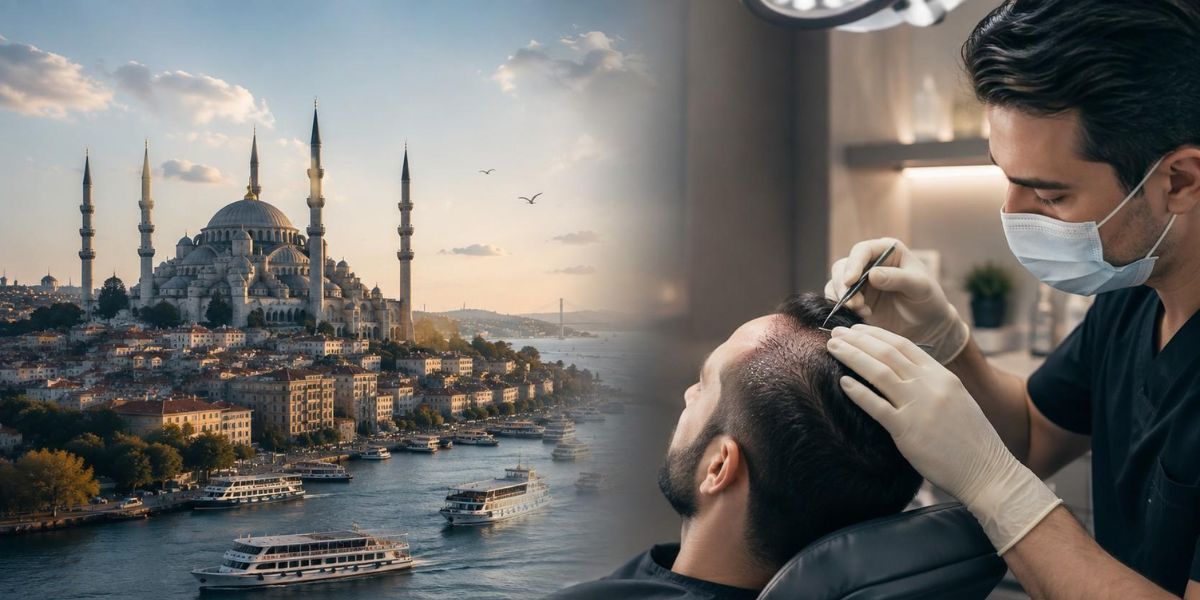

Somewhere between a $30,000 procedure in Beverly Hills and a DIY topical spray from the drugstore, an entire industry has quietly built itself around a middle option: flying to Istanbul for a hair transplant. What started as a niche medical tourism trend a decade ago has become one of the most well-established corners of the industry, with Turkey now performing more hair transplant procedures annually than any other country in the world.
The numbers explain a lot of it. A comparable procedure at a hair transplant clinic in Turkey typically costs a fraction of the equivalent treatment in the US or UK, sometimes as little as a quarter of the price, without necessarily sacrificing surgeon quality. That price gap exists for structural reasons rather than a corner being cut. Lower operating costs, a highly competitive local market, and a government that has actively supported medical tourism as an export industry all play a role.
But cost alone doesn’t fully explain why Turkey, specifically, became the epicenter of this trend rather than any other lower-cost destination. Volume does. Istanbul’s clinics collectively perform an enormous number of procedures each year, and that repetition has produced a depth of surgical experience that’s difficult to replicate quickly elsewhere. Surgeons who perform hair transplants daily, rather than occasionally alongside other cosmetic work, tend to develop a level of technical fluency that shows up directly in graft survival rates and natural-looking results.
Technique has evolved alongside that volume. Follicular Unit Extraction, or FUE, has been the industry standard for years, but a growing share of Istanbul clinics have shifted toward DHI hair transplant in Turkey procedures, which use a specialized implanter pen to place follicles directly into the scalp without pre-made incisions. The appeal is precision. DHI gives surgeons tighter control over the angle and depth of each graft, which matters most in visually sensitive areas like the hairline.
None of this means every clinic in Turkey delivers the same quality of care, as the market’s rapid growth has inevitably attracted operators of wildly varying standards alongside the genuinely excellent ones. Industry observers generally point to a few markers of a reputable provider: transparent, itemized pricing rather than vague headline numbers; a proper in-person or video consultation before any commitment; verifiable before-and-after results; and a clearly explained aftercare plan that extends well beyond the day of surgery.
Pricing transparency in particular has become a bigger differentiator than it used to be. As demand has grown, so has scrutiny of what’s actually included in a quoted price. A search for hair transplant cost in Turkey turns up wildly different numbers depending on the clinic, and much of that variation comes down to what’s bundled in. Some providers quote a bare surgical fee, while others, including larger operators like BlueMagic Group, build hotel accommodation, airport transfers, medication, and extended aftercare into a single all-inclusive price.
That inclusiveness has become something of a selling point in its own right, largely because international patients have relatively little recourse if something is missing from their trip once they’ve already landed in another country. A patient who discovers, mid-recovery, that follow-up medication wasn’t actually included in their quote is in a considerably worse position than one browsing options from home.
The broader trend line points toward continued growth rather than a plateau. As more patients share their experiences online, for better or worse, the market has become more transparent by necessity, with reputation and verifiable results increasingly outweighing headline price as the deciding factor for prospective patients. For an industry that started as a word-of-mouth secret among a relatively small number of early medical tourists, that shift toward transparency may end up being the more significant story than the growth itself.
Disclaimer: This article is for informational purposes only and does not constitute medical advice. Results vary between individuals and no outcome is guaranteed. Consult a qualified medical professional before making decisions about any procedure.