
By: Schiamarelly Pinckert
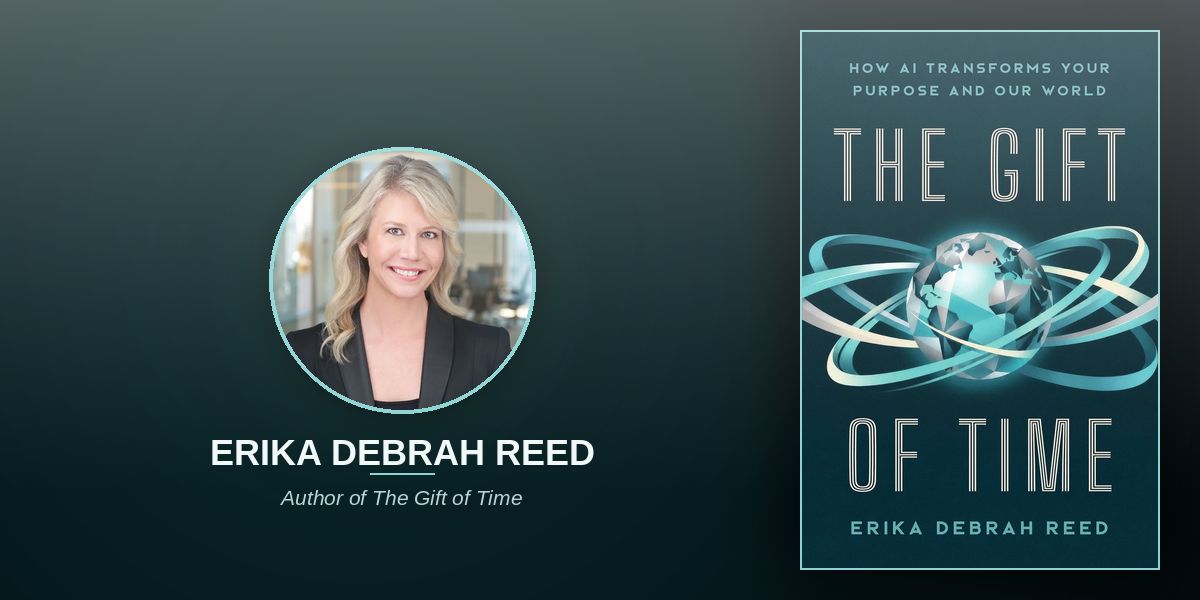
There is a moment in The Gift of Time where Erika Debrah Reed reaches for J.R.R. Tolkien to anchor her entire argument, quoting Gandalf’s counsel to Frodo in the depths of despair: all we have to decide is what to do with the time that is given us. That choice of epigraph is not decorative. It is the philosophical spine of everything that follows, a 236-page exploration of one of the most consequential questions of our civilizational moment, delivered not as a technology manual but as a genuine work of humanistic inquiry by someone who holds degrees in civil engineering, engineering management, and an MBA from Kellogg, and who spends her professional life predicting the future of commerce at the intersection of retail, real estate, and transportation.
Reed writes with a breadth and a depth that consistently exceed what the book’s AI-adjacent subject matter might initially suggest. The opening chapter on the philosophy of time, tracing the question from Plato and Aristotle through Augustine and Kant and Einstein, is itself a minor intellectual achievement, giving readers the conceptual vocabulary they need to understand what Reed is actually arguing before she begins arguing it. She is not asking whether AI will change our lives. She is asking what kind of change that will be, whether the time returned to us by automation and robotics and autonomous vehicles and electric air taxis will be time we inhabit with intention and meaning or simply another variety of the frictionless busyness that already defines so much of modern life.
The reading experience this book produces is one of expanding possibility rather than anxious anticipation. Reed moves the reader from the intimate, from one’s own relationship with the hours of a day and the quality of the attention one brings to them, outward through autonomous vehicles and the elevator operator strike of 1945 and humanoid robots tending to Frank in his kitchen and the Wright brothers and Amelia Earhart and electric air taxis and the shortened work week and the autonomous divide and education and finally to the philosophy of curiosity itself. Each chapter is a different angle on the same essential question, and the cumulative effect is genuinely expansive.
What distinguishes this book from the crowded AI conversation is Reed’s insistence on the human being as the primary subject. She brings the same rigor she would apply to a commercial real estate forecast or a transportation analysis to the question of what a well-lived human life actually requires, and she finds in that question a richer and more urgent argument than any prediction about which jobs AI will eliminate. The five-minute reflection prompts woven through every chapter are not exercises. They are invitations to begin the work the book is ultimately preparing you for.
The Gift of Time is the AI book that the current moment has been missing, and Erika Debrah Reed has the rare combination of technical credibility and humanistic depth to have written it.
If you have been watching the AI conversation accelerate around you and have felt that something essential was missing from most of what you were hearing, The Gift of Time by Erika Debrah Reed is the book that supplies it. Grab your copy on Amazon today and discover what a strategist, engineer, and humanist has to say about the most important question of our technological moment: not what AI will do to us, but what we will do with the time it gives back.