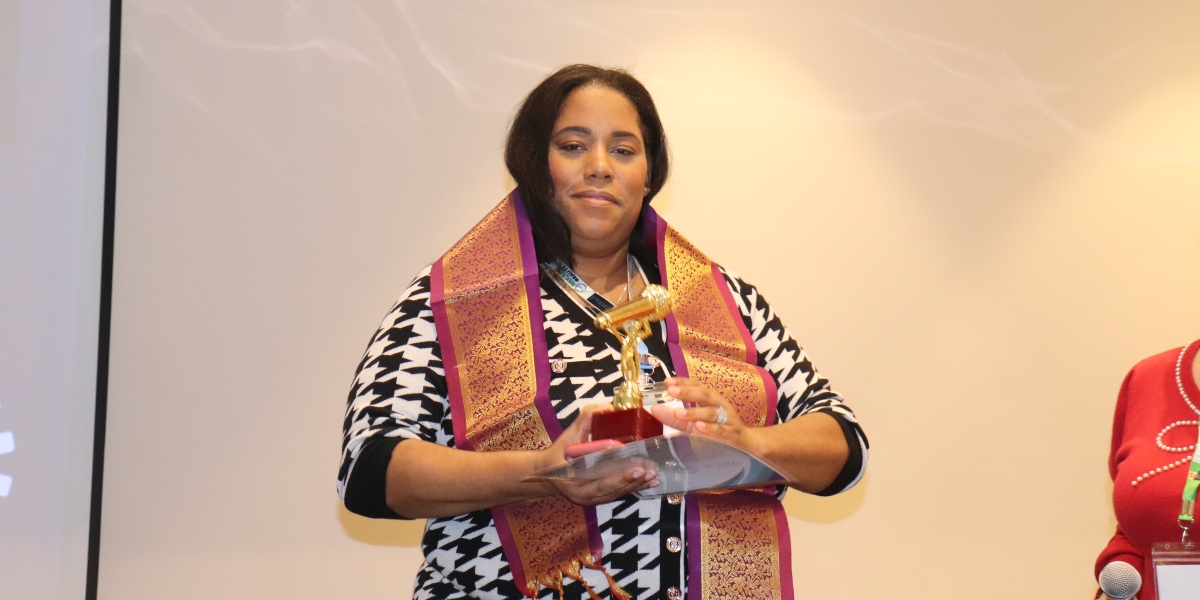

Most founders in health services sell hours. Toni Curtis sold a method, and then persuaded a Medicaid managed care organization to put it to the test.
A two‑year partnership between BirthWise Doula Services and AmeriHealth Caritas North Carolina, built on Curtis’s care model, served roughly 200 families across four counties. The partnership is now expanding statewide.
For a founder in a category that health systems have historically treated as optional, a signed payer contract did something no amount of advocacy had managed. It moved the conversation from whether doula support is nice to have to whether the health system should be buying it at all.
The Category Problem She Had to Solve First
Curtis founded BirthWise in Charlotte in 2020 after nearly 30 years in birth work, beginning in 1996 as a high school peer educator supporting teen mothers. The commercial problem she inherited was structural. Doula care sits outside the clinical billing system, which means it is bought by individual families who can afford it and skipped by everyone else, and it scales linearly with the founder’s own time.
Her answer was to stop selling presence and start selling a defined methodology. The Lifespan Birth Method™ organizes her practice around four arms: clinical care, body and breath work, nutrition and fertility, and policy and advocacy. It treats birth as a physiological process across a woman’s life rather than a forty‑eight‑hour clinical event, and it applies at every level of risk, including inductions and surgical births.
That distinction matters commercially as much as clinically. A method that only works for straightforward births is a boutique service. A method whose logic holds across a full Medicaid population, high‑risk pregnancies included, is something a payer can underwrite.
“The medical model can’t argue with the receipts,” Curtis has said of the approach.
Why She Led With Economics
Plenty of founders in women’s health lead with the moral case. Curtis leads with the operational argument, then lets the moral case land behind it.
The disparity data is stark, and she cites it precisely. In 2023, the maternal mortality rate for non‑Hispanic Black women in the United States was 50.3 deaths per 100,000 live births against 14.5 for non‑Hispanic white women, roughly three and a half times higher, according to the National Center for Health Statistics. CDC maternal mortality review committee data covering 2017 to 2019 found an estimated 84 percent of pregnancy‑related deaths were preventable.
The national baseline fills in the rest of the picture. NCHS put the cesarean delivery rate at 32.4 percent in 2024, and CDC survey data places breastfeeding initiation nationally at 86.1 percent. Those two figures describe outcomes a managed care organization already budgets around, and they are the ground Curtis chose to argue on.
Her case to AmeriHealth Caritas followed from that. Surgical delivery and early feeding support are both points where a payer is already spending, so a care model that speaks directly to them can be assessed on operational terms rather than on goodwill. That is a different conversation from asking a health plan to fund doula care because it is the right thing to do.
Building an Asset Instead of a Bigger Practice
The payer contract is the credential, not the business model. What Curtis has been building around it is a set of assets that do not depend on her being in the room.
She trains and mentors doulas nationally and has developed a practitioner training pathway. In 2026, she published Beyond Depletion: The Nutritional Therapist’s Guide to Postpartum Healing, a practitioner and consumer education resource on postpartum nutritional recovery. In August, she convened Embrace & Evolve: The Reinvention of Women’s Health, a national summit in Charlotte for clinicians, midwives, lactation consultants, community health workers and doulas, with AmeriHealth Caritas as a confirmed sponsor.
She has also taken the argument upstream. Curtis serves as Director of Advocacy for DONA International, sits on the Forttuna Health & Wellness Council’s global advisory board following her appointment announced in July 2026, and is a United Nations Representative through the Africana Women Working Group, a non‑governmental organization holding consultative status with the UN Economic and Social Council.
That progression, from practice to method to payer contract to policy seat, is the part other founders in regulated and credibility‑sensitive categories should study. Each stage bought the credibility required for the next.
What Comes Next
The statewide expansion is the near‑term test. A model built across four counties has to hold up across a much larger and more varied population, and Curtis’s own framing is that the physiological requirements do not soften as risk rises. They matter more.
“This partnership showed what happens when skilled doula support is built into the system rather than left outside it,” Curtis said. “The work now is to make it accessible. We stand to fight against disparities, but my expertise is for everyone.”
Toni Curtis, CD(DONA), LCCE, CLC, CVD(TVL), CHW, SpBCPE, SpBAP, is the founder of BirthWise Doula Services in Charlotte, North Carolina. More at birthwisedoulas.com.