
People do not always recognize their own readiness. Someone can have the skills, experience, and judgment to take on a greater responsibility while still believing they need more time, more preparation, or more proof before they are ready.
Chris Sund has seen that gap from both sides. He has experienced moments in his own life when circumstances forced him to reconsider what was possible, and later, as an executive leading and hiring at scale, he began noticing the same pattern in other people: capable individuals were often ready for their next opportunity long before they believed it themselves.
Chris Sund Learned That Capability Is Not Always Obvious
Sund’s understanding of potential did not come from observing success from a distance. It developed through experiences that challenged his own assumptions about what was possible.
In college, Sund received a theft charge for stealing a shopping cart as part of a practical joke. He worried that one bad decision would hurt his future opportunities. When he looked at jobs he wanted to apply for, he knew he would have to disclose the charge and found himself thinking, “Why would someone hire me?” It was an early example of how quickly self-doubt can affect what someone believes is possible.
About a decade later, Sund faced a very different kind of setback when he lost a job he had sacrificed significant family time for. That experience made him question what he was working toward and what he was willing to give up for career success.
Those experiences did not establish a simple formula for success. They gave Sund a different perspective on how quickly circumstances can change and how easily people can allow one chapter of their lives to define what they believe is possible in the next.
Over the years, Sund began seeing similar patterns in the people he hired, developed, and led.
What Chris Sund Saw When He Started Hiring at Scale
As Sund began hiring, developing, and leading people across growing organizations, he encountered a recurring pattern.
Some employees were already demonstrating the qualities needed for a larger role, but they did not necessarily see themselves that way. Their hesitation was not always connected to a lack of ability. Sometimes they simply had not yet developed enough confidence in their own capability to act on it.
That distinction matters for leaders.
A traditional approach to talent can focus heavily on what someone has already done. But potential requires a different kind of observation. Leaders have to recognize what a person may be capable of doing before that person realizes it in themselves.
For Sund, this became more than a leadership theory. He saw it repeatedly in the people around him.
The Employee Who Was Ready Before She Believed It
One example came from a woman working in his organization’s credentialing department.
Sund saw potential in her that extended beyond her current role and encouraged her to consider moving into sales. She initially declined because she did not believe she was ready. She said no more than once.
After assuring her that she would be supported as she tried the new role, she decided to accept the opportunity.
She went on to succeed in the role and began receiving sales awards, providing a concrete example of something Sund had seen: readiness and the feeling of readiness are not always the same thing.
Her story illustrates an important leadership lesson. Sometimes people already have the ability, but self-doubt or fear of failure keeps them from believing they are ready. They need someone to recognize capability that they have not yet learned to recognize in themselves.
What Leaders Can See Before Employees See It
Leadership involves more than evaluating current performance. It also involves deciding when someone is ready for an opportunity that stretches beyond what they have already demonstrated.
That requires judgment.
Not every hesitant employee is secretly prepared for a larger role, and not every opportunity should be accepted simply because someone believes in a person’s potential. But hesitation should not automatically be interpreted as inability either.
A capable person may hesitate because the new responsibility is unfamiliar. They may worry about failing publicly. They may compare themselves with people who appear more experienced. Or they may simply have spent enough time in their current role that the next step feels larger than it actually is.
Good leaders can help separate those concerns from genuine capability gaps.
They can ask different questions: What has this person already demonstrated? What skills are transferable? What would happen if the person were given the opportunity with appropriate support? What evidence suggests the individual can grow into the role?
That approach turns leadership into more than talent assessment. It becomes an exercise in recognizing possibility.
Feeling Unready Does Not Always Mean Being Unready
Confidence and capability are related, but they are not identical.
A person can be uncertain and still capable. Someone can be nervous about a new responsibility and still perform well. A leader can question a decision and still make a sound one.
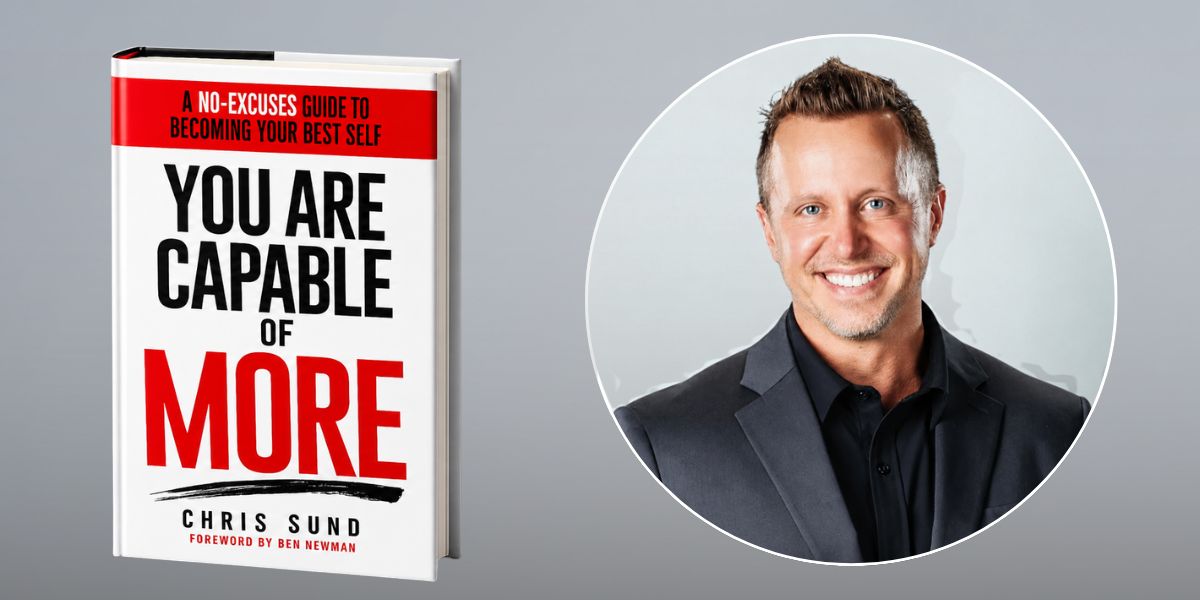
For Sund, this distinction is central to the message behind You Are Capable of More: A No-Excuses Guide to Becoming Your Best Self.
The book examines how self-doubt, fear of failure, comfort, and busyness can prevent people from using capabilities they already possess. Its premise is not that people need to become perfect before they move forward. It is that they may have more capacity than their current circumstances require them to use.
That idea also changes the responsibility of leaders. Rather than waiting for employees to arrive with complete confidence, leaders can create opportunities for people to discover what they are capable of doing.
From Recognizing Potential to Acting on It
Sund’s experience leading companies has reinforced a simple observation: people are often closer to their next level than they realize.
The distance between where someone is and where they could be may not always require a dramatic transformation. Sometimes it begins with an opportunity, a difficult conversation, or another person willing to say what the individual cannot yet see for themselves.
That does not eliminate the need for preparation, accountability, or skill development. It means those things should not be confused with the belief that a person must feel completely ready before taking the next step.
For leaders, the lesson is to look beyond confidence when evaluating potential. For individuals, it is to recognize that uncertainty is not always evidence of incapability.
Sund’s work, including You Are Capable of More, is built around that distinction. People may not always see their own potential clearly. Sometimes the first step toward using more of it is having someone recognize it, name it, and create the opportunity to prove it.
Explore / Learn More and Connect with Chris Sund
Website: You Are Capable of More
Book: You Are Capable of More: A No-Excuses Guide to Becoming Your Best Self
LinkedIn: Chris Sund
Instagram: Chris Sund
Facebook: Chris Sund