
By: Jessica S
There is a word missing from most leadership conversations about disruption. Not a word about how to survive it, manage it, or push through it. A word about what to do in the moment just before all of that, when something unexpected has just landed, and the instinct to react immediately is the loudest thing in the room.
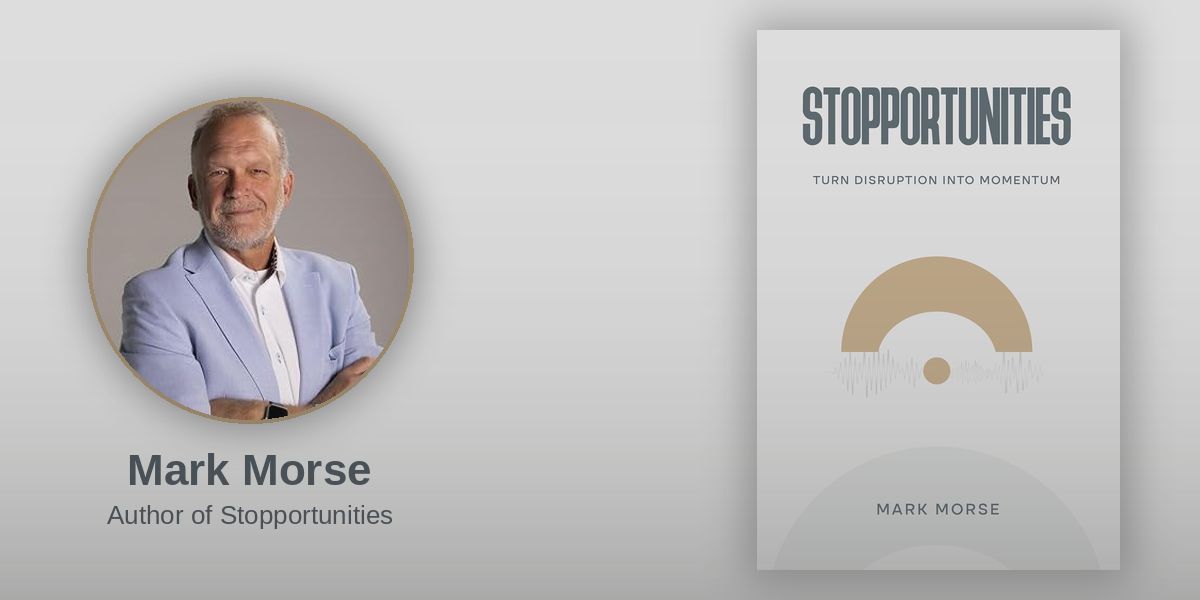
Mark Morse spent more than two decades building Morsekode, a Minneapolis-based brand and marketing agency, leading it through the kind of uncertainty that comes with entrepreneurship at every stage, until its acquisition by Gravity Global. He is a lifelong musician and drummer. He has been a brand builder, a creative leader, a strategic advisor, and now a Managing Partner at Gravity Global. And across all of those roles and transitions, he kept noticing the same thing.
The leaders who handled disruption best weren’t the fastest to react. They were the ones who knew how to pause.
He coined a word for the moment that pause makes possible. He called it a Stopportunity®.
What The Word Actually Means
A Stopportunity is the opportunity hidden inside a disruption, the moment of friction or uncertainty or unexpected change that contains within it the seed of meaningful momentum, if a leader is willing to stop long enough to see it.
The concept sounds simple. It runs against almost everything the current pace of business rewards. The world is moving at hyper-speed, and most leaders are trying to keep up with it. In the race to be fast or first, the ability to be right gets quietly sacrificed. Constant motion gets mistaken for progress. And the noise that constant motion generates prevents leaders from spotting the very moments where disruption could actually become something valuable.
Mark’s framework, which he calls PAUSE, is built to change that pattern. It prepares leaders before pressure hits, helps them assess reality without ego, extracts signal from noise, and then supports execution with genuine conviction. The moments of disruption, he argues, are inevitable. What happens next is not.
The Musician Who Thinks Like A Leader
Mark’s background in music, particularly jazz, is not a biographical footnote. It is the foundation of how he thinks about leadership, change, and momentum. Jazz is built on improvisation and collaboration. It requires musicians to listen as carefully as they play, to respond to what’s actually happening in the moment rather than following a fixed script, and to find their contribution within a dynamic, constantly shifting whole.
That orientation toward listening, toward presence in the actual moment rather than the anticipated one, translates directly into what Mark teaches about Stopportunities. Leaders who are always in performance mode, always executing the plan, always moving, miss the improvisation that great leadership actually requires. The pause isn’t a break from the music. It’s part of how the music gets made.
From Entrepreneur To Acquisition To What Comes Next
Mark’s own career is itself a series of Stopportunities. The transition from running Morsekode for more than two decades to navigating its acquisition by Gravity Global, and then stepping into a Managing Partner role inside a much larger organization, required exactly the kind of deliberate pause the book describes. Not stopping to give up. Stopping to see what the disruption was actually offering.
His experience on both sides of that transition, as a founder and as an executive inside a global firm, gives the framework a credibility that purely theoretical leadership books rarely carry. He has been in the room when disruption arrives unexpectedly. He has felt the pull toward immediate reaction. And he has learned, through experience rather than observation, that the leaders who emerge from disruption with momentum intact are the ones who learned to treat the pause as an asset rather than a weakness.
What The Pause Framework Actually Does
The PAUSE framework at the center of the book is practical in the way that only frameworks built from lived experience tend to be. It doesn’t ask leaders to slow down as a philosophical stance. It gives them a structured way to use the moment of disruption productively rather than reactively.
Prepare before pressure hits. Assess reality without ego. Understand the signal beneath the noise. Strategize around what the moment is actually offering. Execute with conviction once clarity has been achieved. Each step is designed to convert the instinct to react immediately into something more deliberate and more effective.
The underlying argument is that Stopportunities don’t announce themselves clearly. They hide inside the moments that feel most urgent, most disruptive, most demanding of immediate action. The leaders who find them are the ones who have built the capacity to pause before they respond, to ask what this moment is actually offering before deciding what to do with it.
The Momentum That Follows
Mark is clear that the goal of the book isn’t to slow leaders down. It’s to help them move faster in the right direction. Momentum built from clarity and conviction moves farther and lasts longer than momentum built from reaction and noise.
The moments of disruption are inevitable, he says. Every leader will face them repeatedly across a career. What separates the leaders who build lasting momentum from the ones who simply survive the disruption is whether they learned to see the Stopportunity inside it.
That’s the word the leadership conversation was missing. And the book built around it is a practical argument for why learning to stop, just long enough to see clearly, might be the most important skill available to any leader navigating the pace of the world right now.
Stopportunities: Turn Disruption into Momentum by Mark Morse is available now on Amazon. The moments are inevitable. The momentum is up to you.
If disruption keeps arriving faster than you can respond and you’re tired of reacting instead of leading, Stopportunities: Turn Disruption into Momentum by Mark Morse is available now on Amazon. The pause isn’t the problem. It’s the answer.