
By Brian Gentile, NYC, Artist Critique
Architectural designer Wanfang Long combines robotic fabrication, community-centered design, and emerging technologies to rethink the future of the built environment.
As architecture responds to growing demands for sustainability, digital transformation, and social responsibility, a new generation of designers is exploring how digital fabrication and other emerging technologies can reshape both the building process and the communities architecture ultimately serves. Among them is architectural designer Wanfang Long, whose work bridges computational design, robotic fabrication, and community-centered architecture. From experimental research to built projects, her career reflects a consistent effort to translate technological innovation into practical architectural solutions with lasting environmental and social value.
Early Practice and a Turn Toward Emerging Technology
Long began her professional career in Los Angeles County after earning her Bachelor of Architecture. She worked across every stage of project delivery, from planning and schematic design through design development and construction documentation. During those years, she contributed to more than twenty residential and healthcare projects, including a 155,000-square-foot resort complex designed to enhance the visitor experience through carefully integrated architectural planning. The breadth of that early work gave her both technical depth and firsthand experience with the complexities of large-scale practice.
Seeking to expand her knowledge of emerging technologies, Long pursued a Master of Advanced Architectural Design at the University of Pennsylvania. There she explored computational design, robotic fabrication, material intelligence, and advanced building technologies while participating in the Princeton Gallery design project. Rather than treating digital tools as a way to refine conventional workflows, her research asked how computation and robotics could change the way architecture is conceived and constructed.
How Robotic 3D Printing Supports Sustainable Construction
One outcome of that research was a minimum-surface façade prototype fabricated through large-scale robotic 3D printing. By pairing computational geometry with robotic fabrication, the project proposed a prefabricated assembly system intended to reduce construction complexity and material consumption while maintaining architectural performance. The building industry continues to search for lower-carbon, more resource-efficient methods, and the research examined how digital fabrication can contribute to that shift without compromising design quality.
The project later received Gold Winner recognition from both the MUSE Design Awards and the French Design Awards, two international competitions administered by the International Awards Associate. Both programs use a blind review process, with entries scored independently by panels of architects, designers, educators, and industry professionals from a range of countries. The recognition drew wider attention to the project and to its pairing of technological innovation with sustainable thinking.
The research also established an approach that continues to characterize Long’s work. Rather than treating technology as an end in itself, she applies computational design and digital fabrication to practical architectural challenges, with the aim of improving construction efficiency, reducing material waste, and expanding opportunities for environmentally responsible design. That pairing of innovation with real-world application has remained a defining theme throughout her career.
Following graduate school, Long continued practicing architecture in Pennsylvania and contributed to more than twenty additional projects, including the adaptive reuse of a 12,000-square-foot residence hall at Bryn Athyn College. She currently serves as an Architectural Designer at Design Develop, an AIA Design Award-winning firm whose work spans commercial, institutional, educational, civic, cultural, healthcare, hospitality, and mixed-use developments. Working across that portfolio has allowed her to pair sustainable design strategies with the practical demands of professional practice.
Community-Centered Design at UO Café in Baltimore
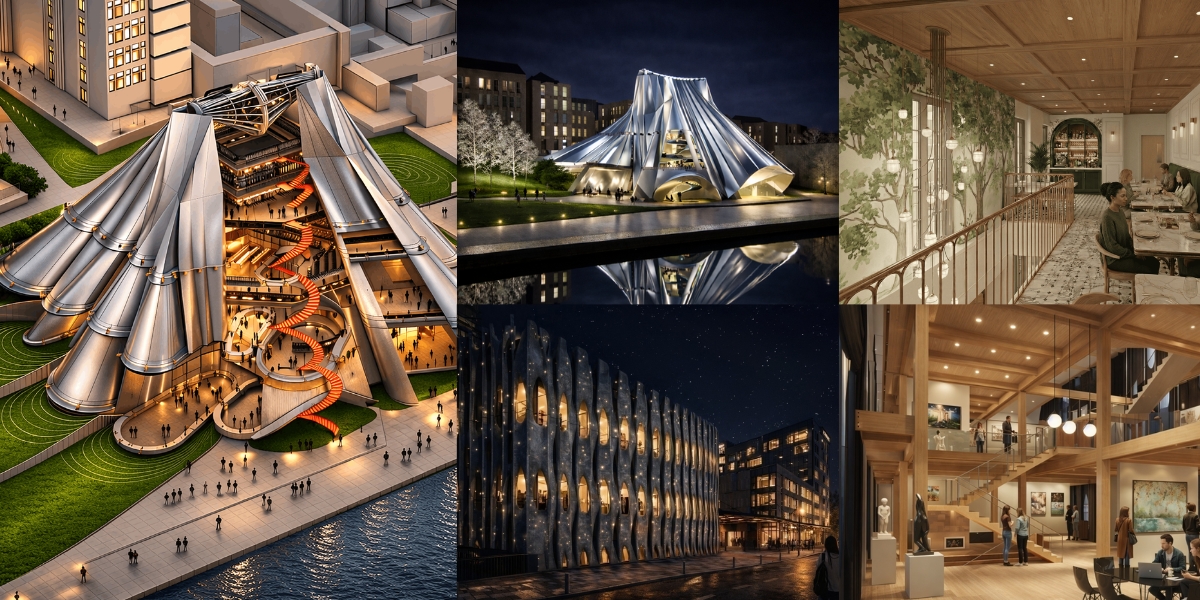
Among her most significant projects is UO Café, a nonprofit community development initiative in a historically underserved Baltimore neighborhood affected by decades of disinvestment, homelessness, and food insecurity. As lead designer, Long directed the project’s architectural design, visualization, and public presentations, helping shape the vision into a welcoming community destination.
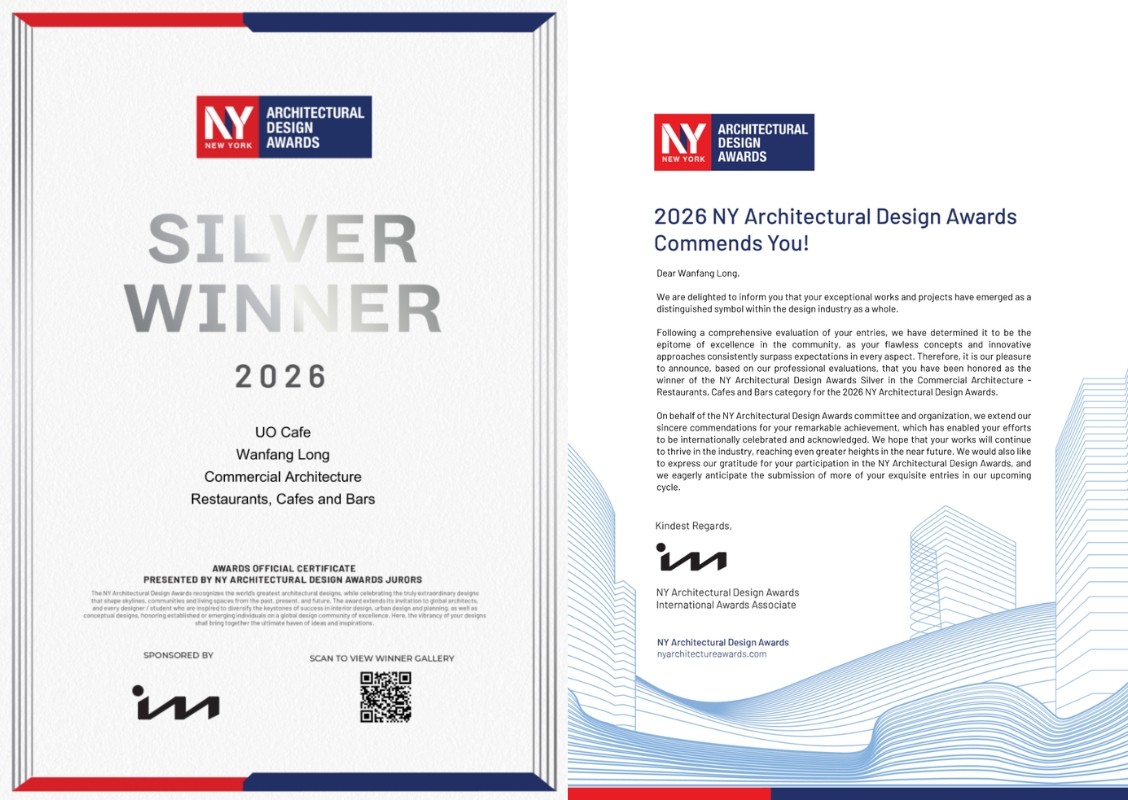
Conceived as more than a neighborhood café, the project is designed as an inclusive public space intended to encourage social interaction, expand access to fresh food, support local economic activity, and contribute to long-term neighborhood resilience. The design has also given the nonprofit organization a stronger platform for its fundraising and public engagement work. In recognition of both its architectural quality and its social intent, the project received honors from the Rome Design Awards and the New York Architectural and Interior Design Awards.
International Recognition for Digital Fabrication Work
Long’s expanding professional profile has also led to invitations to take part in major international industry events. In 2026, she was selected as an Ambassador for Sustainability in Construction, Digital Construction, and Women in Construction at New York Build Expo, the largest construction and design exhibition in New York. The Expo draws more than 40,000 architects, engineers, developers, contractors, government representatives, and construction professionals, and it serves as a significant forum for innovation and professional exchange.
As part of the Expo’s Architect’s Hub, Long exhibited her award-winning projects alongside internationally recognized firms including CannonDesign, AECOM, Perkins Eastman, Fogarty Finger Architecture, and DLA Architects. Her participation reflected a growing presence within international conversations about sustainable architecture, digital construction, and the future of the built environment.
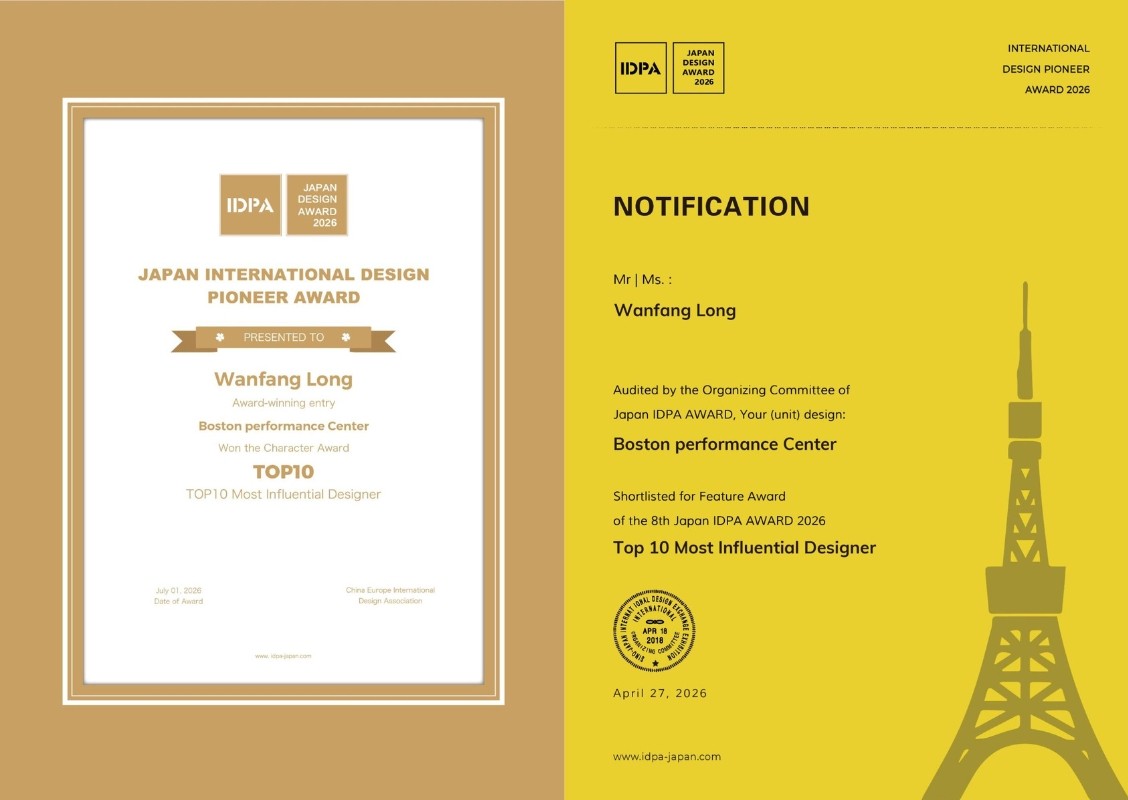
That recognition continued later in 2026, when Long was named a Global Top 10 Finalist and one of the Top 10 Most Influential Designers by the Japan International Design Pioneer Award. Established in Tokyo in 2018 through collaboration among Japanese architecture and interior associates, Japanese design agencies, and international design associations, the award recognizes achievement in architecture, interior design, and product design while promoting innovation, sustainability, and international collaboration. Participants include architects and designers from Asia, Europe, and North America, with projects evaluated by architects, educators, and design professionals.
Long received the distinction for her Boston Performance Center, a project selected for its originality, conceptual depth, and forward-looking approach to cultural architecture. Integrating material intelligence research, flexible spatial organization, and advanced planning strategies, the proposal reimagines the relationship between performance venues, public space, and urban life while emphasizing adaptability, sustainability, and community engagement.
Across research, professional practice, and international design competitions, Long has built a body of work defined by a consistent commitment to innovation, sustainability, and public impact. Whether she is exploring robotic fabrication, adaptive reuse, or community-centered development, her projects show how emerging technologies can support architecture that is more efficient, more environmentally responsible, and more responsive to the people and communities it serves. As her work continues to draw recognition from international organizations and professional institutions, Long represents a generation of designers shaping contemporary practice through technology, sustainability, and civic engagement.
Silver Winner from New York Architectural and Interior Design Awards :
Ambassador for Sustainability in Construction, Digital Construction, and Women in Construction at New York Build Expo:
Top 10 Most Influential Designers by the Japan International Design Pioneer Award (IDPA Award) :
Firm’s AIA winning project: