
By: Georgette Virgo
In an era when executives chase visibility, Dave Richardson remains notably private. Yet this founder and co-founder of numerous companies focused on the environment and green technologies, and Board Chair and Co-Founder of the Stigma-Free Mental Health Society, has shaped some of Canada’s most consequential industries and philanthropic movements. His fingerprints appear across sectors that touch daily life. Yet his name rarely appears in headlines.
Richardson has spent decades at influential global tables. He was a founding member of the Asia Pacific Foundation and served with the Canada-China Trade Council, chairing its Agriculture Committee. He served on the board of Credit Suisse Canada. He served for 25 years on the board of Ducks Unlimited Canada and is now a Director Emeritus.
Kenya, Where it All Started
As a former director of the World Wildlife Fund, Richardson saw firsthand how environmental collapse leads to economic collapse, and how the reverse is equally true. Yet when he speaks about legacy, he doesn’t reach for trade policy or boardroom wins. He reaches for the people his work has positively impacted.
That instinct led him to the Maasai Mara in 2018. While visiting with his wife, Pamela, and son, Colby, he noticed something most development frameworks miss entirely. The girls were going to school in uniforms, full of purpose and ambition. Their brothers were herding goats by the roadside, barefoot and idle.
The once-proud warriors of the Maasai, living in more peaceful times, had lost a clear sense of who they were. There were 400 women in a collective, but men had nowhere to gather and nothing to anchor them.
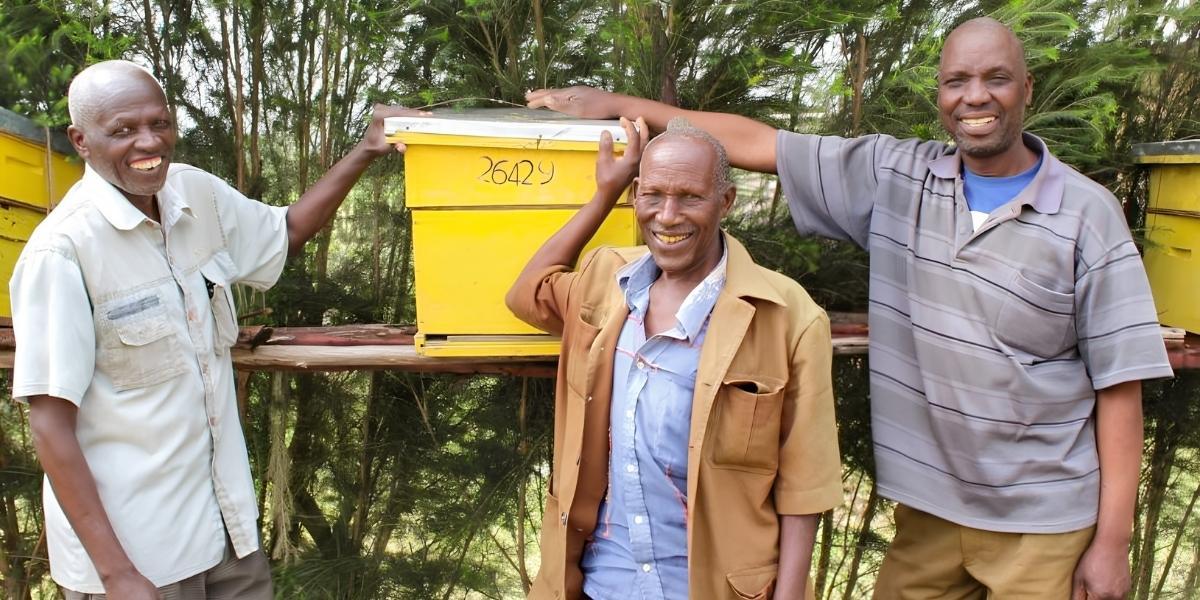
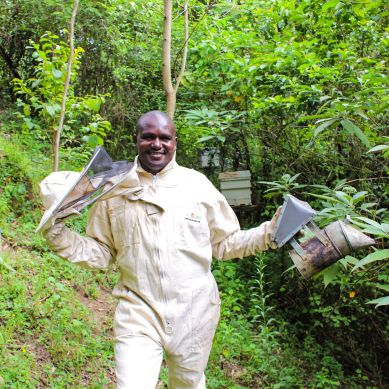
His response was practical and immediate. In partnership with WE Charity and its founder Craig Kielburger, Richardson funded a beekeeping hub at Oleleshwa Farm, a gathering place for men named the Beehive. He funded woodworking tools so participants could build and supply hives, creating income beyond honey.
However, Richardson saw another need: mental health well-being. Thus, he added mental health training in 2024, ensuring it would continue into 2025 and beyond. The founder personally held Zoom calls with graduating classes and beekeeper groups, through an interpreter, to discuss wellbeing directly.
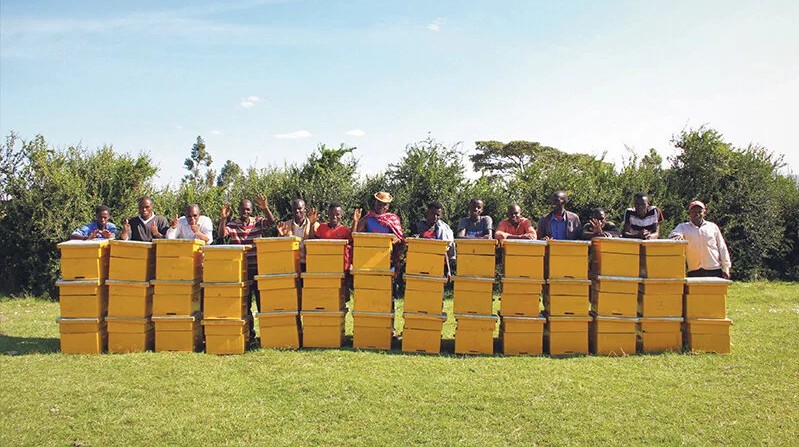
The initiative saw a favorable result: participants have increased their household income by an average of 25%. Communities for miles around now visit the Beehive to learn from what has grown there.
Building the Same Impact in Ecuador
The Ecuador program followed a similar logic. When Richardson’s son Quinten was working with WE Charity in Ecuador, the initiative expanded into the Amazon basin. Across more than 20 beneficiary communities, families now steward native Melipona stingless bees that have pollinated these forests for millennia. The program has grown to eight high schools in partnership with Ecuador’s Ministry of Education.
In both Kenya and Ecuador, honey is considered a medicine by indigenous communities. The loss of pollinators has made it scarce. These programs have restored access and, as a direct result of increased pollination, expanded the local food supply.
“Dave has this gift for seeing what’s missing before anyone else does,” says Carol Moraa, Director of WE Charity’s Mara region. “He finds the gaps where society’s systems are breaking down. Then he steps in, strengthens them, and disappears before anyone can thank him. It’s the most effective form of leadership I’ve ever witnessed.”
That same instinct extends to his work closer to home. As the co-founder of the Stigma-Free Mental Health Society, Richardson has worked for years to dismantle the structural barriers that prevent people from seeking support.
More recently, as a visionary partner and founding sponsor of the Art of Wellbeing Lab at the Vancouver Art Gallery, he helped create something genuinely new: a program that allows healthcare professionals to prescribe immersive art and nature experiences as part of patient care.
The program, the first of its kind in Canada, has drawn partners including BC Parks, the Canadian Institute for Social Prescribing, Fraser Health, and Covenant House. In its first year, more than 2,200 people received complimentary admission, and over 330 seniors attended dedicated sessions.
Legacy Beyond Numbers
The thread running through all of Richardson’s advocacies is the same. He sees systems, recognizes when they are failing, and works to repair them before collapse becomes inevitable, whether that system is a pollinator network in the Amazon, a community of men who have lost their purpose in Kenya, or an urban population that has lost its connection to nature and to each other.
Richardson builds durable solutions, hands authority to local teams, and steps back. Local charities run the programs day to day. Local trainers lead the mental health sessions. Local beekeepers are now training other beekeepers. The goal, always, is that the work outlasts him.
In an era that rewards loud voices and immediate impact, Richardson’s influence offers a different model. Real leadership is often quiet. Power exercised with restraint can be more transformative than power on display. The systems people depend on, from food security to mental health to ecological stability, are strengthened by people willing to work without fanfare and trust communities to lead their own transformation.
The world Richardson is helping shape won’t bear his name prominently. But it will be more resilient, more compassionate, and more sustainable. And that, perhaps, is the truest measure of legacy.