
The nexus between energy policy, environmental integrity, and public health has become progressively complicated over the last few decades. On the continents, uncontrolled emissions, urban sprawl that is not sustainable, and inefficient land utilization have increased risks to health. The stakes are exceptionally high in sub-Saharan Africa, where urbanization is going at almost 4% each year. Air pollution contributes to more than 1 million premature deaths every year in Africa, as large cities experience poor air quality due to traffic, industrial emissions, and burning biomass.
Environmental and health outcomes are shaped significantly by energy and urban development policy. Industrial pollution, primarily from energy generation and manufacturing, continues to be one of the significant sources of particulate matter and greenhouse gas emissions. According to the International Energy Agency (IEA) 2022 report, Africa’s energy-related carbon dioxide emissions were over 1.5 billion metric tons, with urban-industrial areas being primary sources. Combined with inadequate land-use planning and poor transportation infrastructure, such emissions provide settings that amplify asthma, cardiovascular disease, and respiratory infections.
Inadequate zoning and land use also contribute to encroachment into environmentally vulnerable areas, raising the risk of contaminated water sources, vector-borne illnesses, and urban heat islands. The overconcentration of slums around high-emission industrial regions further exacerbates the health disparities, particularly for children and the elderly. Although these issues are universal, they have also necessitated comprehensive research and policy guidelines from researchers, planners, and engineers toward long-term answers through sustainable development.
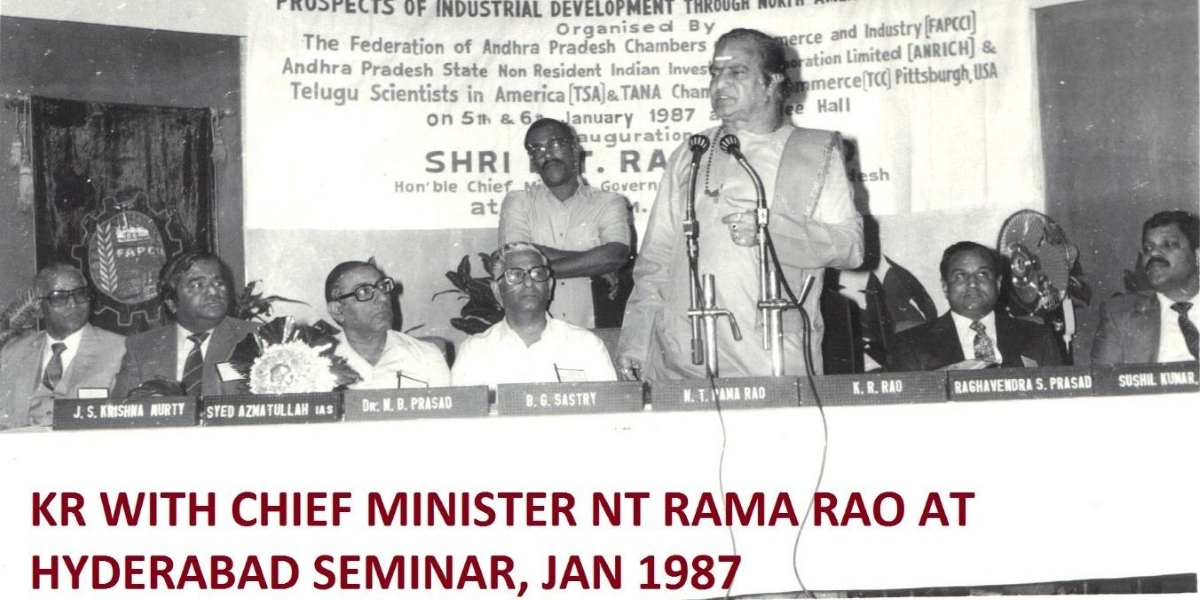
The present research and scholarly contribution of Kocherlakota Ramchandra Rao, known simply as K. R. Rao, gives insight into how knowledge from multiple disciplines can direct energy and city policies. Rao, whose education and career is in civil, mechanical, structural, and nuclear engineering, with research at the intersections of environmental science and engineering, renewable energy, and sustainable urban development, has stressed through his work, especially as the Editor-in-Chief of the American Society of Mechanical Engineers (ASME), the importance of holistic policy schemes in reducing the adverse health and environmental consequences of contemporary energy infrastructures.
Rao’s response to these challenges began with his work in the 1960s when he contributed to industrial planning in India with his thesis Meerut District – A Plan for Industrial Locations. This empirically based land-use analysis recommended measures to contain health and congestion effects by decentralizing industrial areas. His subsequent doctoral research at the University of Pittsburgh, where he received a Ph.D. in metropolitan and urban affairs in 1976, broadened this interest to international settings, combining regional economics with urban planning. His presentation on urban design at the International Congress of Geography in Montreal was representative of his attempts to place environmental health issues in the planning arena.
In the energy industry, Rao spent much of his time during the 1980s working on nuclear power plant safety and seismic design at Westinghouse Electric Corporation, including projects concerning the Beznau Nuclear Power Plant in Switzerland and U.S.-based facilities such as Diablo Canyon and Vogtle. Such experience influenced subsequent work focusing on the environmental roles of energy facility development. His works in the Companion Guide to the ASME Boiler and Pressure Vessel Codes and the Handbook of Energy and Power Generation (2011) outlined technical standards that balanced operational safety with environmental concerns, advocating stronger codes for energy facilities worldwide.
From 2020 to 2024, Rao was the lead editor for ASME’s Renewable Energy Book Series, managing volumes like Solar Energy Applications (2020), Biomass and Waste Energy Applications (2021), Wind Energy Applications (2022), and Hydro, Wave, and Tidal Energy (2024). These books, created in consultation with several subject-matter specialists, examined how new technologies in energy production can lower city emissions, alleviate reliance on fossil fuels, and enable decentralized power systems appropriate for densely populated or rural areas. Each book described the connection between sustainable energy uptake and enhanced health indicators, such as decreased ambient air and water pollution.
Rao’s two-volume treatise Wind Energy for Power Generation: Meeting the Challenge of Practical Implementation, published by Springer, also highlighted the social aspects of renewable energy policy. Focusing on the United Nations Sustainable Development Goals (SDGs), SDG 3 (Good Health and Well-being), and SDG 11 (Sustainable Cities and Communities), the book was praised for its comprehensive methodology in reconciling economic, engineering, and health priorities. Based on SpringerLink statistics, the volumes attracted more than 4,300 readers within a quarter, demonstrating their audience among researchers, policymakers, and scholars.
For many years, he conducted tutorials and contributed to ASME’s Pressure Vessels and Piping (PVP) Division. He was a member of the Special Working Group on Editing and Review from 2007 to 2012, which aimed to standardize safety procedures in the energy infrastructure. He also started the Early Career Technical Conference (ECTC) in 2001, a forum for young engineers to share peer-reviewed research on environmental engineering, energy systems, and public health technologies. By 2019, the ECTC had welcomed more than 880 international participants and raised $90,000 to fund ongoing academic and practical investigations in the field.
Though Rao’s research does not explicitly deal with African energy issues, his conceptualizations and arguments are exceedingly relevant in nascent urban nodes across the Global South. Much of Africa’s recent urban growth has similarly grappled with industrial aggregation, congestion in traffic flow, and uncontrolled energy utilization, which his research has critiqued in other landscapes. His cross-pollination approach, marshaling engineering, city policy, and sustainability measurement, is a viable master plan to help reduce environmental devastation-induced disparities in health.
The African continent’s environmental challenges are deep but not unbridgeable. Strategic policy measures based on research and technical standards are essential to avert long-term threats. Researchers such as K. R. Rao, who have crossed disciplines and borders, offer case studies of how an integrated approach can result in practical solutions.
Kocherlakota Ramchandra Rao’s ideas on energy and urban planning still resonate today with discussions regarding sustainable development, especially where there is an interface between public health and industrial growth. His output is a timely reminder that solutions of a technical nature have to be anchored to human and environmental contexts, given that cities and countries must operate on the two-sided imperatives of growth and well-being.