
By Max Cooper
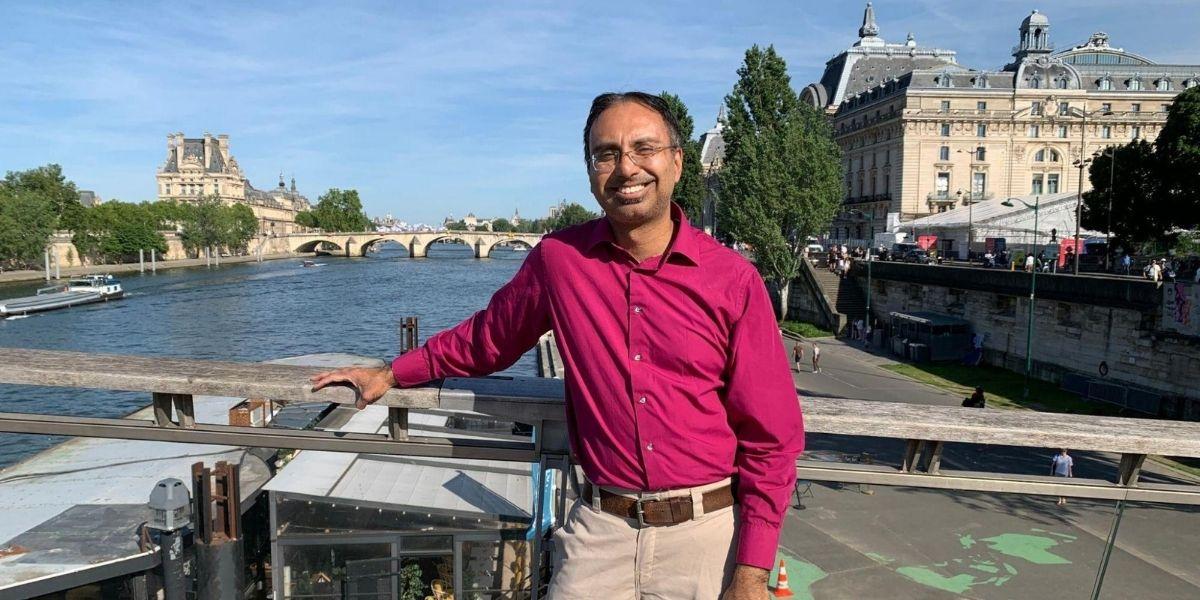
For author Tejas Desai, returning to Oxford was not simply another stop on a literary journey. It was a deeply personal return to the environment where many of the intellectual and artistic foundations of Bad Americans: Part II first began to take shape years earlier.
The internationally recognized novelist recently traveled back to Oxford to speak with students about Bad Americans: Part II, contemporary storytelling, literary ambition, and the evolving role of fiction in an increasingly fragmented modern world. Yet the visit quickly became something more reflective and emotional: a revisiting of the libraries, bookstores, streets, and memories that helped shape his literary identity.
“It was amazing,” Desai said of the return. “It was great to see my old haunting grounds, what’s changed and what hasn’t.”
Among the places he revisited were Blackwell’s Bookshop and the historic Bodleian Libraries, where he explored the works of literary figures ranging from Lord Byron and John Keats to Friedrich Nietzsche and Søren Kierkegaard. For Desai, these places represented moments of discovery that would later influence the themes and philosophical ambitions found throughout The Human Tragedy series.
Desai also recalled revisiting the everyday spaces that once shaped his student life, including kebab vans, Wadham College Hall, and smaller corners of Oxford tied to memories of long reading sessions and literary conversations.
“I ordered and reread many of the works I discovered at the time, and tried to find some of the more obscure libraries where I read Tolstoy and Dostoyevsky,” he explained. “But many have been reoriented.”
The changing landscape of Oxford mirrored themes that appear throughout Bad Americans: Part II, particularly ideas surrounding memory, identity, transformation, and the uneasy balance between preserving the past and adapting to modern realities.
The Oxford event itself became one of the highlights of the trip. According to Desai, the students were highly engaged throughout the discussion, with many continuing conversations afterward and acquiring copies of the book following the talk.
“The questions were excellent,” he said, specifically praising student interviewer Veer Anand for guiding a thoughtful discussion about literature, culture, and storytelling.
One question especially resonated with Desai: a comparison between Bad Americans: Part II and Absalom, Absalom! by William Faulkner, a novel celebrated for its complexity and layered narrative structure.
“The second time I’ve been asked that,” Desai noted. “Faulkner was my hero when I was in high school and college.”
The comparison reflects how readers increasingly view Bad Americans: Part II not simply as contemporary fiction, but as part of a broader literary conversation involving interconnected storytelling, moral ambiguity, and ambitious structural experimentation.
Desai’s work has often been described as intentionally resistant to simplified storytelling formulas. Rather than focusing on straightforward narratives, his fiction frequently embraces philosophical tension, emotionally complicated characters, and layered perspectives that attempt to capture the contradictions of modern life.
That ambition extends beyond a single novel and into the larger goals behind The Human Tragedy series and The New Wei, Desai’s broader literary and cultural initiative.
“I just hope it can spark more works like it,” Desai said. “Works that are urgently alive and sophisticated, meaningful yet provocative, that show us a window into the human condition.”
He added that he believes literature still has the ability to challenge readers while creating meaningful dialogue, particularly among younger audiences searching for stories willing to take creative and intellectual risks.
The conversation surrounding Bad Americans: Part II now appears to be expanding well beyond traditional literary spaces. From bookstore events in Brooklyn to discussions at Oxford and conversations continuing within public libraries and literary communities, the novel increasingly appears connected to larger discussions about the future of ambitious fiction and the cultural role literature can still play.
Desai also noted that several American students studying abroad expressed interest in visiting him later this year at his public library in Queens, where he hopes to continue conversations about literature and how libraries themselves have evolved into modern cultural and community centers.
As those conversations continue, from Brooklyn bookstores to Oxford lecture halls to public libraries, Bad Americans: Part II appears increasingly positioned not simply as the continuation of an ambitious literary series but as part of a larger ongoing experiment in how contemporary fiction can reflect the complexity, contradictions, anxieties, and emotional realities of modern life.
Bad Americans: Part II is now available on Amazon and other major retailers. You can find more information about Tejas Desai on his Instagram.