
The Catholic school systems across America have been enduring for several years, with enrollments fluctuating, expenses increasing, and an ever-changing demography of neighborhoods. The National Catholic Educational Association presents data from across America that reveals an enrollment reduction of two million members from the 1970s to the 2020s for Catholic schools. The challenge is much tougher in cities, with financial dependence on tuition rates, in addition to outdated school infrastructure, adding to financial woes. Such an environment makes it imperative for school administrations to manage tradition and adapt to practical change by working together at parishes, dioceses, or governmental levels to sustain schools.
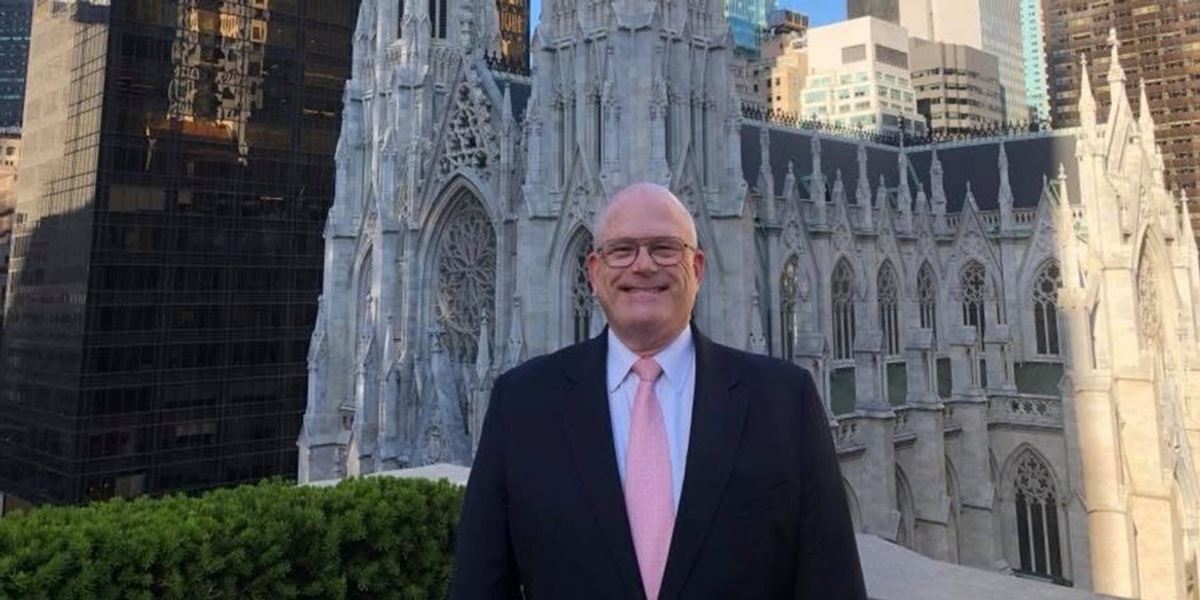
Michael J. Deegan lived in this environment, living for fifty years in Catholic education in New York. His background in Catholic education in New York has been anything but typical, as he has never entered the archdiocese as an administrator but rather as an educator, rising through the ranks. His experience has influenced the way in which he has led as a superintendent, grounded as he has been in both the operation and the business of the organization. As he became the Superintendent of Schools for the Archdiocese in New York in 2019, he brought fifty years of experience, ranging from all levels of Catholic Education.
Deegan’s educational background was the typical Catholic school education in the New York City metropolitan area. He completed his elementary education in 1967 at St. Philip Neri in the Bronx and high school at Rice in the Harlem community in 1971. His BA degree was acquired in 1975 from Iona University in New Rochelle. He further achieved the Master of Science in Education degree from the College of New Rochelle in 1984. His postgraduate work was conducted at Manhattan College in the Bronx as well as Fordham University in the city of New York. This was in line with his engagement in teaching as well as the management of the local schools.
The next several decades saw Deegan engaged in teaching, administrative, and leadership positions in various Catholic schools in New York. His responsibilities not only included schools but also enrollment management, teacher education, and governance. As the Catholic schools became less reliant on parish support and instead on tuition, enrollment management became a crucial matter regarding financial viability. This marked a critical point in Deegan’s trajectory, reflecting a growing emphasis on planning and system coordination in education, as opposed to instruction.
In April 2019, Deegan was appointed interim superintendent of Catholic schools for the Archdiocese of New York by Cardinal Timothy Dolan. He formally became Superintendent of Schools in the Archdiocese of New York in September 2019. Deegan served as the head of the Catholic elementary and secondary schools system of the Archdiocese in New York City, Westchester County, Rockland County, Orange County, Sullivan County, Putnam County, Ulster County, and Dutchess County. This network included approximately 200 schools in urban, suburban, and rural areas.
His tenure as a superintendent started shortly before the outbreak of COVID in early 2020. The budget of the Catholic schools, depending on tuition and parish offerings, faced an immediate problem due to the economic shock. The tuition payments were difficult to manage, and the parish offerings were down. In New York, schools in need were sustained through a combination of private giving and public assistance. Fundraising money of nearly $40 million was channeled to maintain the schools. In addition, public assistance such as the Paycheck Protection Program, Emergency Assistance to Nonpublic Schools I and II, funding from ESSER, E-Rate, CARES Act, and the American Rescue Plan were of tremendous help.
However, access to these programs was not automatic for private schools. Deegan worked with Cardinal Dolan, the US Conference of Catholic Bishops, and federal officials including Senator Chuck Schumer to advocate for Catholic schools’ inclusion. This was because Deegan and his associates contributed to various discussions surrounding issues of equality within the school environment and the use of private schools during the time of relief and preparedness for pandemics like COVID-19. Coverage by media outlets primarily focused on planning and funding issues during this time.
However, aside from addressing the effects of the pandemic, Deegan has also dealt with existing structural issues in the school district system. For instance, lower enrollment in certain areas has caused school consolidations and closings, which have generated reactions from those communities. However, this has been presented under a plan for sustainability, aside from quick remedies to budgetary constraints. The school district has encouraged using data to project enrollment, sharing services, and regional planning to make the best of limited resources.
The career of Michael Joseph Patrick Deegan can be considered a guide to Catholic school administration in an urban diocese for the past five decades. Alongside his professional life, he has received awards for his compassion and dedication to what he does: the 2003 Saint Elizabeth Ann Seton Compassionate Educator Award, the Joseph J. Bruno Award in 2005, the designation of Brother Edmund Rice–Christian Brothers of North America Centenary Partner Honoree in 2006, the Iona College Arthur A. Loftus Award for Outstanding Achievement in 2020, and the National Catholic Educational Association Lifetime Commitment Award in 2023.
The Archdiocese of New York announced in 2022 his retirement as a superintendent in 2023. Now retired from the position, he founded MJDEEGAN Educational Consultants, of which he is currently the president. Even as the new role keeps him from direct engagement in the actual work of school systems across the country, his focus on sustainability and leadership building, as was evident in his previous role, is preserved. His move from direct diocesan work to an advisory role is the normal pattern for those retiring after senior roles in education.
Taken cumulatively, Michael J. Deegan’s experience is representative of the evolution of Catholic high schools in big city dioceses during the second half of the twentieth century. Beginning with his experience in the classroom to system-level administration, his experience is a microcosm of the overall evolution in the administration, finance, and government influence on Catholic schools in general. His experience was a product of evolving demographics, economic realities, and health concerns, where several stakeholders must be positioned to address the issues on a Catholic-church-state level. It is on these terms that his impact is measured not only based on his successes but on the evolution of the system as a whole in a dynamic educational atmosphere.