
By: Ice Somani
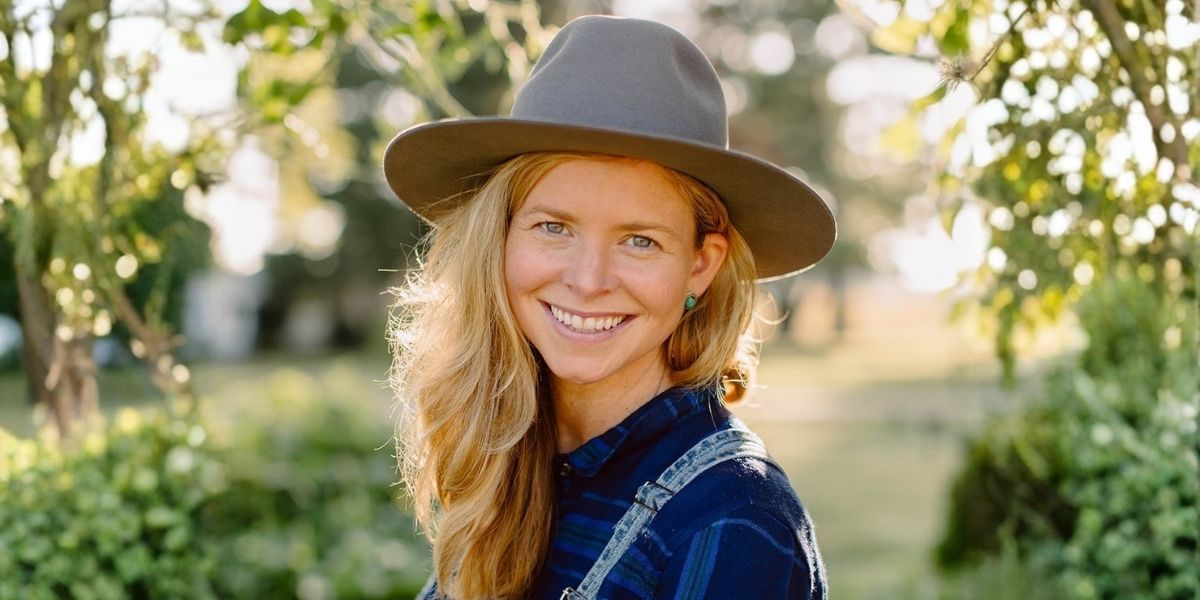
The morning air at Foxhollow Farm doesn’t just carry the scent of damp earth and curing hay; it carries a history. For Maggie Keith, standing amidst the rolling pastures of Crestwood, Kentucky, the land is not a line item on a balance sheet or a set of industrial coordinates. It is a living, breathing entity that she has spent two decades learning to converse with. When she arrived here twenty years ago, the soil told a different story, one of depletion and quiet. Today, the ground hums. There is biodiversity in the fence rows, birds in the canopy, and a thick, resilient carpet of grass under the hooves of wandering cattle. For Keith, the success of Foxhollow isn’t measured in the traditional metrics of a CEO, but in the simple, profound fact that “the land is alive again,” as Keith puts it.
To understand Maggie Keith is to understand a leadership style that rejects the rigid hierarchies of the corporate world in favor of something more ancient: stewardship. She does not sit at the head of a mahogany table; she walks the perimeter of the fields, often slowing herself down to match the pace of the seasons. “I don’t think of myself as a traditional CEO,” she explains. “I see myself as a steward of the land and a connector of people. My role is to hold the long-term vision for Foxhollow, what we’re building, why it matters, and then surround myself with people who are deeply skilled in the areas I’m not.” This humility is the bedrock of the farm’s operations. Whether it is the head herdsman who understands the nuanced language of cattle or the vegetable growers with decades of dirt under their fingernails, Keith’s primary objective is to create a space where their expertise can flourish in alignment with the broader mission of soil health and regeneration.
This journey has been one of intentional patience. In an era of “fast” everything, regenerative agriculture is a slow, methodical rebellion. Keith recalls that twenty years ago, reintroducing cattle and committing to a biodynamic system was a radical, long-term gamble. It required a willingness to look past short-term profits in favor of ecological resilience. Every decision made at Foxhollow is filtered through a singular, grounding question: “Does this honor and improve the land for the next generation?” If a choice doesn’t build resilience in the soil, it is discarded. This commitment to the long view has transformed the farm into a sanctuary not just for the animals, but for a community of people who feel a visceral pull toward the land.
However, the path hasn’t been without its jagged edges. The industrial food system is a formidable giant, and Keith has never been one to shy away from the uncomfortable truths of the trade. She speaks with a refreshing, sometimes jarring honesty about the state of modern agriculture. While the term “sustainability” has become a fashionable marketing buzzword, Keith has spent two decades in the trenches, navigating the grit and the heartbreak of farming. She acknowledges the “huge opportunity” in the current cultural shift toward food transparency, but she is equally vocal about the systemic barriers, the lack of capital, the disappearance of generational knowledge, and the predatory nature of “misleading” labels. “I’m willing to say what’s actually happening in the food system, even when it’s uncomfortable or unpopular,” she notes. For her, “know your farmer” is more than a slogan; it is a vital defense mechanism for a public that is increasingly disconnected from the source of its nourishment.
This fierce advocacy is tempered by a deep sense of personal reflection. Keith is the first to admit that her instinct is often one of urgency, a desire to fix the “fundamentally unfair” systems she sees around her. Over time, she has learned that her best work doesn’t come from that initial, reactive heat. Instead, she seeks the perspective of the land itself. When challenges arise, she takes a walk. She listens to the wind through the trees and relies on a team that isn’t afraid to tell her to pause. She is currently in a season of personal evolution, moving away from the “founder” mindset of doing everything and toward a more structured partnership that allows her vision to be translated into sustainable systems. She isn’t trying to become a rigid operator; she is trying to grow as a leader who trusts others to hold the day-to-day clarity so that she can continue to dream of what Foxhollow can become.
Her vision for the next decade is as expansive as the Kentucky horizon. She wants Foxhollow to move beyond being a successful farm and become a replicable model, a blueprint for others to follow. “If someone wants to start a farm or transition their land, I want them to be able to look at Foxhollow and say, ‘Okay, this is possible, and here’s how.'” This desire to democratize knowledge is rooted in the mentorship she received from figures like Mary Berry, who taught her that agriculture is as much about philosophy and culture as it is about mechanics. Keith views herself as a link in a chain, honoring the “ancestral wisdom” of those who came before while building a bridge for the next generation of stewards.
At the heart of it all is the simple act of gathering. To Keith, food is not a commodity; it is the ultimate connector. There is a quiet, sacred joy in seeing a customer have a “moment of understanding” when they step onto the farm and see the system in person. It is in these moments, and in the shared meals with her team and the sight of her herdsman moving through the pasture, that the true weight of her work is felt. She advises those who wish to follow in her footsteps to shed any romanticized notions of the lifestyle. It is hard, physical, and often grueling work that requires a constant willingness to learn from your mistakes. “But if you feel called to it,” she says, “there’s nothing like it. Growing food, feeding people, gathering around that, it’s one of the most fulfilling loops you can be part of.”
As the sun sets over the Foxhollow pastures, casting long shadows across the healthy, dark soil, the narrative of Maggie Keith remains one of quiet defiance. She has spent twenty years proving that you can run a business by listening to the earth, that profit can exist along with the health of the community, and that a leader’s greatest strength is often their ability to say, “I don’t know the answer,” In the world of CEOs, Keith is an anomaly, a woman who measures her legacy not in buildings or dividends, but in the return of the bees, the richness of the dirt, and the strength of the relationships built on the ground she calls home.