
For years, sobriety has been framed as the ultimate victory. The milestone. The moment everything finally comes together. In the media, recovery stories often end at abstinence, as if quitting alcohol alone ensures clarity, fulfillment, and freedom. But for many high-performing professionals and leaders, that narrative falls apart shortly after sobriety begins.
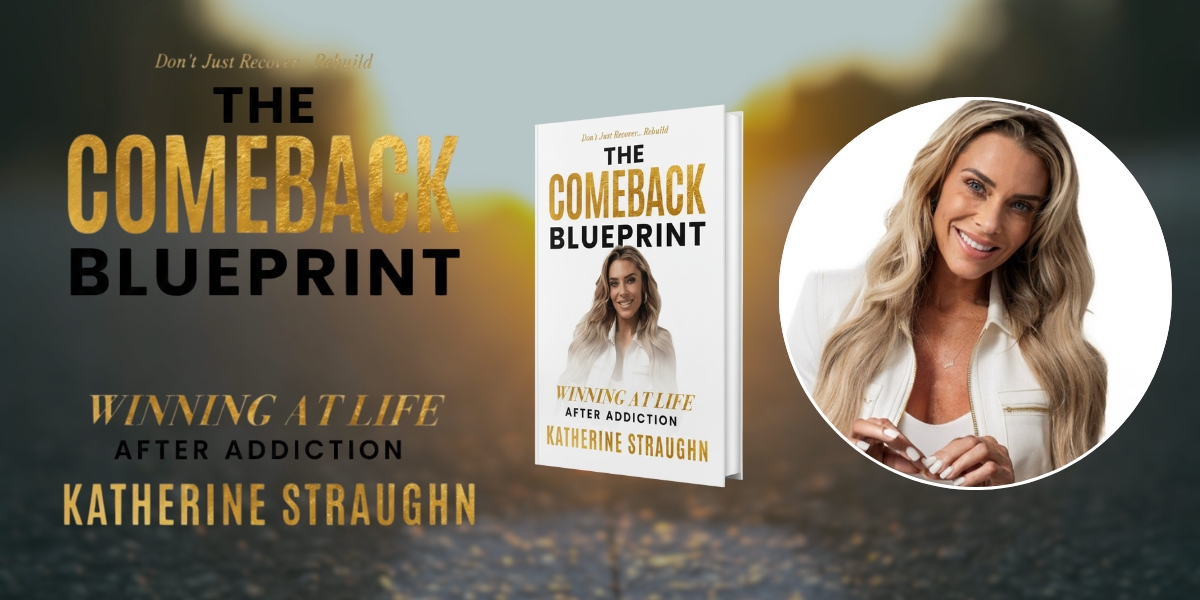
Kat Straughn knows this reality firsthand. As the founder of The Comeback Blueprint: Winning at Life After Addiction, she brings a perspective that acknowledges sobriety as essential, yet incomplete. Her work challenges a widely accepted misconception: removing alcohol solves the problem, but it does not automatically build life.
In recent years, Straughn has become increasingly explicit about what she believes sits at the center of real transformation. While sobriety creates space and structure provides stability, she points to faith in Jesus as the defining shift that turns recovery into lasting fruit. For Straughn, this is not about religion or performance-based spirituality, but about alignment, living under a higher authority than self. She describes this as a “Kingdom assignment”: the decision to stop working solely for personal improvement and begin stewarding one’s life, habits, and influence for something greater than self-preservation.
This is where many recovery journeys quietly stall. The absence of alcohol exposes deeper questions about purpose, discipline, and direction. When those questions go unanswered, the risk is not just relapse, but stagnation.
From Self-Improvement to Fruit-Bearing Work
This reframing marks a clear evolution in Straughn’s work. What began as helping people rebuild after addiction has expanded into training high-capacity individuals to live with discipline, purpose, and responsibility under Kingdom principles. She teaches that deliverance is God’s work, but stewardship is ours, that while freedom is given, authority must be exercised. In Straughn’s view, every person is entrusted with a Kingdom assignment: to take responsibility for the domains of life placed under their care and to build in a way that carries eternal weight. True freedom, she explains, is revealed not in what someone escapes but in what their life produces over time: peace, stability, restored relationships, and measurable impact. When identity, structure, and obedience align under faith, transformation stops being theoretical and becomes visible.
The Pivot Point No One Talks About
What separates long-term transformation from short-term recovery is not willpower or motivation. It is the pivot point, the moment when sobriety is recognized as a starting line rather than a destination.
Straughn’s work focuses on what happens after that realization. Through The Comeback Blueprint, she outlines how individuals move from merely avoiding relapse to actively rebuilding their lives intentionally. The shift is subtle but powerful: from managing behavior to redefining identity.
Sobriety clears the space. Identity and structure determine what fills it.
Identity, Structure, and Faith as Stabilizers
One of the distinguishing aspects of Straughn’s approach is her emphasis on alignment. She teaches that lasting change requires three interconnected elements: identity, structure, and faith.
Identity answers the question of who someone is becoming, not just what they are avoiding. Structure provides daily systems that support consistency when motivation fades. Faith, woven as a grounding framework rather than doctrine, anchors decisions in meaning beyond immediate outcomes.
Together, these elements transform sobriety from restraint into freedom. They shift recovery from reactionary discipline into sustainable leadership over one’s life.
From Recovery to High-Performance Living
Straughn’s credibility extends beyond personal experience. With more than a decade of lived sobriety, she has founded and led multiple treatment centers, supporting thousands through addiction and mental health recovery. She also built global sober communities designed to provide long-term accountability well beyond early sobriety.
Her work addresses a broader reality: addiction patterns rarely exist in isolation. The same cycles that drive substance dependence often appear in finances, relationships, career choices, and self-worth. Breaking those cycles requires more than abstinence; it requires intentional redesign.
Through coaching, community leadership, and her book, Straughn helps individuals transition from crisis recovery to purpose-driven, high-performance living.
Why This Message Resonates Now
In professional circles, more leaders are choosing sobriety for clarity, health, and performance. Yet many are unprepared for what follows. When alcohol is no longer the coping mechanism, unresolved patterns surface quickly.
The Comeback Blueprint meets this moment with honesty. It reframes sobriety not as an endpoint, but as a platform. A foundation upon which a new life, defined by discipline, faith, and self-trust, can be built deliberately.
This perspective resonates not only with those recovering from addiction but with anyone seeking freedom from cycles that no longer serve them. For Straughn, the ultimate measure of freedom is not abstinence, but fruit, a life reordered under faith that bears lasting results.
Redefining What Freedom Actually Means
Straughn’s core message is clear: sobriety removes the chaos, but structure, identity, and faith create freedom. True recovery is not measured by what someone no longer does, but by the life they intentionally build afterward.
By shifting the narrative from survival to ownership, The Comeback Blueprint offers a framework for individuals ready to move beyond abstinence and into alignment.
Acknowledging sobriety as the beginning, not the finish, opens the door to lasting transformation.
Explore More and Connect with Kat Straughn
- Website: Kat Straughn
- Book: The Comeback Blueprint: Winning at Life After Addiction
- Instagram & TikTok: @soberkatt
- Business: Laguna Shores Recovery
Disclaimer: This content is for informational purposes only and reflects the personal experiences and perspectives of Kat Straughn. The views shared are not intended to serve as medical, therapeutic, or professional advice. The author’s approach to sobriety and recovery, including her focus on faith, is based on her personal beliefs and may not apply to everyone. For professional advice regarding addiction recovery, please consult with a licensed healthcare provider.