Safety Checks for Pre-Owned Storage Units
Pre-owned storage units can be a practical choice for offices that need reliable organization without unnecessary waste or overspending. However, ...
Read morePre-owned storage units can be a practical choice for offices that need reliable organization without unnecessary waste or overspending. However, ...
Read morePre-owned storage units can be a practical choice for offices that need reliable organization without unnecessary waste or overspending. However, safety should come before appearance, price, or convenience. Cabinets, lockers, shelving, and mobile storage units all carry weight, move through shared workspaces, and interact with staff throughout the day. A careful inspection helps confirm whether a unit is suitable for everyday workplace use.
The first safety check is the overall structure. A storage unit should stand level, hold its shape, and show no twisting, bowing, or uneven pressure. When assessing items such as a used two drawer file cabinet and workplace storage solutions, check whether the frame remains square, the base sits flat, and the unit does not rock when lightly pushed.
Small dents may be cosmetic, but deeper impact marks around corners, bases, or drawer openings can affect how weight is carried. For taller units, stability matters even more because stored items can shift the center of gravity. Any unit that leans, wobbles, or flexes under light pressure should be repaired or replaced before use.
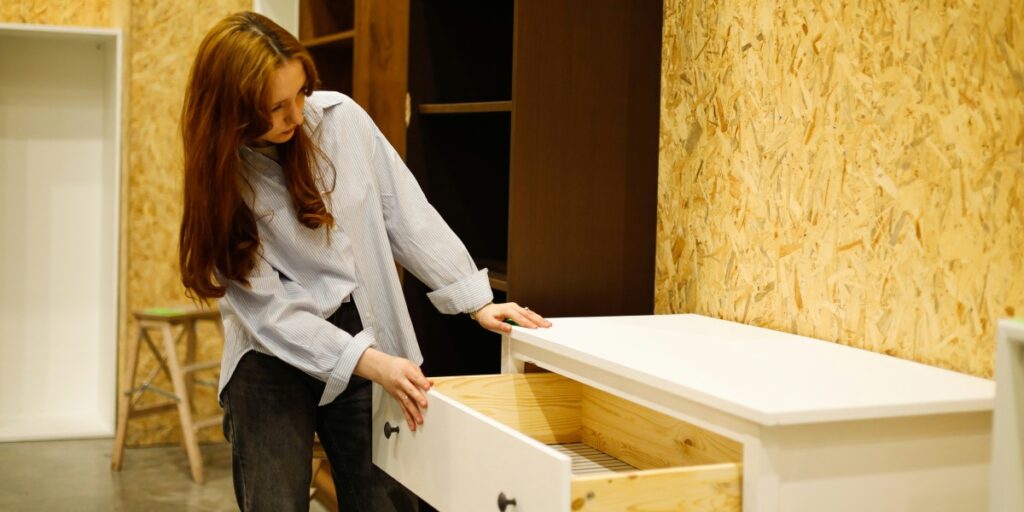
Drawers and doors should open smoothly without sticking, dropping, or scraping against the frame. A drawer that jerks forward or tilts may indicate damaged runners, worn tracks, or poor alignment. These issues can create pinch points, falling hazards, or sudden movement when staff retrieve files or equipment.
Sliding doors, tambour fronts, and hinged panels should also be checked for secure movement. Hinges must hold firmly, handles should not loosen, and drawer runners or rails should be free from cracks, rust, or sharp edges. If the unit has locks, test them several times without forcing the key or handle.
Every storage unit has a practical limit, even when the original manufacturer’s rating is unavailable. Before reuse, assess whether shelves, bases, and drawer bottoms can still carry the intended items. Paper, archived files, tools, and supplies can become heavy quickly, especially when packed tightly.
Shelf pins, clips, and brackets should fit securely and show no bending or corrosion. Adjustable shelves must sit evenly on all supports, while fixed shelves should not sag in the center. The risk is higher when pre-owned units are repurposed for heavier items than they were designed to hold.
Surface condition can reveal how a unit has been used and stored. Rust around the base, handles, hinges, or internal corners may suggest moisture exposure, which can weaken metal over time. For wooden or laminate units, swelling, splitting, or peeling edges may affect both hygiene and durability.
Sharp edges, exposed screws, cracked laminate, and broken trims should be addressed before the unit is placed in service. These may seem minor during inspection, but they can cut hands, snag clothing, or damage stored items in a shared workplace.
A storage unit may be structurally sound but still unsafe if placed poorly. Safe Work Australia notes that workplace layouts should allow people to enter, exit, and move around safely, including during emergencies, with aisles and walkways kept free of furniture or other obstructions.
This makes accessways a useful safety term when assessing second-hand cabinets, lockers, or mobile storage units. Tall cabinets should sit on level flooring and, where appropriate, be secured to a wall to reduce tipping risk. Units should not block walkways, emergency exits, access panels, or shared movement areas. Drawer-based units need enough clearance so drawers can open without becoming trip hazards. Mobile pedestals or cabinets with castors should have working brakes or stable wheels. In flexible workplaces, staff should also know which units are safe to move and which should remain fixed.
Pre-owned storage should be cleaned before use, but cleaning is also a chance to inspect hidden areas. Interior corners, drawer backs, and undersides can reveal mould, pests, residue, or concealed damage. Units used for general office storage should be dry, odor-free, and suitable for the materials being stored.
Workplace suitability also includes practical fit. A cabinet may be safe in isolation, but unsuitable if it encourages overloading, awkward lifting, or cluttered access. Frequently used items should be easy to reach, heavy items should sit lower, and archived materials should be stored in a way that avoids strain.
Pre-owned storage units can perform well in modern workplaces when they are assessed for safety, stability, and daily use. Checking the frame, moving parts, load support, surface condition, and placement helps prevent avoidable hazards while extending the useful life of office furniture. For businesses choosing second-hand or repurposed storage, the goal is not only to reuse what is available but to make sure each unit remains safe, practical, and suitable for the people who rely on it every day.
Follow Us
Get published in CEO Weekly
Founders, executives, and brands ready to build credibility through publication.
Follow Us
Copyright ©2026 Matrix Global, LLC. All Rights Reserved.
CEO Weekly is not responsible for the content of external websites.
By registering for an account or using any part of this website, you acknowledge that you have read, understood, and agree to be bound by our Terms of Use and Privacy Policy, which govern your access to and use of our services, content, and features.
CEO Weekly is not responsible for the content of external websites.