How Sara Ston Built a Real Estate Practice Around the People Who Need It Most

By: Matt EmmaSara Ston did not start her career in real estate. She started it in a classroom in New ...
Read moreBy: Matt EmmaSara Ston did not start her career in real estate. She started it in a classroom in New ...
Read moreBy: Alena WieseShaun Tomson is a 1977 world surfing champion, entrepreneur, speaker, and author whose story has traveled far beyond ...
Read moreBy: Alena Wiese
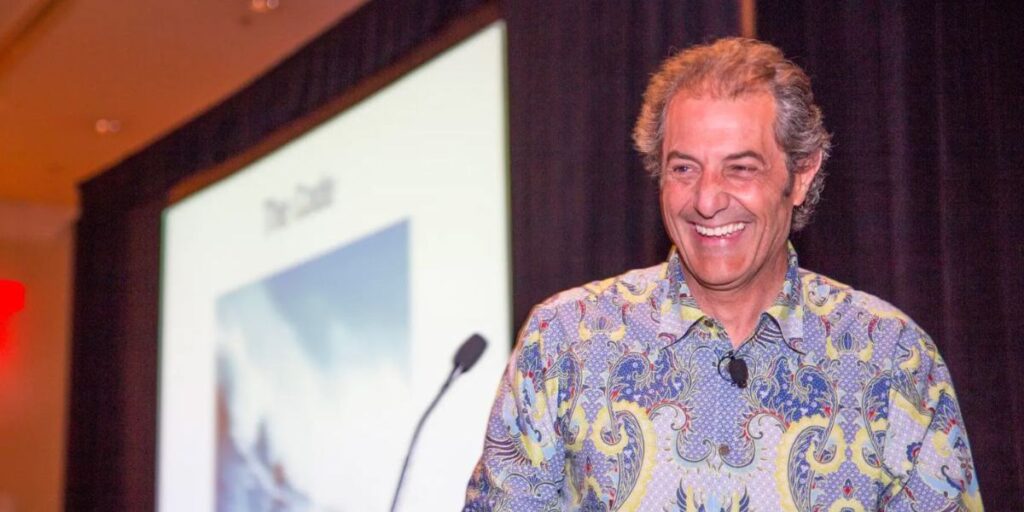
Shaun Tomson is a 1977 world surfing champion, entrepreneur, speaker, and author whose story has traveled far beyond the waves. As the creator of the Surfer’s Code and The CODE method, a leadership framework used by organizations, schools, and communities around the world, Tomson has spent decades translating the lessons of the ocean into a philosophy for living with intention, resilience, and purpose.
CEO Weekly sat down with Tomson to explore what it means to lead with purpose, how companies can build genuine engagement, and why kindness may be the most underrated competitive advantage in business. The conversation comes as the 20th anniversary edition of his book, Surfer’s Code, releases on April 28, 2026, with a nationwide book tour to follow.
I describe it with an acronym, CODES.
C is commitment. In every chapter of my life, I have tried to be fully committed to the path in front of me, whether becoming the best surfer in the world, building purpose-driven businesses, or learning to be a better storyteller.
O is optimism. As surfers we wake up in the dark, pull on a cold wetsuit, and paddle out without knowing what the ocean will give us. We do it because we believe the next wave is coming. That optimism has carried me through business and through some very difficult personal moments.
D is discipline. Talent gives you a start, but discipline gets you to the finish line.
E is engagement and empathy. Engagement is enthusiasm for life, work, family, and the people you serve. Empathy is the ability to put yourself in someone else’s shoes.
S is my favorite word on the planet, stoked. You need that feeling of passion, that spark that propels you forward. My wife jokes that I overuse the word, but I still tell her, I am enjoying my youth. I am stoked.
When I was a young competitor, legacy meant results. Today, it is about how people experience you and how you influence their lives. Years ago I distilled the lessons surfing taught me into twelve simple lines, each beginning with “I will.” They are not about being the best surfer in the world. They are about being a good person. If I had to define my legacy, it lives in those twelve lines and in the lives they have helped to shape.
The twelve lines of the Surfer’s Code are twelve commitments any leader can reflect on. The first is, I will never turn my back on the ocean. That is about awareness. Leaders need to stay awake to danger, disruption, and opportunity.
The second is, I will always paddle back out, a metaphor for perseverance underpinned by hope. Every surfer on the planet has taken a heavy wipeout. The question is what you do next. You paddle back out because you have faith there is another wave coming.
Another line is, I will take the drop with commitment. To be successful you need to move through fear and fully commit. On a big wave, if you hesitate you fall. In business, half measures often create more risk than a committed decision.
Instinct is a critical ingredient in any high-level performance. When you perform at your best, you enter a state of flow. Your focus is absolute, and you are no longer thinking step by step. You are operating on instinct, built from thousands of hours of practice and hundreds of failures. Every successful athlete and business person will get crushed at some point. What happens next is what defines you.
I do not think you can completely prepare for the big wipeouts, other than to accept that they will come. What you can prepare is your response.
The greatest wipeout of my life was not on a wave. It was losing our beautiful fifteen-and-a-half-year-old son, Matthew. He played a dangerous game he heard about at school, and we lost him. When you lose a child, a piece of you is always missing. The pain softens over time, but the loss never disappears.
Two hours before the phone call that changed our lives, Matthew called me from South Africa, where he was spending a semester at my old school. He had written an essay for English class about riding inside the tube and wanted to read it to me. In the middle were words that leapt out at me: “The light shines ahead.”
After he died, those words became my mantra. You cannot stop the wipeouts, but you can choose the words and commitments that guide you through them.

The Code began with a practical problem. A friend told me about a serious environmental issue at a famous surf spot near where I live in Santa Barbara. To fix it, we needed to raise about eight million dollars, and he said, “Shaun, I have a budget of one hundred dollars.”
I asked myself what I could give students that would have real power. I picked up a sheet of paper and wrote twelve lines, every line beginning with “I will,” capturing the fundamental lessons surfing had taught me about life. I called it the Surfer’s Code.
We printed credit-card-sized versions and handed them to students on the beach. The initiative worked. We raised the money and solved the environmental problem. But something else happened. The little cards started to travel from person to person, like a wave that never stopped.
The Code method is deliberately simple. Download the free worksheet at ShaunTomson.com. Print a copy for every team member. Start with four stories: a biographical story about where you come from, a story of resilience, a story about courage and commitment, and a story of deep connection. Then invite everyone to write their own Code, twelve lines, every line beginning with “I will.” It is a fifteen-minute exercise.
The most powerful part is sharing. In a group of forty or fewer, each person stands up and reads their twelve lines aloud. People realize that while they may look different and have different roles, they share the same positive values.
Leaders have shared experiences of stronger accountability, improved performance, and higher engagement. Industry research has consistently shown that the vast majority of employees worldwide are not fully engaged at work, with Gallup linking this disengagement to billions in lost productivity each year. When people go through The Code process, they often reconnect with their own purpose and with the purpose of the organization. That shift in emotional connection is what starts to move the needle.
Many people are afraid to reveal their emotions at work. They see vulnerability as weakness, so they hold back. That fear creates distance.
Organizations often define purpose only in terms of profit, sales, and growth. Those are important measures, but they are not a purpose. My definition of purpose is a long-term committed intention to realize aims that are meaningful both to oneself and to the broader world. When a company stands for something bigger than quarterly results, it gives people a North Star.
I was invited by Sheriff Bill Brown to speak at the Santa Barbara County Jail. I told the inmates four stories, then asked them to write their own Codes. One at a time, each man stood up and read his twelve lines aloud.
The biggest, toughest-looking man in the room stopped at one line and his voice broke. The line was, I will forgive myself. He began to cry. Every other inmate walked over to him, hugged him, and many started crying too. His statement was healing for him, and it was also connective for everyone else in the room. That is what leaders can do in companies.
A more recent example came at Harvard’s Kennedy School of Leadership, where I worked with future heads of state and senior advisors. At the start of my session, I asked them to text me a single word describing how they were feeling. The responses reflected stress, fatigue, and a sense of disconnection. We went through The Code process. At the end, I asked them to text one word they were taking home. The responses had shifted noticeably toward a more positive tone.
Students are the future leaders of this country and this world, and they are living through a dangerous and confusing time. Between the ages of fourteen and twenty-five, a significant portion of deaths in young people are preventable, from traffic accidents, homicide, illicit drugs, suicide, and risky games. I call these choice deaths.
When students write their twelve “I will” statements, they are creating a personal North Star. These commitments can give them strength at the decision point. I ask one thing of them, based on strong scientific research: when a serious decision comes your way, think twice.
For me, this work is deeply personal. Our son died because of a poor choice. If I can help even one student pause, think twice, and choose life, it honors his memory and helps to heal a little of the hurt my wife and I carry.
I will help others be better.
When I was nineteen, I was surfing at Waimea Bay in Hawaii, the Mount Everest of surfing. A big set approached. I took off on a twenty-five-foot wave. As I dropped in, I remember thinking, “I have got this.” A fraction of a second later the wave hit the reef, stood up, and launched me into space. It was one of the worst wipeouts of my career.
The moment you think you have made it, you are in a very dangerous place. When a CEO feels something is missing, I can almost guarantee something is. What is needed is not more confidence. It is humility. The humility to ask, “What is this really about, and who am I really serving?”
I would hope it inspires kindness. My Double Shakka process is built around that idea. Kind companies are often spoken about as if they are families. Patagonia is an example I like. Kindness is not just altruism, it is a serious economic positive. In this disconnected, turbulent world, kindness is an economic imperative.
There are two big waves I would like to catch. The first is to have my method embedded in formal learning. I would love every high school and university freshman, in their first weeks of school, to write and share their Code. The second is to use my reignited company, Instinct, as a tool for positive transformational change, spreading this wave of hope and purpose around the world.
Shaun Tomson is the 1977 World Surfing Champion, entrepreneur, author, and creator of The CODE, a leadership and purpose framework used by organizations, schools, and communities worldwide. Named one of the ten greatest surfers of all time by Surfer Magazine, he has won 19 major professional events and is an inductee of the South African, Jewish, and American Surfing Halls of Fame. His books include Surfer’s Code (20th Anniversary Edition, April 2026), The Code: The Power of “I Will,” and The Surfer and the Sage. He also co-produced the acclaimed documentary Bustin’ Down the Door.
Website:shauntomson.com | The CODE Method:shauntomson.com/the-code-method
Surfer’s Code (20th Anniversary Edition):diversionbooks.com/books/surfers-code
Follow Us
Get published in CEO Weekly
Founders, executives, and brands ready to build credibility through publication.
Follow Us
Copyright ©2026 Matrix Global, LLC. All Rights Reserved.
CEO Weekly is not responsible for the content of external websites.
By registering for an account or using any part of this website, you acknowledge that you have read, understood, and agree to be bound by our Terms of Use and Privacy Policy, which govern your access to and use of our services, content, and features.
CEO Weekly is not responsible for the content of external websites.